Prime Rib Internal Temp
Quick answer
Pull prime rib from the oven when the center reads 120°F (49°C) for medium-rare. During a 20–30 minute rest the prime rib internal temp climbs about 10°F, finishing near 130°F (54°C). Pull at 115°F for rare, 130°F for medium and 140°F for medium-well, and about 5°F later after a reverse sear. USDA's safe minimum for beef roasts is 145°F (63°C).
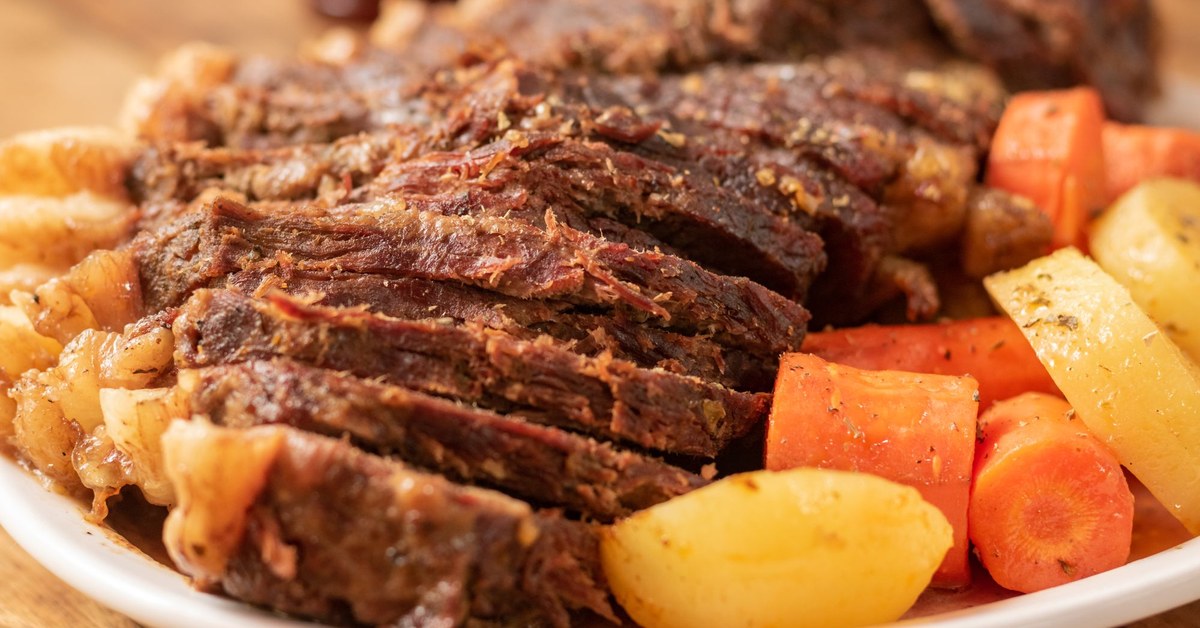
Handy for this: Prime rib cooking time calculator · Internal temperature chart
Part of our Food safety temperatures (safe temperatures, storage times and thawing in one chart) hub.
At a glance
- Start checking 30–45 minutes before the low end of your estimated roasting time.
- Insert an instant-read thermometer from the top or the end into the very center of the thickest part of the eye, away from the bones and any fat pocket.
- Move the tip in and out slightly and take the lowest reading you find; that's the true center.
- Check a second spot in the thick end, since roasts rarely cook evenly.
- Pull the roast when the lowest reading is about 10°F (5–6°C) below your target, for example 120°F (49°C) for medium-rare.
- Rest it loosely tented with foil for 20–30 minutes, then check once more before carving.
The short version
Take prime rib out of the oven about 10°F (5–6°C) before the temperature you want to eat it at. For medium-rare, that means pulling it at 120°F (49°C) in the center of the thickest part. Rest it 20–30 minutes and it climbs to about 130°F (54°C) on its own.
A big roast holds a lot of heat. The outer inch is much hotter than the center when it leaves the oven, and that heat keeps moving inward while it rests. That's carryover cooking, and on a rib roast it's large: usually 10°F, sometimes 15°F. If you pull at the temperature you want to serve, you'll end up a full level past it.
This page is only about temperatures. For seasoning, oven settings and roasting times, see our guide on how to cook prime rib and the prime rib cooking time calculator.
What you need
- An instant-read digital thermometer. It reads in 2–4 seconds, so you can check two or three spots without leaving the oven door open. A thin probe leaves small holes.
- A leave-in probe thermometer (optional). It sits in the roast the whole time and beeps at your pull temperature. Great on a big day when the kitchen is busy. Still double-check with an instant-read before you pull.
- Foil. A loose tent keeps the roast warm while it rests without steaming the crust soft.
- A carving board with a juice groove. A rested roast still releases some juice when you slice.
How to check prime rib temperature
- Start early. Begin checking 30–45 minutes before the low end of the estimated time. Rib roasts vary a lot in shape and in how cold they were going in, and the last 10°F can come quickly.
- Find the center of the eye. The eye is the large round muscle in the middle of the slice. Push the probe in from the top of the roast, or from the end, so the tip sits in the very middle of its thickest part.
- Stay off the bone and the fat. Bone conducts heat differently and gives a false reading. So does the fat seam between the eye and the outer cap. If the probe slides in with no resistance, you're probably in fat.
- Hunt for the lowest number. Push the tip slightly past the middle and slowly draw it back. The lowest reading is the true center.
- Check a second spot. Test the thicker end too. One end of a rib roast often runs 5°F behind the other.
- Pull at the right time. When the lowest reading is about 10°F below your target, take it out. Use the chart below.
- Rest, then check again. Tent it loosely with foil and rest 20–30 minutes. A final reading in the center tells you where you landed.
Prime rib internal temperature chart
Pull temperatures are for a bone-in roast cooked the classic way (hot start, then 325°F / 165°C) and rested 20–30 minutes. For a low-oven reverse sear at 225–250°F (110–120°C), carryover is only about 3–5°F, so use the right-hand column.
| Doneness | Pull (classic roast) | Final after rest | Pull (reverse sear) | What it looks like |
|---|---|---|---|---|
| Rare | 115°F (46°C) | 125°F (52°C) | 120°F (49°C) | Deep red, cool-looking center |
| Medium-rare | 120°F (49°C) | 130°F (54°C) | 125°F (52°C) | Rosy red, warm center |
| Medium | 130°F (54°C) | 140°F (60°C) | 135°F (57°C) | Pink center, firmer |
| Medium-well | 140°F (60°C) | 150°F (66°C) | 145°F (63°C) | Light pink center |
| Well done | 150°F (66°C) | 160°F (71°C) | 155°F (68°C) | Brown throughout |
The same pull-and-rest logic works for steaks, pork and poultry. Our doneness temperatures chart has the numbers for all of them.
How carryover changes with roast size
Small roasts (2–3 ribs)
A 4–7 lb (1.8–3.2 kg) roast usually rises 7–10°F. If you've got a small roast and an especially hot oven, 120°F is still the right pull for medium-rare, but check it after 15 minutes of resting.
Large roasts (4–7 ribs)
Big roasts carry more heat and rise more, often 10–15°F. If yours is over 10 lb (4.5 kg) and finished at 350°F or higher, pull at 115–118°F (46–48°C) for medium-rare.
Boneless rib roasts
Without bones to slow things down, boneless roasts cook faster and rise about the same, around 10°F. Start checking a little earlier than for bone-in.
Reverse sear
A roast cooked at 225–250°F has almost the same temperature from edge to center, so there's little stored heat to push inward. Pull about 5°F below target, rest, then do the final hot blast.
“The fat cap is deep brown and you're 30 minutes from the chart time. Grab the thermometer and check the center of the eye.”
How to tell when prime rib is done
A thermometer is the only exact answer for a roast this thick, but your other senses tell you when to reach for it.
Sight
- The fat cap turns from pale to deep brown and starts to crackle and blister. That's the crust, not the center, but it tells you the roast is well along.
- Clear, pinkish juices beading on the cut ends mean the outer layers are hot. You're usually within 20–30 minutes of the pull.
Sound
- Steady, gentle spitting from the pan is normal. When it quiets and the drippings start to look syrupy, the roast is giving up its last moisture into the pan, which is a good moment to check the center.
Smell
- A deep, roasted beefy smell with a little sweetness from the browned fat fills the kitchen in the second half. Smell doesn't change much at the finish, so don't lean on it alone.
Touch
- Press the top of the eye with tongs. Rare feels soft and yielding, medium-rare gives with a gentle spring, and medium feels noticeably firmer. On a roast this big, use touch only to decide when to check.
Temperature
The numbers decide. Pull at 120°F (49°C) for medium-rare, rest, and it finishes near 130°F (54°C). USDA's safe minimum for beef roasts is 145°F (63°C) with a 3-minute rest, which is medium-well on prime rib. Many cooks prefer it medium-rare, the way most restaurants serve it; that's a personal call, and 145°F is the one to use for guests who are pregnant, older, very young or immunocompromised. If you cook for a mixed table, give those guests the end cuts, which run a level or two more done.
Big-roast days are busy. Pan can't read the center, but it can keep the clock and the crust in view and tell you when it's time to start checking.
Tips for hitting your temperature
- Know your thermometer. Test it in ice water before the big day. It should read 32°F (0°C). If it's off by 2–3°F, adjust your pull number to match.
- Check, don't poke constantly. Every hole leaks a little juice and every open door drops the oven temperature. Every 15 minutes near the end is plenty.
- Room temperature roasts cook more evenly. Letting the roast sit out for 1–2 hours before cooking shortens the time a little and narrows the gray band under the crust.
- Rest it where it's warm. A loose foil tent on the counter is ideal. Don't wrap it tightly, or the crust softens and carryover climbs higher than you planned.
- Running ahead? Pull it a few degrees early and rest it longer under foil. A big roast stays hot for 45–60 minutes.
- Running behind? Turn the oven up 25°F and check every 10 minutes. Don't slice into it to peek.
- Leftovers. Refrigerate within 2 hours, then reheat slices gently to 165°F (74°C), or use them cold in sandwiches. Our how to reheat steak guide works for prime rib slices too.
After the pull: resting, carving and sides
Use the 20–30 minute rest to finish the sides. That's the perfect window for Yorkshire puddings, which want a very hot oven and the beef fat from the pan. For carving, the jus and full roasting times, go back to how to cook prime rib. Planning a turkey on the same table? The turkey internal temp guide covers where to probe a bird.
Internal temps for other meats
The same rule of thumb for everything else you cook: these are USDA safe minimums, with the pull point or texture target where it differs.
| Guide | Done at |
|---|---|
| Chicken internal temp | 165°F (74°C) Every cut, whole bird |
| Chicken breast internal temp | 165°F (74°C) Pull at 160–162°F, rest 5 min |
| Chicken thigh internal temp | 165°F (74°C) Most tender at 175–185°F |
| Turkey internal temp | 165°F (74°C) Breast, thigh and wing |
| Steak internal temp | 145°F (63°C) USDA Medium-rare 130–135°F |
| Brisket internal temp | 145°F (63°C) safe Tender at 195–205°F |
| Burger internal temp | 160°F (71°C) 165°F for turkey or chicken |
| Meatloaf internal temp | 160°F (71°C) 165°F for turkey or chicken |
| Pork internal temp | 145°F (63°C) Ground pork 160°F |
| Pork chop internal temp | 145°F (63°C) Pull thick chops near 140°F |
| Pork loin internal temp | 145°F (63°C) Pull roasts at 140°F |
| Pork tenderloin internal temp | 145°F (63°C) Pull at about 142°F |
| Salmon internal temp | 145°F (63°C) USDA Many cooks pull at 125–130°F |
Pan watches it for you
Pan tells you when to grab the thermometer
Pan can't see inside the roast, but it watches the outside and keeps the clock. It tells you when the crust is set, when to start checking the center, and reminds you to rest the roast before carving.
- Fat cap deep brown and crackling after the hot start: turn the oven down
- 30–45 minutes before the chart time: start checking the center
- Juices beading on the surface of the cut ends: the finish is close
- Out of the oven: rest 20–30 minutes, loosely tented
Pan AI is on iPhone • Android.
Common questions
What temperature do you pull prime rib for medium-rare?
Pull it at 120°F (49°C) in the center of the thickest part. It rises about 10°F during a 20–30 minute rest and finishes around 130°F (54°C). After a low-oven reverse sear, pull closer to 125°F (52°C), because carryover is smaller.
How much does prime rib rise while resting?
About 10°F for most bone-in roasts started hot or finished at 325°F. Big roasts of 4 ribs or more, especially ones finished at high heat, can rise 12–15°F. Roasts cooked low at 225–250°F rise only 3–5°F.
Where do you put the thermometer in prime rib?
Into the center of the thickest part of the eye of the roast, coming in from the top or the end. Keep the tip away from the bones and the fat seam between the eye and the cap, which both read differently from the meat.
What is the USDA safe temperature for prime rib?
USDA's safe minimum for beef roasts is 145°F (63°C) with a 3-minute rest, which is medium-well on prime rib. Many cooks serve it medium-rare; that's a personal choice, and 145°F is the target for anyone pregnant, older, very young or immunocompromised.
Is 130°F prime rib safe?
130°F is the classic final temperature for medium-rare prime rib and how most restaurants serve it, but it is below USDA's 145°F recommendation for whole beef cuts. Whether to eat it that way is your choice; cook slices to 145°F for higher-risk guests.
Can I take prime rib out at 125°F for medium-rare?
If you roasted it low and slow, yes, 125°F is about right. After a hot oven it will likely coast up to 135°F, which is the border of medium. For a classic roast, 120°F is the safer pull for medium-rare.
What is the internal temp of prime rib for medium?
Pull it at 130°F (54°C). After a 20–30 minute rest it reaches about 140°F (60°C), pink in the center.
What internal temp is medium well prime rib?
Pull it at 140°F (60°C) for about 150°F (66°C) after resting. Well done: pull at 150°F for about 160°F.
What oven temperature is best for prime rib?
Either 15 minutes at 450°F, then 325°F (about 13–15 minutes per pound for medium rare), or low and slow at 250°F (about 30–35 minutes per pound) with a final sear.
What is medium rare prime rib in Celsius?
Pull at 49°C; it rests up to about 54°C. Rare: pull at 46°C for 52°C. Medium: pull at 54°C for 60°C.
What is the internal temp of well done prime rib?
Pull a classic roast at 150°F (66°C). It finishes at about 160°F (71°C) after a 20–30 minute rest and is brown throughout. With a low-oven reverse sear, pull it at 155°F (68°C).
When do you take prime rib out of the oven?
About 10°F below the doneness you want, because it keeps rising while it rests: 120°F (49°C) for medium-rare and 130°F (54°C) for medium. With a low-oven reverse sear, pull it 5°F higher.
What is the internal temp of rare prime rib?
Pull it at 115°F (46°C). It reaches about 125°F (52°C) after resting, with a deep red center.
Sources
- USDA FSIS: Safe Minimum Internal Temperature Chart
- FoodSafety.gov: Safe Minimum Internal Temperatures
- Jessica Gavin: Prime Rib Recipe
- America's Test Kitchen: Steak Doneness Chart
Reviewed against USDA FSIS and FoodSafety.gov guidance. How we choose sources and fix mistakes: editorial policy.
Keep cooking
- Thanksgiving & holidaysHow to Cook Prime RibSear prime rib at 450°F for 15–20 minutes, then roast at 325°F about 13–15 minutes per pound to 120°F for medium-rare. Charts, reverse sear and carving.
- Thanksgiving & holidaysHow to Make Yorkshire PuddingsMake Yorkshire puddings with 2 eggs and equal volumes of flour and milk, poured into smoking-hot fat at 425–450°F (220–230°C) and baked 20–25 minutes.
- Meat & poultryHow to Cook Beef TenderloinSear a tied beef tenderloin on all sides, roast at 425°F for 25–35 minutes, pull at 120–125°F for medium-rare and rest 15 minutes. Times by weight and cues.
- Start hereHow to Tell When Food Is DoneHow to tell when chicken, steak, fish, chorizo, eggs, pasta, rice, cheesecake and pecan pie are done, with safe temperatures and simple sight and touch cues.
- Thanksgiving & holidaysHow to Make Beef WellingtonMake beef Wellington by wrapping seared tenderloin in duxelles, prosciutto and puff pastry, then bake at 425°F for 25–35 minutes until it reads 120–125°F.
- Thanksgiving & holidaysBoxing Day LeftoversTurn Boxing Day leftovers into bubble and squeak, turkey sandwiches, pie, hash and soup. Plus safety: chill in 2 hours, eat in 3–4 days, reheat to 165°F.
- Free toolPrime rib cooking time calculatorTime by weight and doneness, classic or reverse sear, with pull temps and when it goes in the oven.
- Free toolInternal temperature chartSafe and perfect internal temperatures for steak, chicken, salmon, pork and more, plus a printable PDF.