How to Cook Steak on the Stove
Quick answer
Pat a 1- to 1½-inch steak dry, salt it well, and sear it in a smoking-hot cast iron or stainless skillet with a thin film of high-smoke-point oil. For a 1-inch steak, cook 3–4 minutes per side for medium-rare, pulling it at 120–125°F. Rest it 5 minutes and it lands around 130°F. USDA's safe minimum for steak is 145°F plus a 3-minute rest.
Handy for this: Steak cooking time calculator · Internal temperature chart · Cooking oil smoke points
At a glance
- Take the steak out of the fridge, pat it very dry, and salt both sides.
- Heat a heavy skillet over medium-high for 4–5 minutes, then add 1 tablespoon of high-smoke-point oil.
- Lay the steak in, away from you, and leave it alone for 3 minutes.
- Flip when the underside is deep brown and releases easily.
- For the last minute, add butter, garlic and thyme and spoon the foaming butter over the top.
- Check the center with an instant-read thermometer and pull it 5°F below your target.
- Rest 5 minutes, then slice against the grain.
The short version
A great stovetop steak needs three things: a dry surface, a properly hot heavy pan, and a thermometer. Salt the steak, sear it in a thin film of oil until a deep brown crust forms, flip, and finish with butter. Pull it a few degrees before your target, rest it, and slice.
That's the whole method. Everything below helps you tune it to your cut, your pan and the doneness you love.
Pick the right steak and pan
Steaks between 1 and 1½ inches thick are the sweet spot for the stove. They're thick enough to build a crust before the center overshoots, and thin enough to cook through without the oven.
- Ribeye: rich marbling, very forgiving, and the fat renders into the pan for basting.
- NY strip: beefy and a little leaner, with a fat cap you can render by holding it edge-down for a minute.
- Top sirloin: lean and budget-friendly. Slice it thin against the grain.
- Skirt or flank: thin, so it cooks in minutes over high heat. Always slice across the grain.
- Filet mignon: thick and tender. Sear every side, then cook gently to finish.
For the pan, cast iron is the classic choice because it holds heat when cold meat hits it. Heavy stainless steel and carbon steel work just as well. If you're using cast iron, our guide on how to clean a cast iron frying pan keeps it ready for next time, and our skillet vs frying pan guide explains what to look for.
How to prepare steak for the stove
Dry it and salt it
Moisture is what stands between you and a golden crust. Pat the steak with paper towels until the surface feels tacky, not wet. Then salt both sides generously with kosher salt.
If you have time, salt it 45 minutes to a day ahead and leave it uncovered in the fridge. The salt draws out moisture, dissolves, and gets pulled back into the meat, so the steak is seasoned deeper and the surface dries out. Short on time? Salt it right before it goes in the pan.
Choose your oil
Use an oil that handles high heat, like canola, peanut, avocado or refined vegetable oil. Save butter and olive oil for the finish. Our smoke points of oils chart shows which ones are built for searing.
How to cook steak in a cast iron skillet, step by step
- Preheat. Set the pan over medium-high heat for 4–5 minutes. Electric and induction stoves work fine; they just take a little longer to get there.
- Add oil. About 1 tablespoon. When it shimmers and the first wisp of smoke appears, you're ready. Turn on the vent fan now.
- Lay the steak in. Place it away from you so any oil spatter goes the other direction. You should hear a loud, steady sizzle right away.
- Leave it alone. Give it 2–3 minutes before peeking. The steak tells you it's ready to flip when it lifts off the pan without sticking.
- Flip and keep going. For thick steaks, flipping every 1–2 minutes after the first sear cooks the center more evenly. For 1-inch steaks, a single flip is fine.
- Baste. In the last 1–2 minutes, lower the heat to medium, add 2 tablespoons of butter, a smashed garlic clove and a few thyme sprigs. Tilt the pan and spoon the foaming butter over the steak.
- Check, pull and rest. Take the temperature from the side into the center, pull it 5°F below your goal, and rest it on a cutting board or plate for 5 minutes.
How long to sear steak: timing table
These times are for steaks that start fridge-cold and cook in a preheated heavy skillet over medium-high heat. Every stove is different, so use the times to plan and the thermometer to decide.
Different thickness? The steak cooking time calculator gives the minutes per side for your exact steak.
| Doneness | Pull at | After rest | ¾-inch (total) | 1-inch (total) | 1½-inch (total) |
|---|---|---|---|---|---|
| Rare | 115–120°F (46–49°C) | 120–125°F | 3–4 min | 5–6 min | 7–9 min |
| Medium-rare | 120–125°F (49–52°C) | 125–130°F | 4–5 min | 6–8 min | 9–12 min |
| Medium | 130–135°F (54–57°C) | 135–140°F | 5–6 min | 8–10 min | 12–14 min |
| Medium-well | 140–145°F (60–63°C) | 145–150°F | 6–7 min | 10–12 min | 14–16 min |
| Well-done | 150–155°F (66–68°C) | 155–160°F | 7–8 min | 12–14 min | 16–18 min |
Thin skirt and flank steaks are the exception: over high heat, 2–3 minutes per side usually gets them to medium-rare. For steaks thicker than 1½ inches, the reverse sear steak method gives you edge-to-edge pink with less guesswork.
USDA's safe minimum internal temperature for whole cuts of beef is 145°F (63°C) with a 3-minute rest. Many cooks enjoy whole steaks less done than that; it's your call, and 145°F is the one to use when cooking for anyone at higher risk.
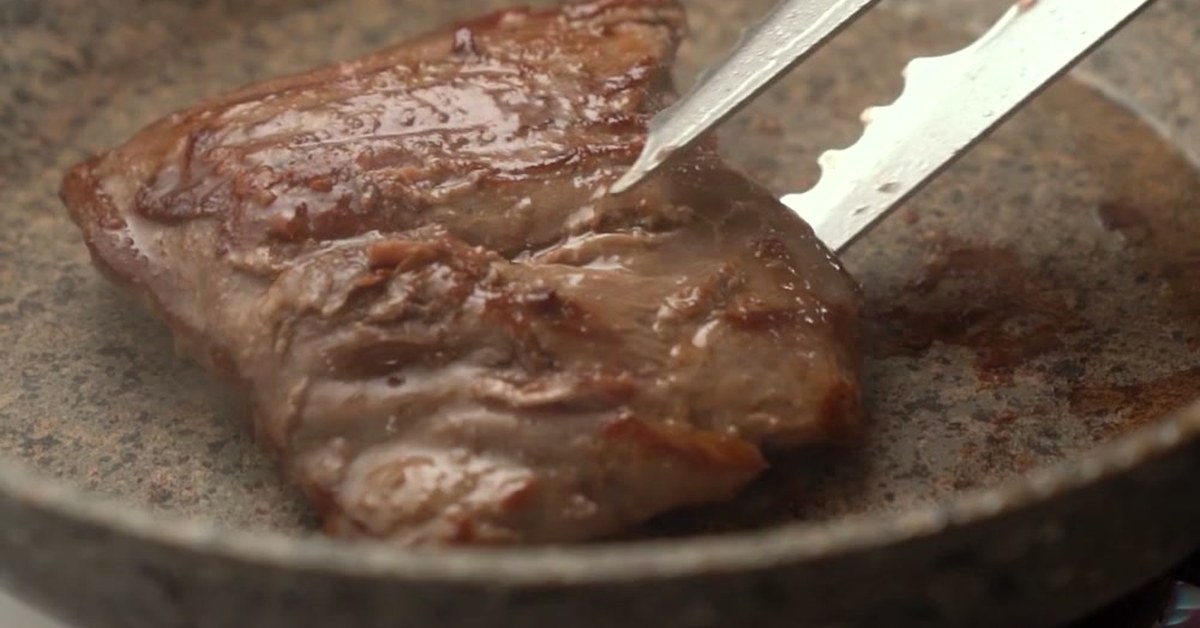
“That crust is a deep mahogany and the steak lifts right off the pan. Flip it now, and grab the butter.”
How to tell when your steak is done
A thermometer is the most reliable tool, but your senses tell you a lot along the way. Here's what to watch, listen and feel for.
Sight
- The underside is ready to flip when the edge touching the pan has turned a deep golden brown and the color has crept about a quarter of the way up the side.
- As the center cooks, you'll see a gray band growing from the bottom and top. On a 1-inch steak, when the pink band in the middle looks about a third of the thickness, you're near medium-rare.
- Beads of juice on the top surface mean the steak is heading past medium.
Sound
- A loud, crackling sizzle the moment the steak lands means the pan was hot enough.
- If the sizzle drops to a quiet hiss, the pan has cooled. Nudge the heat up a notch.
- When the butter goes in, it foams loudly; once the foam quiets and smells nutty, it's browned and ready to spoon over.
Smell
- A rich, roasted, slightly sweet aroma means the crust is forming nicely.
- Nutty, toasty butter is the cue to baste and wrap up in the next minute or so.
Touch
- Press the center with a fingertip. Rare feels soft and squishy, medium-rare springs back gently, medium feels firm with a little give, and well-done feels firm all over.
- The touch test gets better with practice, so pair it with a thermometer until you trust it.
Internal temperature
Slide an instant-read thermometer in from the side so the tip sits in the very center, away from any bone or fat pocket. Pull the steak about 5°F before your target, since it keeps rising while it rests. Our doneness temperatures chart has every level in one place.
This is exactly the moment Pan watches for: it reads the color creeping up the side and speaks up when it's time to flip and when to grab the thermometer.
Cut-by-cut tips
How to cook ribeye on the stove
Ribeye's marbling melts into the pan, so you need less oil. Start the fat edge against the pan for a minute with tongs to render it, then sear flat. The extra fat makes the butter baste even richer.
How to cook NY strip on the stove
Strip steaks have a firm fat cap along one edge. Stand the steak on that edge for 1–2 minutes at the start until it turns golden and crisp. Then sear both flat sides as usual.
How to cook sirloin on the stove
Top sirloin is lean, so it's at its best between medium-rare and medium. Rest it fully, then slice thin across the grain for tender bites.
How to cook skirt steak on the stove
Skirt is thin and loves very high heat. Cut it into pan-sized pieces, sear 2–3 minutes per side, rest 5 minutes, and slice across the grain at an angle.
Little things that make a big difference
- One or two steaks at a time. Give each steak room. A crowded pan steams instead of searing.
- Room-temperature myths. You don't need to leave steak out for an hour. A dry surface matters far more than starting temperature.
- Slice against the grain. Look for the lines of muscle fiber and cut across them. Each bite gets noticeably more tender.
- Make a quick pan sauce. After the steak comes out, pour off most of the fat, add a splash of broth or wine, scrape up the browned bits, and swirl in a pat of butter.
- Season again at the end. A pinch of flaky salt and cracked pepper on the sliced steak adds a lovely crunch.
Want to keep the skillet going? The same pan and the same doneness cues work for pan-fried pork chops and for how to cook burgers on the stove. You've got this.
Common questions
How long do you cook a steak on the stove?
A 1-inch steak takes about 6–8 minutes total for medium-rare over medium-high heat, or 3–4 minutes per side. A 1½-inch steak needs 9–12 minutes total, turning every couple of minutes. A thermometer gives you the final word.
Should I cook steak in butter or oil?
Start with oil, because it handles the high heat a good sear needs. Add butter in the last minute or two for flavor and baste the steak with it as it foams.
Do you cook steak on high or medium-high?
Medium-high works on most home stoves. Very thin steaks like skirt can go on high for a fast sear, while thick steaks do better with medium-high and frequent flipping so the center catches up with the crust.
Can you cook steak on the stove without cast iron?
Yes. A heavy stainless steel or carbon steel skillet sears beautifully too. Skip thin nonstick pans for steak, since they are not meant for the high heat a crust needs.
How long should steak rest after cooking?
About 5 minutes for a typical 1-inch steak, and up to 10 minutes for very thick cuts. The temperature climbs a few degrees while it rests, so pull it a little early.
Is it safe to eat medium-rare steak?
USDA recommends cooking whole cuts of beef to 145°F with a 3-minute rest. Many people choose medium-rare for whole steaks; if you are cooking for someone who is pregnant, older or immunocompromised, 145°F is the target to use.
Sources
- USDA FSIS: Safe Minimum Internal Temperature Chart
- America's Test Kitchen: Steak Doneness Chart
- ThermoWorks: Steak Temperature Guide
Reviewed against USDA FSIS guidance. How we choose sources and fix mistakes: editorial policy.
Keep cooking
- Thanksgiving & holidaysHow to Reverse Sear SteakReverse sear a ribeye: bake at 250°F until 10 to 15°F below your target, then sear 1 minute per side in a very hot skillet. Times, pull temps and cues inside.
- Meat & poultryHow to Cook Burgers on the StoveMake hamburgers on the stove in a hot skillet: cook ¾-inch patties 4–5 minutes per side over medium-high until they reach 160°F. Timing chart and tips.
- Start hereHow to Clean a Cast Iron PanClean a cast iron frying pan in 3 steps: wash with warm water and a little soap, dry over low heat, then rub in a thin coat of oil. Plus stuck food and rust.
- Meat & poultryHow to Cook Pork Chops on the StoveCook pork chops on the stove in 8 to 14 minutes: sear over medium-high, flip, and pull at 140°F so they rest to a juicy 145°F. Times for every thickness.
- Meat & poultryHow to Cook Duck BreastScore duck breast skin, start it skin-side down in a cold pan and render 10–15 minutes over medium-low, then flip for 1–3 minutes. USDA temp and doneness cues.
- Meat & poultryHow to Cook Ground ChickenBrown ground chicken in an oiled skillet over medium-high for 8–10 minutes, breaking it up, until no pink remains and it reaches 165°F (74°C). Tips and times.
- Free toolSteak cooking time calculatorMinutes per side by thickness and doneness, pan, grill or reverse sear, with pull temps.
- Free toolInternal temperature chartSafe and perfect internal temperatures for steak, chicken, salmon, pork and more, plus a printable PDF.
- Free toolSmoke point of oils, with the best oil for each jobSmoke points of 20+ oils and fats, and the best oil for searing, frying and cast iron.