Chicken Thigh Internal Temp
Quick answer
Chicken thighs are safe to eat at 165°F (74°C), measured in the thickest part without touching bone. Most cooks take them further, to 175–185°F (79–85°C), because dark meat has more fat and connective tissue that softens as it heats, so the meat gets more tender and juicy. Boneless thighs usually hit 175°F in 10–12 minutes in a skillet; bone-in thighs take 35–45 minutes at 425°F (220°C).
Handy for this: Internal temperature chart · Thawing time calculator
Part of our Food safety temperatures (safe temperatures, storage times and thawing in one chart) hub.
At a glance
- Start checking a few minutes before the low end of your recipe time.
- Slide an instant-read thermometer into the side of the thickest thigh.
- For bone-in thighs, stop just short of the bone.
- Read the lowest number as you ease the probe in and out.
- Make sure every thigh reads at least 165°F (74°C).
- For more tender dark meat, keep cooking until 175–185°F (79–85°C), then rest 5 minutes.
The short version
Chicken thighs are safe at 165°F (74°C), the same as every other part of the chicken. Check the thickest piece with a food thermometer, without touching bone.
But thighs are dark meat, and dark meat gets better past that number. Most cooks take them to 175–185°F (79–85°C). The extra heat melts more of the connective tissue, so the meat turns silky, pulls off the bone easily, and stays juicy thanks to its fat. Breast meat is the opposite: it's best right at 165°F.
Chicken thigh temperature chart
| Temperature | What it means | Texture |
|---|---|---|
| Below 165°F (74°C) | Not done yet | Keep cooking |
| 165°F (74°C) | USDA safe minimum | Cooked through, a little firm and springy |
| 170–175°F (77–79°C) | Safe, getting tender | Juicy, starting to loosen |
| 175–185°F (79–85°C) | Safe, most cooks' target | Tender, pulls from the bone easily |
| 185–195°F (85–91°C) | Safe, fall-apart | Great for shredding, braises and stews |
| Reheated leftovers | 165°F (74°C) | Add a splash of broth to keep it moist |
For breasts, wings, drumsticks and every other protein, see the doneness temperatures chart.
Why thighs get better at a higher temp
Thigh muscles do a lot of work, so they carry more collagen and more fat than the breast. At 165°F that collagen is still mostly intact, and the meat can feel a bit rubbery near the bone. As it climbs toward 175°F and beyond, the collagen softens into gelatin. That's what makes a good thigh taste rich and moist.
The fat helps too. It keeps the meat from drying out, which is why a thigh at 180°F is still juicy while a breast at 180°F is dry. Thighs give you a wide, forgiving window.
Where to put the thermometer
- Pick the biggest thigh. Thighs in a pack vary a lot in size. The thickest one finishes last.
- Go in from the side. Slide the probe through the edge into the center of the thickest part. Coming in from the top often goes straight through a thin boneless thigh.
- Bone-in: stop short of the bone. The bone reads differently from the meat, so aim for the meat right next to it.
- Read the lowest number. Ease the probe in and out slowly. The coolest reading is the true center.
- Check a few. In a full pan, check the biggest thigh and one from the middle of the pan, where heat is usually lower.
Timing by method
These times get you to roughly 175°F. Start checking at the low end.
| Method | Boneless, skinless | Bone-in, skin-on |
|---|---|---|
| Skillet, medium-high | 5–6 min per side | 12–15 min skin side, then 8–10 min after flipping, or finish in the oven |
| Oven, 425°F (220°C) | 18–22 min | 35–45 min |
| Air fryer, 380°F (195°C) | 14–18 min | 22–26 min |
| Grill, medium heat | 5–7 min per side | 30–40 min, indirect heat |
Our guide to pan-fried chicken thighs covers the skillet method with crispy skin. For a hands-off sheet pan, see how to cook chicken thighs in the oven, and for a quick weeknight batch, air fryer chicken thighs.
“The skin side is deep golden and it releases from the pan. Flip it now, and check the thickest thigh in about 5 minutes.”
How to tell when chicken thighs are done
The thermometer makes the call. These cues tell you when to reach for it.
Sight
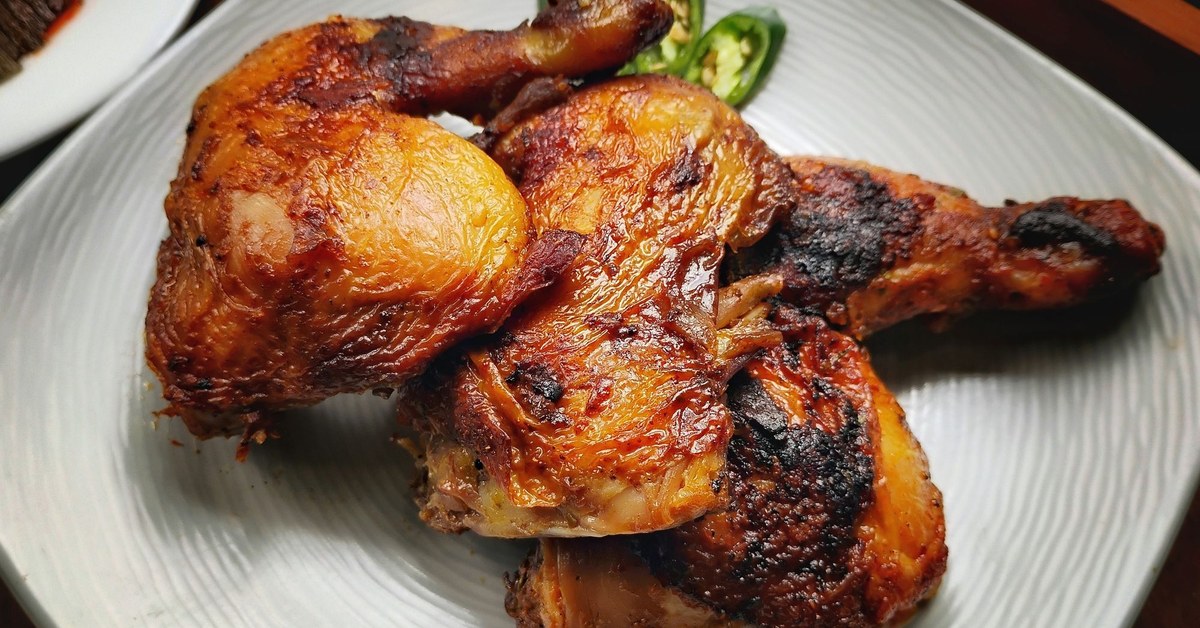
- The skin is deep golden and crisp, and the edges of the meat have turned opaque all the way around.
- Juices run clear when you press the thickest part. A little pink near the bone can still show at a safe temperature, so confirm with the thermometer.
- On bone-in thighs, the meat starts to shrink back from the end of the bone.
Sound
- In a skillet, the sizzle starts loud and spitty as the skin renders. When it settles to a steady, gentler crackle, the skin is crisping and nearly ready to flip.
Smell
- A savory, roasted-chicken aroma means the skin is browning well. A sharp smell means the pan is too hot; lower it a notch.
Touch
- Press the thigh with tongs. At 165°F it feels firm and springy. Around 175–185°F it gives a little more, and the meat starts to separate along the muscle lines.
- The skin releases from the pan on its own when it's ready to flip. If it sticks, give it another minute.
Temperature
165°F (74°C) is safe. 175–185°F (79–85°C) is where thighs are at their most tender. In a skillet, this is the moment Pan watches for: it sees the skin go deep golden, tells you to flip, and reminds you to check the thickest piece.
Boneless vs. bone-in thighs
Boneless, skinless thighs are thin and cook fast, so they move from 165°F to 180°F in just a few minutes. That makes them great for weeknight skillets, stir-fries and tacos. Check them a little early, and pull them anywhere in the 175–185°F range.
Bone-in, skin-on thighs take longer and reward patience. The bone slows the heat near the center, and the skin needs time to render and crisp. They're at their best closer to 180–185°F, when the meat almost falls off the bone. If the skin is deep golden before the inside is there, finish them in a 400°F (205°C) oven.
Drumsticks behave the same way as bone-in thighs, with the same safe minimum and the same tender range. Our guide on how to cook chicken drumsticks has their times.
Tips for juicy, tender thighs
- Start fully thawed. A frozen center cooks unevenly. The thawing time calculator tells you how long thighs need in the fridge or in cold water.
- Pat the skin dry. Dry skin browns and crisps; wet skin steams.
- Start skin side down and leave it. Let it render without moving for the first several minutes.
- Rest 5 minutes. The juices settle and the temperature rises a couple of degrees.
- Use the drippings. A splash of broth and a squeeze of lemon in the hot pan makes a quick sauce.
Leftovers
Refrigerate cooked thighs within 2 hours and eat them within 3 to 4 days. Reheat to 165°F (74°C), covered with a splash of broth on the stovetop or in the oven. Thighs reheat better than breasts because the fat keeps them moist. Working with salmon next? Fish has its own number, covered in our guide to salmon internal temp.
Internal temps for other meats
The same rule of thumb for everything else you cook: these are USDA safe minimums, with the pull point or texture target where it differs.
| Guide | Done at |
|---|---|
| Chicken internal temp | 165°F (74°C) Every cut, whole bird |
| Chicken breast internal temp | 165°F (74°C) Pull at 160–162°F, rest 5 min |
| Turkey internal temp | 165°F (74°C) Breast, thigh and wing |
| Steak internal temp | 145°F (63°C) USDA Medium-rare 130–135°F |
| Prime rib internal temp | 145°F (63°C) USDA Pull at 120°F for medium-rare |
| Brisket internal temp | 145°F (63°C) safe Tender at 195–205°F |
| Burger internal temp | 160°F (71°C) 165°F for turkey or chicken |
| Meatloaf internal temp | 160°F (71°C) 165°F for turkey or chicken |
| Pork internal temp | 145°F (63°C) Ground pork 160°F |
| Pork chop internal temp | 145°F (63°C) Pull thick chops near 140°F |
| Pork loin internal temp | 145°F (63°C) Pull roasts at 140°F |
| Pork tenderloin internal temp | 145°F (63°C) Pull at about 142°F |
| Salmon internal temp | 145°F (63°C) USDA Many cooks pull at 125–130°F |
Pan watches it for you
Pan tells you when to flip and when to check
Pan can't see inside the chicken, but it watches the skillet. For stovetop thighs it sees the skin crisp and the edges turn opaque, keeps the clock, and tells you when to flip and when to grab the thermometer.
- Skin deep golden and releasing from the pan: flip the thighs
- Edges opaque and juices running clear: check the thickest thigh
- Fat in the pan smoking lightly: lower the heat to medium
- Thighs at 175°F and resting: start the pan sauce in the drippings
Pan AI is on iPhone • Android.
Common questions
What temp are chicken thighs done?
USDA says all chicken is safe at 165°F (74°C). For thighs, many cooks prefer 175–185°F (79–85°C), because dark meat gets more tender and stays juicy at those temperatures.
Should chicken thighs be 165 or 175?
Both are safe. 165°F is the safe minimum. 175°F and up is a texture choice: the connective tissue breaks down more and the meat pulls easily from the bone.
Can chicken thighs go above 185°F?
Yes, thighs are forgiving. They stay moist up to about 190°F thanks to their fat. Past that they start to firm up and lose juice, so most cooks pull them by 185°F.
Why is my chicken thigh still pink at 165°F?
Dark meat can stay pink near the bone even when fully cooked, especially in young birds. USDA notes that color isn't a reliable sign. If the thermometer reads 165°F or higher, it's safe.
How long do boneless chicken thighs take?
In a skillet over medium-high, about 5–6 minutes per side. In a 425°F oven, 18–22 minutes. In an air fryer at 380°F, about 14–18 minutes.
How long do cooked chicken thighs last?
Refrigerate them within 2 hours and eat them within 3–4 days. Reheat leftovers to 165°F (74°C).
Where is the thickest part of a chicken thigh?
The center of the meatiest section, and on a bone-in thigh, the meat right next to the bone. Pick the biggest thigh, slide the probe in from the side, stop short of the bone and go by the lowest reading.
What temp should pan-fried chicken thighs be?
Safe at 165°F (74°C) and most tender at 175–185°F. Bone-in, skin-on thighs take 12–15 minutes skin side down over medium-high, then 8–10 minutes after flipping. Boneless thighs take 5–6 minutes per side.
What is the internal temp of chicken thighs in Celsius?
74°C (165°F) is the safe minimum. Most cooks aim for 79–85°C (175–185°F), where thighs turn tender.
Sources
- USDA FSIS: Safe Minimum Internal Temperature Chart
- USDA FSIS: Chicken from Farm to Table
- FoodSafety.gov: Safe Minimum Internal Temperatures
- USDA FSIS: Leftovers and Food Safety
Reviewed against USDA FSIS and FoodSafety.gov guidance. How we choose sources and fix mistakes: editorial policy.
Keep cooking
- Meat & poultryPan Fried Chicken ThighsPan fry chicken thighs skin side down over medium until golden, flip, and cook to 175°F. Times for bone-in, boneless and skinless thighs, plus doneness cues.
- Meat & poultryHow to Cook Chicken Thighs in the OvenBake bone-in chicken thighs at 425°F for 35–45 minutes, boneless for 18–25, until they reach at least 165°F. Skin side up for crisp, golden skin.
- Air fryerAir Fryer Chicken ThighsAir fry bone-in chicken thighs at 380°F for 22–26 minutes, or boneless thighs for 14–18 minutes, until 175°F inside with crisp skin. Charts and tips.
- Meat & poultryHow to Cook Chicken DrumsticksBake chicken drumsticks at 425°F for 35–45 minutes, or pan-sear then cover for 25–30, until 175–185°F inside. Safe at 165°F; juiciest a bit higher.
- Meat & poultryHow to Cook Duck BreastScore duck breast skin, start it skin-side down in a cold pan and render 10–15 minutes over medium-low, then flip for 1–3 minutes. USDA temp and doneness cues.
- Meat & poultryHow to Cook Ground ChickenBrown ground chicken in an oiled skillet over medium-high for 8–10 minutes, breaking it up, until no pink remains and it reaches 165°F (74°C). Tips and times.
- Free toolInternal temperature chartSafe and perfect internal temperatures for steak, chicken, salmon, pork and more, plus a printable PDF.
- Free toolThawing time calculatorHow long to thaw a turkey, chicken, ground beef or fish safely, in the fridge or cold water.