How to Cook Chicken Thighs in the Oven
Quick answer
Heat the oven to 425°F (220°C). Pat the thighs dry, rub with oil and season. Bake bone-in, skin-on thighs skin side up for 35–45 minutes, and boneless, skinless thighs for 18–25 minutes. They're safe at 165°F (74°C), but thighs are most tender at 175–185°F (79–85°C). Rest 5 minutes before serving.
Handy for this: Internal temperature chart · Thawing time calculator
At a glance
- Heat the oven to 425°F (220°C) and line a sheet pan, or set a rack on it for bone-in thighs.
- Pat the thighs very dry and trim any large flaps of skin or fat.
- Rub with oil and season all over with salt, pepper, garlic powder and paprika.
- Arrange bone-in thighs skin side up, or boneless thighs smooth side up, with space between them.
- Bake bone-in thighs 35–45 minutes or boneless thighs 18–25 minutes, until at least 165°F (74°C).
- Rest 5 minutes and serve.
The short version
Chicken thighs are the most forgiving cut you can put in the oven. Pat them dry, rub them with oil and spices, and bake them at 425°F (220°C). Bone-in, skin-on thighs take 35–45 minutes. Boneless, skinless thighs take 18–25.
They're safe at 165°F (74°C), but they're at their best a little higher. At 175–185°F (79–85°C), the connective tissue softens and the meat turns silky and pulls away from the bone.
What you need
- 8 chicken thighs. About 3 lb (1.4 kg) bone-in, skin-on, or 2 lb (900 g) boneless, skinless. That's two per person.
- 1 tablespoon of olive oil.
- Seasoning. 1½ teaspoons kosher salt, ½ teaspoon black pepper, 1 teaspoon each of garlic powder and smoked paprika, and ½ teaspoon of dried thyme or oregano.
- A rimmed sheet pan, lined with parchment or foil. For bone-in thighs, a wire rack set on the pan lets air circulate under the skin.
- An instant-read thermometer.
Bone-in vs boneless chicken thighs
They're both thighs, but they behave a little differently in the oven.
Bone-in, skin-on
This is the cut for crispy skin and the juiciest meat. The bone slows the cooking and keeps the meat moist, and the skin renders into a thin, crackly layer. They take longer, 35–45 minutes, and the meat needs to be eaten off the bone or pulled. Weekend dinners and sheet pan suppers are where they shine.
Boneless, skinless
Quick, lean-ish and easy to slice. They're done in 18–25 minutes, soak up marinades beautifully and go straight into tacos, grain bowls, salads and wraps. There's no skin to crisp, so a little extra oil and a hotter rack position help them get some color. Lay them smooth side up and tuck any loose flaps under so each piece is roughly even.
Want a crispier crust on boneless thighs in less time? Our guide to pan-fried chicken thighs gets them golden in a skillet in about 12 minutes.
How to bake chicken thighs, step by step
- Heat the oven. Set it to 425°F (220°C) with a rack in the upper middle. Line the sheet pan and set a wire rack on it if you're cooking bone-in thighs.
- Dry and trim. Pat the thighs very dry with paper towels. Trim any large flaps of overhanging skin or fat with kitchen scissors, but leave the skin that covers the meat.
- Oil and season. Toss the thighs with the oil, then sprinkle the salt and spices over all sides. For bone-in thighs, rub some of the seasoning under the skin too.
- Arrange. Place bone-in thighs skin side up, and boneless thighs smooth side up, with an inch or so between them. Crowding traps steam and the skin stays soft.
- Bake. Bone-in thighs need 35–45 minutes. Boneless thighs need 18–25 minutes. No flipping needed.
- Check. Push the thermometer into the thickest thigh. With bone-in thighs, stay just off the bone. You want at least 165°F (74°C), and ideally 175–185°F (79–85°C).
- Crisp if needed. If the meat is ready but the skin could use more color, switch to the broiler for 2–3 minutes and watch closely.
- Rest. Give them 5 minutes on the pan or a plate before serving.
Chicken thigh oven times and temperatures
Times are for thighs straight from the fridge on a preheated oven rack. Larger thighs land at the top of each range.
| Cut | Oven temp | Approx. time | Safe temp | Best texture |
|---|---|---|---|---|
| Bone-in, skin-on | 425°F (220°C) | 35–45 min | 165°F (74°C) | 175–185°F (79–85°C) |
| Bone-in, skin-on | 400°F (200°C) | 40–50 min | 165°F (74°C) | 175–185°F (79–85°C) |
| Bone-in, skin-on | 375°F (190°C) | 45–55 min | 165°F (74°C) | 175–185°F (79–85°C) |
| Boneless, skinless | 425°F (220°C) | 18–25 min | 165°F (74°C) | 170–180°F (77–82°C) |
| Boneless, skinless | 400°F (200°C) | 20–28 min | 165°F (74°C) | 170–180°F (77–82°C) |
Cooking legs too? Chicken drumsticks take about the same time as bone-in thighs at 425°F, so they share a pan nicely.
“The skin is crisp and deep golden, and the thickest thigh reads 175°F. They're ready, pull the pan now.”
How to tell when chicken thighs are done
Thighs give you a wide, friendly window, and plenty of signals along the way.
Sight
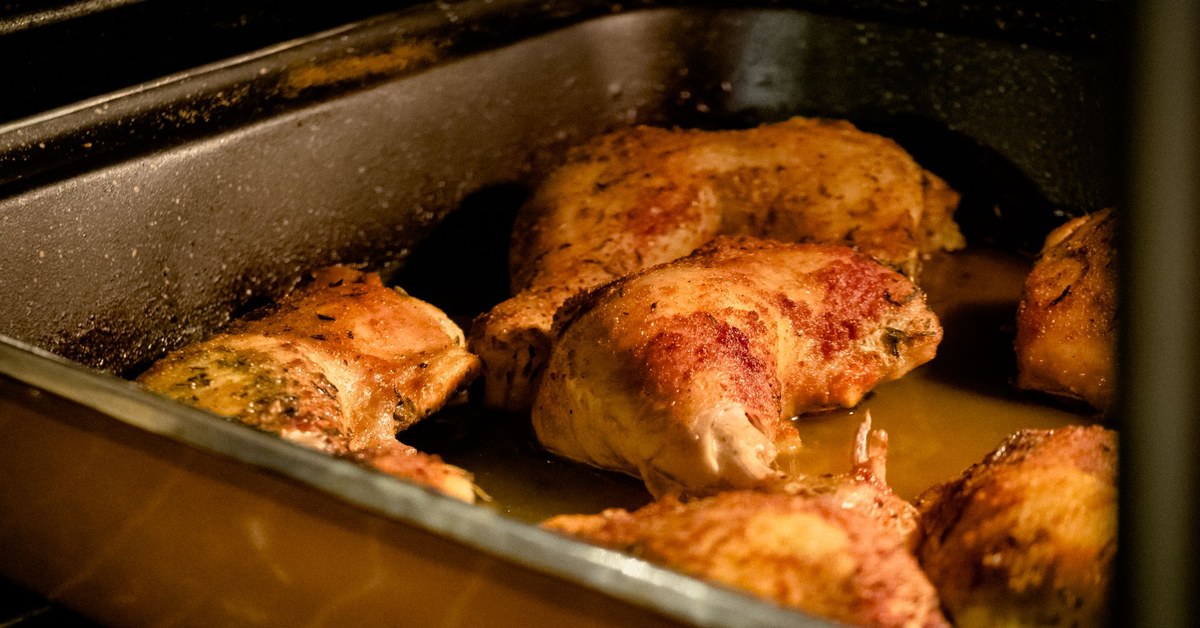
- Bone-in skin starts pale and puffy. As the fat renders, it flattens, tightens and turns golden, then deep reddish-brown from the paprika. Deep color all over usually means the meat is ready or close.
- The juices bubbling around the thighs turn from cloudy to clear.
- Boneless thighs shrink a little and turn opaque all the way through, with browned edges.
Sound
- Through the oven door, you'll hear the fat on the pan go from quiet to a steady crackle. Loud, constant popping means the skin is crisping well.
Smell
- Roasting garlic and smoked paprika come through about two thirds of the way in. A richer, almost nutty roasted chicken smell means the skin is crisping.
Touch
- Press the meat with tongs. Raw thighs feel soft and wobbly. Done thighs feel firm but still a little plump, and a bone-in thigh should feel loose around the bone.
- Tug the bone gently. When it starts to wiggle free of the meat, you're in the tender zone.
Temperature
USDA's safe temperature for all chicken is 165°F (74°C). Thighs are still pleasantly juicy well past that, so 175–185°F (79–85°C) is the sweet spot for texture. Measure the thickest thigh and avoid touching bone. Reheat leftovers to 165°F as well.
If you'd rather not keep opening the oven, Pan can watch the skin color and let you know when it's time to check the temperature.
Tips for crispy, juicy baked thighs
- Dry means crisp. For the crispiest skin, salt the thighs and leave them uncovered in the fridge for a few hours or overnight.
- Use a rack for bone-in. Air under the thighs keeps the bottoms from sitting in fat.
- Add baking powder. A ½ teaspoon of baking powder (not soda) mixed with the salt gives the skin an even crunchier, blistered finish.
- Don't fear the higher temp. Thighs are hard to overcook. A few extra minutes makes them more tender, not drier.
- Make it a sheet pan dinner. Add 1-inch chunks of potato, carrot or onion around boneless thighs, or under bone-in thighs if you skip the rack.
- Glaze at the end. Brush on honey garlic, barbecue or teriyaki sauce in the last 5 minutes so the sugar caramelizes without going too dark.
What to serve with baked chicken thighs
Thighs pair well with anything that can soak up their juices: rice, mashed potatoes, crusty bread or couscous. Roasted broccoli, green beans or a crisp cabbage slaw add some freshness, and our guide on how to roast vegetables runs at the same 425°F, so a second tray can share the oven.
Cooking white meat too? Our guide on how to cook chicken breast in the oven uses the same 425°F oven, so you can bake both on one pan and pull the breasts first. Or go all in with a whole roast chicken on the weekend. The doneness temperature chart keeps every number in one place.
Pan watches it for you
Pan tells you when the thighs are ready
Pan watches the skin render and color and listens to the fat on the pan. It speaks up when the skin has gone crisp and deep golden, which is your moment to check that the thickest thigh is in the 175°F zone.
- Pale, puffy skin flattening and turning light gold: fat is rendering
- Skin tight, crackly and deep golden: start checking temperature
- Juices bubbling clear around the thighs: nearly there
- Thickest thigh at 175–185°F (79–85°C): out of the oven, rest 5 minutes
Pan AI is on iPhone • Android.
Common questions
How long do you bake chicken thighs at 425°F?
Bone-in, skin-on thighs take about 35–45 minutes. Boneless, skinless thighs take 18–25 minutes. Check the thickest thigh with a thermometer, away from the bone.
How long do you bake chicken thighs at 400°F?
Bone-in thighs take about 40–50 minutes at 400°F (200°C), and boneless thighs about 20–28 minutes. The skin won't get quite as crisp as at 425°F.
What temperature should chicken thighs be cooked to?
USDA says chicken is safe at 165°F (74°C). Thighs have more connective tissue than breasts, so most cooks take them to 175–185°F (79–85°C), where the meat turns tender and pulls easily from the bone.
Should I bake chicken thighs skin side up or down?
Skin side up the whole time. The skin renders and crisps in the dry heat while the fat bastes the meat underneath. There's no need to flip.
Is bone-in or boneless better for baking?
Bone-in, skin-on thighs are juicier and have crisp skin, but take twice as long. Boneless thighs are quick, easy to slice and great for weeknights, bowls and tacos.
Can I bake chicken thighs from frozen?
Yes, at 400°F (200°C) for about 50% longer than the times above. The skin won't crisp as well, and seasoning sticks better once they've thawed a bit, so thawing in the fridge overnight gives better results.
How long do baked chicken thighs last in the fridge?
Refrigerate them within 2 hours and eat them within 3 to 4 days. Reheat to 165°F (74°C), ideally in a 375°F (190°C) oven for 10 to 15 minutes so the skin crisps back up.
Why is the skin on my baked chicken thighs not crispy?
Usually the skin was damp or the thighs were crowded and steamed. Pat them very dry, leave space between pieces, and slide the pan under the broiler for 1 to 2 minutes at the end if you want more crunch.
Sources
- USDA FSIS: Safe Minimum Internal Temperature Chart
- America's Test Kitchen: The Best Internal Temp for Chicken Thighs and Drumsticks
- Well Plated: Baked Chicken Thighs
Reviewed against USDA FSIS guidance. How we choose sources and fix mistakes: editorial policy.
Keep cooking
- Meat & poultryPan Fried Chicken ThighsPan fry chicken thighs skin side down over medium until golden, flip, and cook to 175°F. Times for bone-in, boneless and skinless thighs, plus doneness cues.
- Meat & poultryHow to Cook Chicken DrumsticksBake chicken drumsticks at 425°F for 35–45 minutes, or pan-sear then cover for 25–30, until 175–185°F inside. Safe at 165°F; juiciest a bit higher.
- Meat & poultryHow to Cook Chicken Breast in the OvenBake chicken breast at 400–425°F for 18–25 minutes, until the thickest part reads 165°F. Pound it even, season well and rest 5 minutes before slicing.
- Meat & poultryHow to Roast a ChickenRoast a whole chicken at 425°F for about 20 minutes per pound, until the breast and thigh read 165°F. Rest 15 minutes, then make gravy from the pan.
- Meat & poultryHow to Cook Duck BreastScore duck breast skin, start it skin-side down in a cold pan and render 10–15 minutes over medium-low, then flip for 1–3 minutes. USDA temp and doneness cues.
- Meat & poultryHow to Cook Ground ChickenBrown ground chicken in an oiled skillet over medium-high for 8–10 minutes, breaking it up, until no pink remains and it reaches 165°F (74°C). Tips and times.
- Free toolInternal temperature chartSafe and perfect internal temperatures for steak, chicken, salmon, pork and more, plus a printable PDF.
- Free toolThawing time calculatorHow long to thaw a turkey, chicken, ground beef or fish safely, in the fridge or cold water.