Pan Fried Chicken Thighs
Quick answer
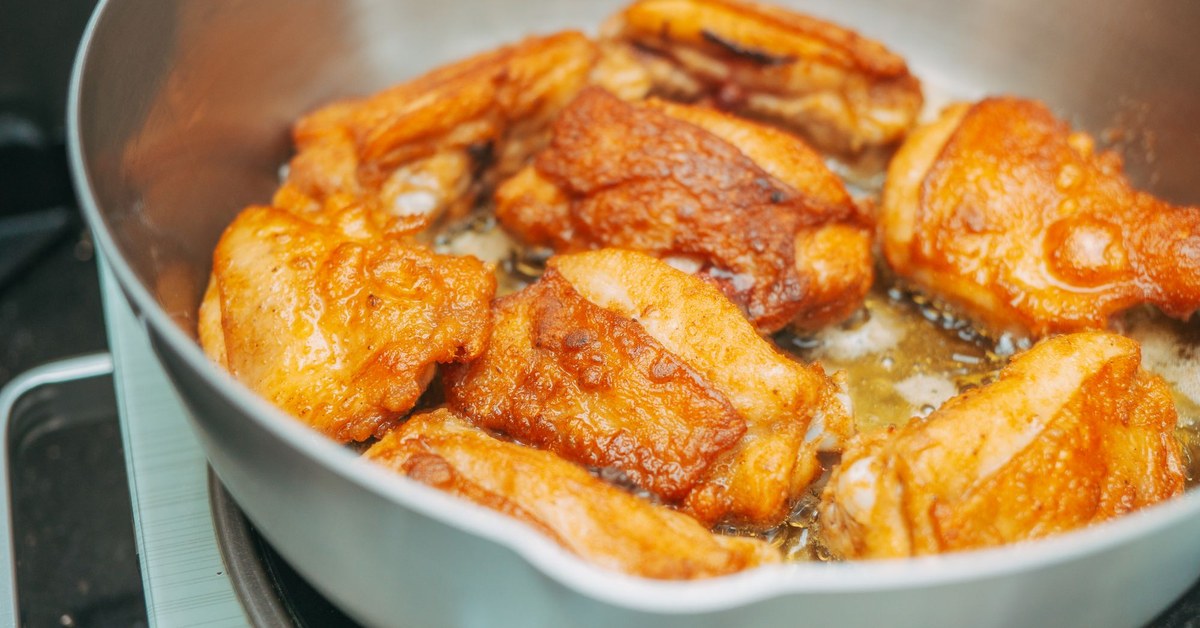
Pat the thighs dry, salt them, and lay them skin side down in a cold or medium-hot skillet with a teaspoon of oil. Cook over medium, untouched, until the skin is deep golden and releases, about 12 to 15 minutes for bone-in. Flip and cook until the thickest part reads 175°F, another 8 to 12 minutes. Boneless skinless thighs take about 5 to 6 minutes per side.
Handy for this: Internal temperature chart · What can I make?
At a glance
- Pat the thighs very dry and season both sides with salt and pepper.
- Place them skin side down in a 12-inch skillet with 1 teaspoon of oil.
- Cook over medium without moving them until the skin is deep golden and releases.
- Pour off excess fat if it reaches more than 1/4 inch.
- Flip and cook until the thickest part reads 175°F.
- Rest 5 minutes skin side up, then serve.
The quick method
Crispy pan fried chicken thighs take three things: dry skin, medium heat, and patience. Lay them skin side down, leave them alone until the skin is deep golden and lets go of the pan, then flip and cook to 175°F.
Thighs are the most forgiving cut of chicken. Their extra fat and connective tissue keep them juicy well past the safe minimum, so they are the perfect cut to learn with.
Pan fried chicken thigh cooking times
Times are for a 12-inch skillet over medium heat with thighs from the fridge. Use them as a guide and let your thermometer decide.
| Thigh type | Typical size | First side | Second side | Target temp |
|---|---|---|---|---|
| Bone-in, skin-on | 6 to 8 oz | 12 to 15 min, skin down | 8 to 12 min | 175°F to 185°F |
| Boneless, skin-on | 4 to 6 oz | 10 to 12 min, skin down | 4 to 6 min | 175°F |
| Boneless, skinless | 3 to 5 oz | 5 to 6 min | 5 to 6 min | 175°F |
| Boneless, skinless, pounded thin | 1/2 inch thick | 3 to 4 min | 3 to 4 min | 175°F |
The USDA safe minimum for all chicken is 165°F (74°C). Thighs reach their best texture higher, around 175°F to 195°F, as collagen softens into gelatin. Check every chicken cut on our doneness temperatures chart.
How to pan fry chicken thighs, step by step
1. Dry and season
Pat the thighs very dry with paper towels, especially the skin. Season both sides with about 1/2 teaspoon of kosher salt per thigh and some black pepper. For even crispier skin, salt them a few hours ahead and leave them uncovered in the fridge.
2. Skin side down
Put the thighs skin side down in a 12-inch cast iron or stainless skillet with 1 teaspoon of oil. You can start in a cold pan or one that has preheated over medium for 2 minutes. Either way, keep the heat at medium. Press each thigh flat for a few seconds with a spatula so the whole skin touches the pan.
3. Leave them alone
This is the important part. Let them cook, untouched, while the fat renders and the skin turns golden. Bone-in thighs need 12 to 15 minutes; boneless skin-on, about 10 to 12. If more than 1/4 inch of fat collects, carefully spoon some out.
4. Flip and finish
When the skin is deep golden and releases on its own, flip. Cook until an instant-read thermometer in the thickest part, not touching bone, reads 175°F. For very thick bone-in thighs that are golden outside but still climbing, lower the heat to medium-low, or move the skillet to a 400°F oven for 5 to 10 minutes.
5. Rest and serve
Rest 5 minutes skin side up. Use the rendered fat in the pan to cook a quick side. Cooking vegetables on the stove in chicken fat, like green beans or potatoes, is a little weeknight luxury.
Pan fried chicken without skin: boneless skinless thighs
Boneless skinless thighs are one of the quickest proteins you can make. Heat 1 tablespoon of oil over medium-high until it shimmers. Lay the thighs flat, smooth side down, and cook 5 to 6 minutes until golden and releasing. Flip and cook 5 to 6 minutes more, to 175°F.
Because there is no skin to protect them, a quick toss in a spice mix (paprika, garlic powder, salt and a pinch of brown sugar) gives them a beautiful color. For a thinner, faster cutlet, pound them to 1/2 inch.
“The skin is deep golden and the sizzle has gone quiet and crackly. Give it a nudge: it's released. Flip now.”
How to tell when chicken thighs are done
Chicken thighs give you lots of clear signals. Here is what to watch, listen and feel for.
Internal temperature
- Insert the thermometer into the thickest part of the thigh, at least 1/4 inch from the bone.
- 165°F is safe; 175°F is tender. Thighs are forgiving, and up to about 195°F they keep getting more succulent.
- Check more than one thigh, since sizes vary in a package.
Sight
- Skin goes from pale to golden to deep amber and looks tight and crisp, with little bubbles across the surface.
- Juices run clear when you press the meat near the bone, with no pink tinge.
- The meat pulls back slightly from the end of the bone on bone-in thighs.
- A little pink color near the bone in a thigh that has reached temperature is normal; it comes from bone pigment, not undercooking.
Sound
- At first you hear a wet, bubbly sizzle as fat renders. When the skin is crisp, it turns into a lighter, drier crackle. That change in sound is your cue to check for release.
Smell
- Roasted, savory chicken fat with a nutty edge means the skin is golden and well rendered.
Touch
- The skin releases on its own. Nudge a thigh with a spatula. If it slides, flip it. If it holds on, give it another 2 minutes.
- Cooked thigh meat feels firm but still gives a little when pressed, and it springs back.
The moment the skin lets go is exactly what Pan listens and watches for, so it can tell you when to flip.
Tips for perfect pan fried chicken thighs
- Dry skin is crisp skin. Any surface moisture turns to steam before it browns.
- Medium heat, not high. High heat browns the skin before the fat underneath has rendered. Medium gives you thin, glassy skin.
- Do not crowd. Four to six thighs fit a 12-inch skillet. Leave a little space between each one.
- Weigh them down for extra-flat, even browning: set a smaller heavy pan on top for the first 5 minutes.
- Make a two-minute pan sauce. Pour off most of the fat, add a minced garlic clove, 1/2 cup of chicken broth and a squeeze of lemon, and scrape up the browned bits. Pour it around the chicken, not over the skin.
- Thighs vs breast: thighs stay juicy at higher temperatures, which makes them easier than chicken breast on the stove. If you are just starting out, cook thighs first.
Bone-in or boneless: which should you buy?
Bone-in, skin-on thighs give the crispiest skin and the richest flavor, and they are usually the least expensive. They take about 25 minutes, so they suit a relaxed weeknight. Boneless skinless thighs are the speed option: dinner in about 12 minutes, and they slice neatly for bowls, wraps and stir-fries.
Boneless skin-on thighs are the best of both, but they are harder to find. You can make your own by sliding a small knife along the bone and lifting it out, which also helps the thigh lie flat for even browning.
Three easy flavor variations
- Lemon garlic: after flipping, add 3 smashed garlic cloves to the fat. Finish with lemon juice and chopped parsley.
- Smoky paprika: rub 1 teaspoon each of smoked paprika and garlic powder into the meat side before cooking.
- Honey soy: once the thighs are done, pour off the fat and simmer 2 tablespoons each of soy sauce and honey for 1 minute. Brush on the meat side only.
Easy ways to serve them
Serve with rice, a crunchy salad, or skillet potatoes. Shred leftovers for tacos, fried rice or a quick soup, and if you are wondering what else to make with them, our what can I make with my ingredients tool has ideas. For the bigger picture on reading doneness, see how to tell when food is done, or start with our cooking for beginners guide.
Why thighs taste better past 165°F: see chicken thigh internal temp.
Common questions
How long does it take to pan fry chicken thighs?
Bone-in, skin-on thighs take about 20 to 27 minutes in total over medium heat: 12 to 15 minutes skin side down, then 8 to 12 minutes after flipping. Boneless skin-on thighs take about 14 to 18 minutes, and boneless skinless thighs about 10 to 12.
What temperature should chicken thighs be cooked to?
The USDA safe minimum for all chicken is 165°F. Thighs are more tender at 175°F or higher because their connective tissue keeps softening, and America's Test Kitchen finds them even better at 190 to 195°F.
Should I cover chicken thighs when pan frying?
Keep the pan uncovered while the skin crisps. If very thick bone-in thighs are golden outside but not yet at temperature, you can turn the heat to medium-low and cover for a few minutes after flipping, or finish them in a 400°F oven.
Why put chicken thighs in a cold pan?
Starting skin side down in a cold pan lets the fat under the skin render slowly as the pan heats, so the skin turns thin, crisp and evenly golden. A medium-hot pan also works; just keep the heat at medium.
How do I keep the skin crispy after cooking?
Rest the thighs skin side up on a rack or plate and spoon any sauce around them, not over them. Steam from a lid or sauce softens skin quickly.
How long do you pan fry boneless skinless chicken thighs?
About 5 to 6 minutes per side in shimmering oil over medium-high, until golden and 175°F in the thickest part.
Why is my chicken thigh pink near the bone?
A little pink near the bone in a thigh that has reached temperature is normal. It comes from bone pigment, not undercooking. Check with a thermometer: 165°F is safe.
How do you finish thick chicken thighs that are golden but not done?
Lower the heat to medium-low, or move the skillet to a 400°F oven for 5 to 10 minutes, until the thickest part reads 175°F.
Sources
- USDA FSIS: Safe Minimum Internal Temperature Chart
- America's Test Kitchen: The Best Internal Temperature for Chicken Thighs and Drumsticks
- ThermoWorks: Skillet Chicken Thighs
Reviewed against USDA FSIS guidance. How we choose sources and fix mistakes: editorial policy.
Keep cooking
- Meat & poultryHow to Cook Chicken Breast on the StoveCook a ¾-inch chicken breast on the stove 5–6 minutes per side over medium-high, then medium, until it reads 165°F. Times by thickness and doneness cues.
- Start hereHow to Tell When Food Is DoneHow to tell when chicken, steak, fish, chorizo, eggs, pasta, rice, cheesecake and pecan pie are done, with safe temperatures and simple sight and touch cues.
- Start hereCooking for Beginners: Everything You Need to StartLearn how to cook as a beginner: the 8 tools you need, 10 core techniques, safe temperatures, and a 7-day plan that builds real skills one meal at a time.
- Vegetables & fruitHow to Cook Vegetables on the StoveCook asparagus, carrots, potatoes, sweet potatoes, green beans and broccoli on the stove with one simple method, clear times, and easy cues for tender-crisp.
- Meat & poultryHow to Cook Duck BreastScore duck breast skin, start it skin-side down in a cold pan and render 10–15 minutes over medium-low, then flip for 1–3 minutes. USDA temp and doneness cues.
- Meat & poultryHow to Cook Ground ChickenBrown ground chicken in an oiled skillet over medium-high for 8–10 minutes, breaking it up, until no pink remains and it reaches 165°F (74°C). Tips and times.
- Free toolInternal temperature chartSafe and perfect internal temperatures for steak, chicken, salmon, pork and more, plus a printable PDF.
- Free toolWhat can I make?Type what is in your fridge and get simple recipes you can cook right now.