How to Make Hoppin' John
Quick answer
Hoppin' John is black-eyed peas and rice, a Southern New Year's Day tradition. Brown diced bacon, onion, celery and pepper in a Dutch oven, add 1 lb (450 g) rinsed dried black-eyed peas, a smoked ham hock and 6 cups (1.4 L) water, and simmer 50–70 minutes until the peas are creamy inside. Serve over 3 cups cooked rice with collard greens and cornbread. Canned peas need just 15 minutes.
Handy for this: Rice to water ratio calculator · Boiling times chart
At a glance
- Rinse and pick over 1 lb (450 g) dried black-eyed peas.
- Cook 4 oz (115 g) diced bacon in a Dutch oven over medium for 5–6 minutes, until browned and the fat has melted out.
- Add the onion, celery and green pepper and cook 5–6 minutes, until soft, then stir in the garlic for 30 seconds.
- Add the peas, smoked ham hock, bay leaf, thyme, red pepper flakes and 6 cups water or stock, and bring to a boil.
- Lower the heat to a gentle simmer, partly cover, and cook 50–70 minutes, stirring now and then, until the peas are creamy inside.
- Pull the meat from the hock, chop it, return it to the pot and season with salt and pepper.
- Serve the peas over hot cooked rice with scallions, hot sauce, collard greens and cornbread.
The short version
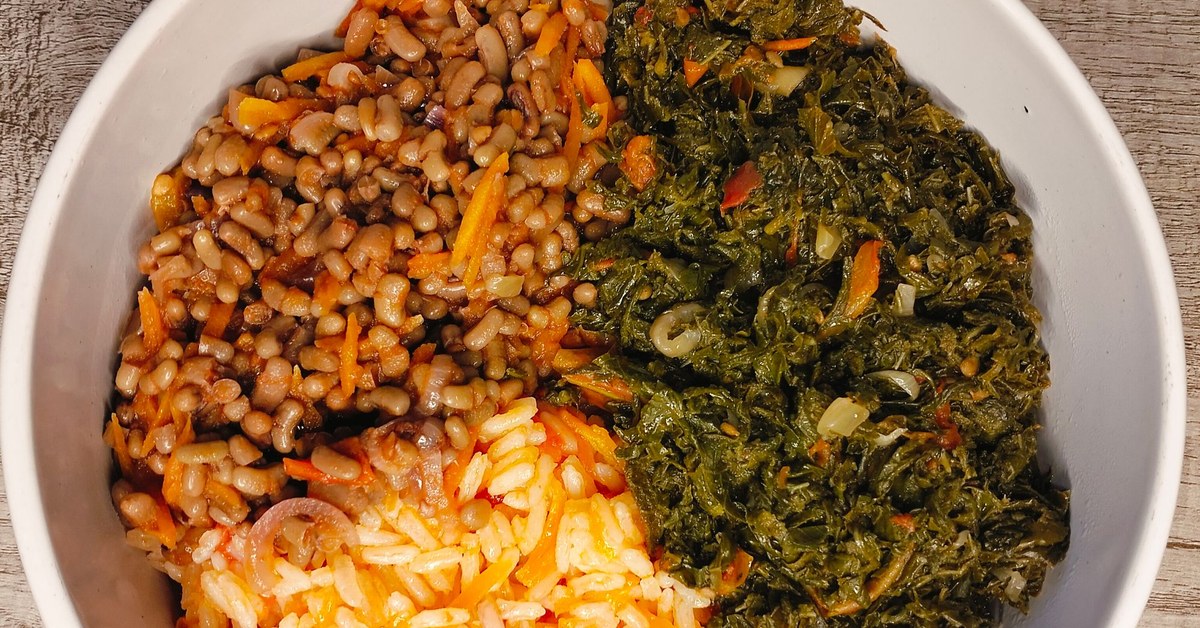
Hoppin' John is a pot of black-eyed peas simmered with smoked pork, onion, celery and pepper, served over rice. In the Southern US it's eaten on New Year's Day for luck in the year ahead, usually with a side of collard greens and a skillet of cornbread.
It's easy: no soaking needed for dried peas, about an hour of gentle simmering, and very little stirring. With canned peas, you can have it on the table in about 30 minutes.
Why Hoppin' John on New Year's Day?
Black-eyed peas came to the Americas from West Africa, and Hoppin' John took shape in the South Carolina Lowcountry, where enslaved Africans and their Gullah Geechee descendants built so much of the region's rice-and-peas cooking. Early versions used local field peas, and many Lowcountry cooks still do.
The New Year's custom is a well-loved piece of Southern tradition: the peas stand for coins, the greens for paper money, and the golden cornbread for gold. Some families leave a few peas on the plate, others hide a coin in the pot. Nobody agrees on where the name came from, and that's part of the fun. Looking for more holiday cooking? Our holiday cooking hub gathers everything from Christmas roasts to New Year's dishes.
What you need
- Peas. 1 lb (450 g) dried black-eyed peas, or three 15-oz (425 g) cans.
- Smoked meat. 1 smoked ham hock (about 1 lb / 450 g) or a smoked turkey wing or leg, plus 4 oz (115 g) bacon.
- Aromatics. 1 onion, 2 celery stalks and 1 green bell pepper, diced, plus 3 garlic cloves.
- Seasoning. 1 bay leaf, 1 teaspoon dried thyme, ¼–½ teaspoon red pepper flakes, salt and black pepper.
- Liquid. 6 cups (1.4 L) water or low-sodium chicken stock.
- Rice. 1 cup (about 185 g) long-grain white rice, which makes about 3 cups cooked.
- A pot. A 5–6-quart Dutch oven or other heavy pot.
How to make Hoppin' John
- Prep the peas. Spread the dried peas on a tray, pick out any small stones or shriveled peas, and rinse well in a colander.
- Brown the bacon. Cook the bacon in the Dutch oven over medium for 5–6 minutes, until browned and the fat has rendered.
- Soften the vegetables. Add the onion, celery and pepper and cook 5–6 minutes, stirring, until soft. Stir in the garlic for 30 seconds, just until fragrant.
- Add everything else. Add the peas, ham hock, bay leaf, thyme, pepper flakes and 6 cups water or stock. Bring to a boil.
- Simmer gently. Lower the heat so the surface barely bubbles, partly cover, and cook 50–70 minutes, stirring now and then. Add a splash of water if the peas peek above the liquid.
- Finish. Lift out the hock, pull the meat off the bone, chop it and stir it back in. Taste, then season with salt and pepper; the hock is salty, so season at the end.
- Serve. Spoon over hot rice and top with scallions and a few dashes of hot sauce.
The simmer is the only part that needs attention. A hard boil splits the peas open and turns them to mush; a calm simmer keeps them whole and creamy. This is the kind of thing Pan watches for on the stove, speaking up when the bubbles get too lively.
Dried vs canned black-eyed peas
| Peas | Prep | Simmer time | Liquid |
|---|---|---|---|
| Dried, unsoaked | Rinse and pick over | 50–70 min | 6 cups per 1 lb |
| Dried, soaked overnight | Soak 6–8 hours, drain | 30–45 min | 5 cups per 1 lb |
| Fresh or frozen | Rinse; no thawing needed | 25–35 min | 4 cups per 1 lb |
| Canned (three 15-oz cans) | Drain and rinse | 15–20 min | 1½ cups stock |
Dried peas give the best texture and a rich, smoky broth (Southerners call it pot likker). With canned peas, swap the ham hock for diced ham or a pre-smoked turkey wing, since there isn't enough time to pull flavor from a hock. For more bean timings, see our boiling times chart.
Ham hock or smoked turkey?
A smoked ham hock is the classic, giving the peas a deep, smoky flavor and a silky broth. Smoked turkey wings or legs are a popular swap for families who don't eat pork, with a similar smokiness. For a meat-free pot, skip the bacon, cook the vegetables in olive oil, and add 1 teaspoon smoked paprika and a vegetable stock.
Most store-bought smoked hocks and turkey wings are already cooked, so they're there for flavor. If you use raw bacon, cook it through as in step 2.
How to cook the rice
In many Lowcountry kitchens, the rice is cooked right in the pea broth. The easiest way at home is to cook it separately so each part has the perfect texture. Bring 1 cup long-grain rice and 1½–1¾ cups water to a boil, cover, and cook on low for 15–18 minutes, then rest 10 minutes. Our guide on how to cook rice on the stove has every detail, and the rice to water ratio calculator scales it up for a crowd.
“The bubbles are rolling too hard. Turn it down to a gentle simmer so the peas stay whole.”
How to tell when Hoppin' John is done
Sight
- The peas look plump and their skins are intact but slightly wrinkled. The broth turns cloudy and slightly thick.
- The ham hock meat pulls away from the bone easily.
Sound
- A soft, steady blip-blip of bubbles is the sound you want. A loud, rolling boil means it's time to lower the heat.
Smell
- The kitchen smells smoky and savory, with thyme and sweet onion, once the peas are about halfway.
Touch and taste
- Squeeze a pea between your fingers or against the spoon: it should mash easily and be creamy all the way through, with no chalky center. Taste three or four, since they don't always cook at the same rate.
Temperature
Peas and broth are simmering hot when done. When reheating leftovers, bring them to 165°F (74°C), or back to a simmer.
What to serve with Hoppin' John
- Collard greens. Simmer chopped collards with a little smoked meat, onion and a splash of vinegar for 45–60 minutes, until silky. Kale works too, and cooks faster; see how to cook kale.
- Cornbread. Bake it in a hot cast iron skillet for crisp golden edges.
- Hot sauce and vinegar. A splash of pepper vinegar or hot sauce brightens the smoky peas.
Storing leftovers
Refrigerate leftovers within 2 hours, in shallow containers, and eat within 3–4 days. Store the peas and rice separately if you can. The peas freeze well for 2–3 months; reheat them in a pot with a splash of water until they reach 165°F (74°C). Leftover Hoppin' John the next day is sometimes called Skippin' Jenny, and many say it tastes even better.
For the traditional New Year’s Day plate, add collard greens, or cook the black-eyed peas on their own as a side. Hosting the night before? The New Year’s Eve party food planner works out appetizers per person, drinks and ice for your guests.
Pan watches it for you
Pan keeps the pot at a gentle simmer
Hoppin' John is mostly hands-off, but the peas like a calm simmer. Pan watches the pot on the stove and speaks up when the heat needs adjusting.
- Bacon browned and fat shimmering: add the vegetables
- Onion soft and translucent: add peas, hock and water
- Big rolling bubbles: lower the heat to a gentle simmer
- Liquid dropping below the peas: add a splash of water
Pan AI is on iPhone • Android.
Common questions
Why do people eat Hoppin' John on New Year's Day?
In the Southern US, black-eyed peas on New Year's Day are a tradition for good luck in the year ahead. The peas are said to stand for coins and the greens served alongside for paper money, with cornbread for gold. The dish has roots in West African and Gullah Geechee cooking in the South Carolina Lowcountry.
Do you have to soak black-eyed peas?
No. Black-eyed peas are small and cook in about 50–70 minutes without soaking. Soaking them overnight shortens the time to about 30–45 minutes, and some cooks find it gives a more even texture.
Can I make Hoppin' John with canned black-eyed peas?
Yes. Use three 15-oz (425 g) cans, drained and rinsed. Cook the bacon and vegetables, add the peas and about 1½ cups (360 ml) stock with a smoked turkey wing or diced ham, and simmer 15–20 minutes.
What is the difference between Hoppin' John and black-eyed peas?
Black-eyed peas are the bean itself. Hoppin' John is the dish: peas cooked with smoked pork and aromatics and served with or cooked into rice.
What do you serve with Hoppin' John?
Traditionally collard greens and cornbread. Hot sauce, chopped scallions and a little vinegar on the side are classic too.
How long does Hoppin' John keep?
Refrigerate it within 2 hours and eat within 3–4 days. Reheat to 165°F (74°C). The peas freeze well for 2–3 months; rice is best cooked fresh.
Sources
- History.com: Hoppin' John, a New Year's Tradition
- Gullah/Geechee Nation: Hoppin' John and Greens
- Smithsonian Magazine: Hoppin' John and Heirloom Beans
- USDA FSIS: Leftovers and Food Safety
Reviewed against USDA FSIS guidance. How we choose sources and fix mistakes: editorial policy.
Keep cooking
- Rice, pasta, grains & beansHow to Cook Rice on the StoveCook white rice in a pot with 1½ cups water per cup of long-grain rice. Boil, cover, simmer on low 15 to 18 minutes, then rest 10. Ratio chart and ready cues.
- Vegetables & fruitHow to Cook KaleSauté chopped kale in olive oil over medium heat for 5–7 minutes with a splash of water until bright green and tender. Prep, times and doneness cues.
- Rice, pasta, grains & beansHow to Cook Black BeansSimmer soaked black beans for 1–1½ hours, or unsoaked for 1½–2 hours, until creamy inside. Canned black beans just need 5–10 minutes with aromatics.
- Soups & stewsHow to Make Chicken StockMake chicken stock by simmering bones and vegetables gently for 3–4 hours, never at a hard boil. Skim, strain, cool fast, then fridge 3–4 days or freeze.
- Thanksgiving & holidaysHow to Make Beef WellingtonMake beef Wellington by wrapping seared tenderloin in duxelles, prosciutto and puff pastry, then bake at 425°F for 25–35 minutes until it reads 120–125°F.
- Thanksgiving & holidaysBoxing Day LeftoversTurn Boxing Day leftovers into bubble and squeak, turkey sandwiches, pie, hash and soup. Plus safety: chill in 2 hours, eat in 3–4 days, reheat to 165°F.
- Free toolRice to water ratio calculatorExact water and cook time for white, jasmine, basmati, brown rice and quinoa on the stove, rice cooker or Instant Pot.
- Free toolBoiling times chartHow long to boil chicken, shrimp, potatoes, corn, broccoli and 30+ more foods.