How to Cook Bacon
Quick answer
For a few strips, lay bacon in a cold skillet, set it over medium heat, and cook 8–12 minutes, turning often, until golden and crisp. For a crowd, bake it on a foil-lined sheet pan at 400°F (205°C) for 15–20 minutes. In an air fryer, cook at 350°F (175°C) for 8–12 minutes. Drain on paper towels; it crisps more as it cools.
Handy for this: Cooking oil smoke points · What can I make?
At a glance
- Lay the bacon strips in a single layer in a cold skillet.
- Set the pan over medium heat and let the fat start to render.
- Turn the strips every 1–2 minutes so they cook evenly.
- Lower the heat a little if the fat starts to smoke.
- Pull the strips when they're golden brown and just shy of your ideal crispness.
- Drain on a paper-towel-lined plate for 1–2 minutes before serving.
The short version
Bacon is one of the most rewarding things to cook, and there are three great ways to do it. On the stove, start the strips in a cold skillet over medium heat and turn them often for 8–12 minutes. In the oven, bake them on a sheet pan at 400°F (205°C) for 15–20 minutes. In the air fryer, cook them at 350°F (175°C) for 8–12 minutes.
Whichever you choose, pull the bacon when it's golden and just short of your perfect crispness, then drain it on paper towels. It firms up as it cools.
Which method should you use?
| Method | Best for | Heat | Regular cut | Thick cut |
|---|---|---|---|---|
| Stovetop skillet | 2–6 strips, cooking eggs in the fat after | Start cold, then medium | 8–12 min | 12–15 min |
| Oven, sheet pan | A full package, hands-off | 400°F (205°C) | 15–20 min | 20–25 min |
| Oven, on a rack | Extra-crisp, flat strips | 400°F (205°C) | 18–22 min | 22–28 min |
| Air fryer | 4–6 strips, less splatter | 350°F (175°C) | 8–12 min | 12–15 min |
Times vary with your stove, oven, air fryer and the brand of bacon, so treat them as a guide and watch the color.
No pan to wash? See microwave bacon: about a minute per slice between paper towels.
How to cook bacon on the stove
The skillet gives you the most control and a pan of flavorful fat to cook with afterward.
- Start cold. Lay the strips in a single layer in a cold 10- or 12-inch skillet. Cast iron and stainless steel both work well. It's fine if they touch; they'll shrink as they cook.
- Turn on medium heat. As the pan warms, the fat slowly renders, so the strips cook in their own fat and stay flatter.
- Turn often. Once they start sizzling, flip the strips every 1–2 minutes with tongs. Frequent turning gives you even color from end to end.
- Adjust the heat. If the fat starts to smoke, lower the heat a notch. A steady, lively sizzle is what you want.
- Pull and drain. When the strips are golden brown, move them to a plate lined with paper towels.
For a second batch, pour off most of the fat into a heatproof jar first, leaving about a tablespoon. Then use what's left for the eggs; our guide on how to fry an egg pairs perfectly with it.
How to cook bacon in the oven
Oven bacon is the easiest way to feed a crowd. Every strip cooks at once, there's no flipping, and your stovetop stays free.
- Heat the oven to 400°F (205°C). America's Test Kitchen found that temperature renders the fat and crisps the strips at the same pace.
- Line a rimmed sheet pan with foil or parchment for easy cleanup. Use a pan with sides so the fat stays put.
- Lay the strips flat in a single layer. They can touch but shouldn't overlap.
- Bake 15–20 minutes for regular-cut bacon, rotating the pan halfway through. Thick-cut takes 20–25 minutes.
- Drain. Move the strips to paper towels with tongs.
For extra-crisp, flat strips, set a wire rack in the sheet pan and lay the bacon on top. The fat drips away, so the strips crisp all over, and it takes a few minutes longer. Starting bacon in a cold oven also works; just expect it to need a few more minutes.
How to cook bacon in the air fryer
Air fry bacon when you want just a few strips without stovetop splatter.
- Lay 4–6 strips in a single layer in the basket. Cut them in half if they're too long to lie flat.
- Cook at 350°F (175°C) for 8–12 minutes, flipping halfway. Thick-cut needs 12–15 minutes.
- Check a couple of minutes early, since some models run hot.
- Drain on paper towels, and carefully pour the fat out of the drawer once it cools a little.
A moderate temperature like 350°F keeps the rendered fat from smoking in the drawer. A slice of bread or a splash of water in the bottom drawer (not the basket) can help catch drips, depending on your model's instructions.
“The fat has gone see-through and the edges are golden. Give it one more minute, then onto the paper towels.”
How to tell when bacon is done
Bacon shows you exactly where it is, if you know what to watch for. It also keeps crisping for a minute after it leaves the heat, so pull it a touch early.
Sight
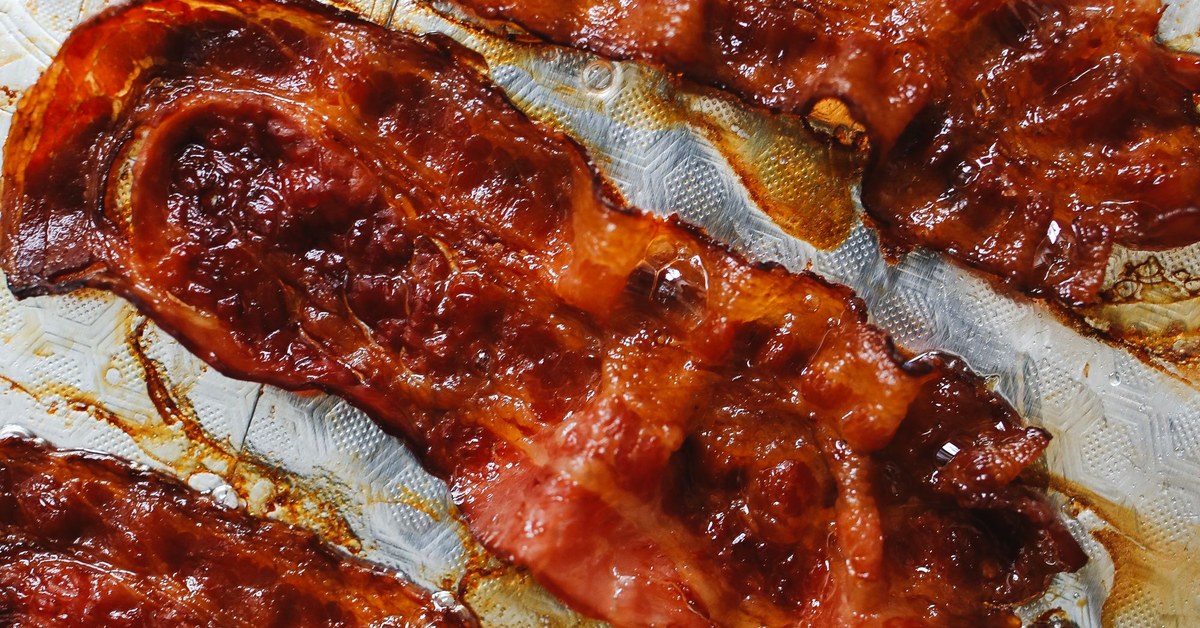
- The white fat turns translucent, then golden and crisp.
- The meat goes from pink to a rich reddish-brown. Golden brown is chewy-crisp; deep brown is shatter-crisp.
- The bubbles in the fat around the strips get smaller as the bacon nears done.
Sound
- Early on, you'll hear loud, popping sizzles as water cooks out of the bacon.
- As it finishes, the sound calms to a quieter, steady crackle. That change is your sign to start checking.
Smell
- The aroma goes from salty and meaty to deeply smoky and toasty right as the strips turn crisp. When it starts smelling sharp or acrid, pull the bacon and lower the heat.
Touch
- Lift a strip with tongs. If it's floppy, give it more time; if it holds its shape with a slight bend, it'll be crisp once it cools.
Internal temperature
Bacon strips are too thin to probe reliably, so color, sound and texture are your guide: cook it until evenly golden and crisp. Any other pork you cook alongside it, like sausage patties, should reach the temperatures on our doneness temperatures chart.
This is exactly the moment Pan watches for: it notices the fat going translucent and the sizzle quieting, and speaks up when the strips are ready to come out.
Tips for perfect bacon
- Thick or thin? Regular-cut bacon crisps quickly and evenly. Thick-cut is meatier and chewier; give it a lower heat and more time.
- Save the fat. Strain warm bacon fat through a fine sieve or coffee filter into a jar and refrigerate it. It's delicious for frying eggs, roasting potatoes or cooking greens. Bacon fat smokes at a lower temperature than refined oils, so check our smoke points of oils chart before using it for high-heat searing.
- Cast iron loves bacon. The fat seasons the pan as it cooks. Our guide on how to clean a cast iron frying pan keeps it in top shape.
- Cook ahead. Like other cooked leftovers, cooked bacon keeps 3–4 days in the fridge. Warm it in a skillet or a 350°F oven for a few minutes.
What to make with bacon
Crumble it over a baked potato, layer it in a BLT, stir it into a pot of beans, or chop it into a breakfast hash. It's also a lovely salty topping for a bowl of savory oatmeal on the stove with a fried egg. Not sure what to make with what's in your fridge? Try our what can I make tool. You've got this.
Common questions
What is the best way to cook bacon?
It depends on how much you're making. The stovetop is great for a few strips, the oven is the easiest for a whole package, and the air fryer is quick for 4–6 strips with less splatter.
How long do you cook bacon in the oven at 400°F?
Regular-cut bacon usually takes 15–20 minutes at 400°F, and thick-cut 20–25 minutes. America's Test Kitchen found 400°F to be the sweet spot for rendering and crisping. Ovens vary, so start checking at about 12 minutes.
Do you start bacon in a cold or hot pan?
A cold pan is the easier route. Starting cold lets the fat render slowly, so the strips cook more evenly, curl less and spatter less.
How long does bacon take in the air fryer?
About 8–12 minutes at 350°F for regular-cut bacon and 12–15 minutes for thick-cut, flipping halfway. Air fryers vary a lot by model, so check a few minutes early the first time.
How do you know when bacon is done?
Bacon is done when it's evenly golden to deep reddish-brown, the fat has turned from white to translucent and crisp, and the sizzle quiets down. Since strips are too thin to probe, color and texture are your best guide.
What do you do with leftover bacon grease?
Let it cool slightly, strain it into a jar, and refrigerate it for cooking eggs, potatoes or greens. Never pour it down the drain, since it hardens and can clog pipes.
Sources
- America's Test Kitchen: You Should Be Oven-Frying Your Bacon
- USDA FSIS: Leftovers and Food Safety
- Cook's Illustrated: Oven-Fried Bacon
Reviewed against USDA FSIS guidance. How we choose sources and fix mistakes: editorial policy.
Keep cooking
- Eggs & breakfastHow to Fry an EggFry a sunny side up egg over medium-low heat, covered, for 2–3 minutes until the white sets and the yolk stays runny. Times for every fried egg style.
- Start hereHow to Clean a Cast Iron PanClean a cast iron frying pan in 3 steps: wash with warm water and a little soap, dry over low heat, then rub in a thin coat of oil. Plus stuck food and rust.
- Rice, pasta, grains & beansHow to Make Oatmeal on the StoveMake oatmeal on the stove with 2 parts liquid to 1 part rolled oats and a pinch of salt. Simmer about 5 minutes. Ratios and times for quick and steel-cut oats.
- Meat & poultryHow to Cook Ground BeefBrown ground beef in a hot skillet for 7–10 minutes per pound, breaking it up, until no pink remains and it reaches 160°F. Then drain and season.
- Meat & poultryHow to Cook Duck BreastScore duck breast skin, start it skin-side down in a cold pan and render 10–15 minutes over medium-low, then flip for 1–3 minutes. USDA temp and doneness cues.
- Meat & poultryHow to Cook Ground ChickenBrown ground chicken in an oiled skillet over medium-high for 8–10 minutes, breaking it up, until no pink remains and it reaches 165°F (74°C). Tips and times.
- Free toolSmoke point of oils, with the best oil for each jobSmoke points of 20+ oils and fats, and the best oil for searing, frying and cast iron.
- Free toolWhat can I make?Type what is in your fridge and get simple recipes you can cook right now.