How to Cook Pork Chops on the Stove
Quick answer
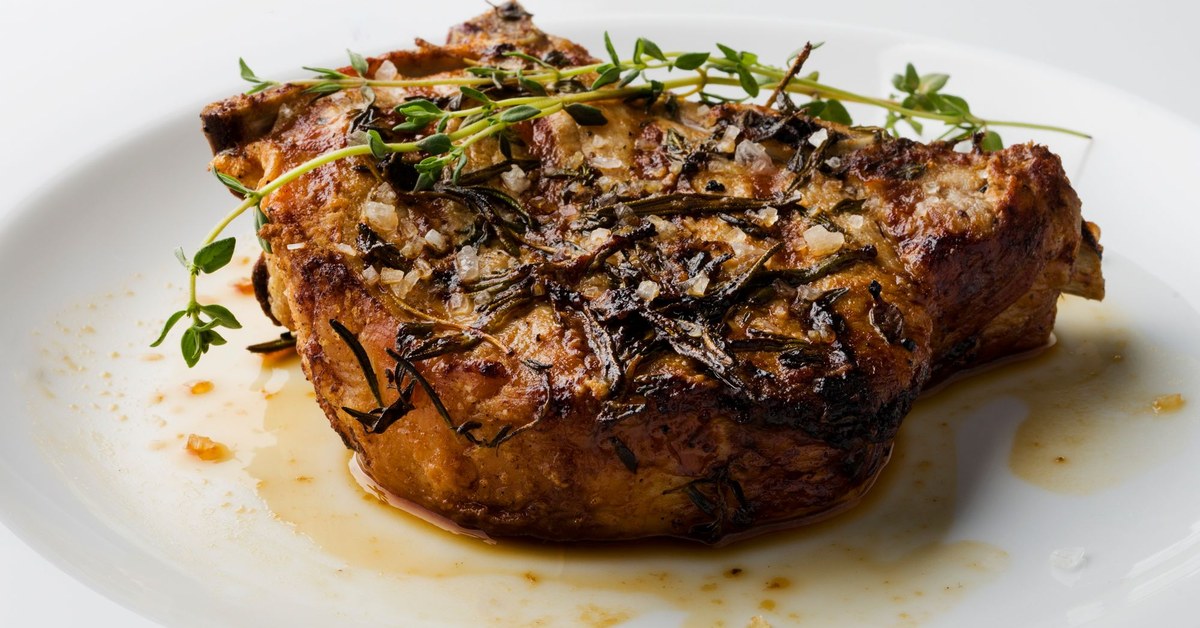
Pat the chops dry, season with salt and pepper, and sear in a hot oiled skillet over medium-high heat. A 1-inch boneless chop takes about 4 to 5 minutes per side; bone-in takes about 5 to 6. Pull them at 140°F in the thickest part, then rest 3 to 5 minutes. They coast up to the USDA's safe 145°F and stay juicy.
Handy for this: Internal temperature chart · Cooking oil smoke points
At a glance
- Take the chops out of the fridge 20 to 30 minutes ahead and pat them very dry.
- Season both sides with kosher salt and pepper.
- Heat 1 tablespoon of high smoke point oil in a heavy skillet over medium-high until it shimmers.
- Lay the chops in and leave them alone until the underside is deep golden, 3 to 5 minutes.
- Flip, lower the heat to medium, and cook until the center reads 140°F.
- Add butter, garlic, and thyme for the last minute and spoon the foaming butter over the top.
- Rest the chops 3 to 5 minutes before slicing.
The short version
Great pork chops on the stove come down to three things: a dry surface, a hot pan, and a thermometer. Sear hard on the first side, flip once, finish over gentler heat, and take them off at 140°F. A few minutes of rest carries them to 145°F, the USDA's safe temperature for whole cuts of pork, and keeps every bite juicy.
You don't need an oven, a brine, or special equipment. A heavy skillet and about 15 minutes will do it.
Pork chop cooking times on the stove
Thickness matters far more than weight. Measure the chop at its thickest point and use this table as your starting point. Times assume chops that sat out for 20 minutes and a skillet preheated over medium-high heat.
| Chop | Thickness | First side (medium-high) | Second side (medium) | Pull at |
|---|---|---|---|---|
| Thin boneless | 1/2 inch (1.3 cm) | 2 to 3 min | 2 min | 140°F (60°C) |
| Boneless center-cut | 3/4 inch (2 cm) | 3 to 4 min | 2 to 3 min | 140°F (60°C) |
| Boneless center-cut | 1 inch (2.5 cm) | 4 to 5 min | 4 to 5 min | 140°F (60°C) |
| Bone-in rib or loin | 1 inch (2.5 cm) | 5 to 6 min | 5 to 6 min | 140°F (60°C) |
| Thick bone-in | 1 1/2 inches (4 cm) | 4 to 5 min | 8 to 10 min on medium-low, flipping every 2 min | 140°F (60°C) |
Every stove runs a little differently, so read the times as a range and let the thermometer make the final call. You can check all the meat targets on our doneness temperatures chart.
Step by step: pan fried pork chops
1. Prep the chops
Pull the chops from the fridge 20 to 30 minutes before cooking. Pat both sides completely dry with paper towels, because a dry surface browns and a wet one steams. If the fat cap has a thin silver skin, make two or three small cuts through it so the chop stays flat in the pan.
If you have an hour or more, salt the chops ahead and leave them uncovered in the fridge. The salt seasons the meat deeply and helps it hold onto moisture.
2. Season simply
Kosher salt and black pepper are all a good chop needs. Add garlic powder, smoked paprika, or a pinch of brown sugar if you like a little color and sweetness. Sugar browns quickly, so keep the heat at medium once you flip.
3. Heat the pan
Set a cast iron or stainless skillet over medium-high heat for 2 to 3 minutes. Add about 1 tablespoon of a neutral oil such as canola or avocado. When the oil shimmers and moves like water, the pan is ready. Our smoke points of oils guide shows which oils handle a hot sear comfortably.
4. Sear and leave it alone
Lay the chops in, away from you, and give them space. Two chops fit in a 12-inch skillet; cook in batches if you have more. Now the hard part: don't move them. A steady, lively sizzle means the crust is forming. After 3 to 5 minutes the edges along the bottom turn golden brown and the chop releases easily from the pan.
5. Flip and finish gently
Flip once, then turn the heat down to medium. This lets the center catch up while the second side browns. For thick bone-in chops, drop to medium-low and flip every couple of minutes so both sides cook evenly. Hold the chops on their edge with tongs for 30 seconds to render the fat cap until it's crisp and golden.
6. Baste with butter (optional, very good)
In the last minute, add 2 tablespoons of butter, a smashed garlic clove, and a sprig of thyme or rosemary. Tilt the pan and spoon the foaming butter over the chops again and again. It adds flavor and a glossy finish.
7. Rest
Move the chops to a plate at 140°F and rest them 3 to 5 minutes. The temperature keeps climbing to 145°F and the juices settle back into the meat. Spoon the pan butter over the top before serving.
“That side is deep golden and the sizzle is steady. Flip it now and drop the heat to medium.”
How to tell when pork chops are done
A thermometer gives you certainty, and your senses tell you you're close. Use both together.
- Internal temperature: Slide an instant-read thermometer in from the side into the thickest part, not touching bone. Pull at 140°F (60°C). After a 3-minute rest it reaches 145°F (63°C), the USDA safe minimum for pork chops.
- Sight: The first side is deep golden brown with crisp edges. On the side of the chop you'll see the cooked, pale band creep up from the bottom about halfway before you flip. Juices on the surface run mostly clear with a faint blush.
- Sound: A strong, even sizzle while searing. When the sizzle softens and the pan goes quiet, the heat has dropped; nudge it back up.
- Smell: Toasty and savory, like browned butter and roasted meat. A sharp, acrid smell means the pan is hotter than you need, so lower the heat a notch.
- Touch: Press the center with your finger. A finished chop feels firm with a slight spring, similar to pressing the base of your thumb when your fingers are relaxed. Very soft means it needs more time.
Hitting the moment the center reaches 140°F is exactly what Pan watches for: it keeps an eye on the browning and speaks up when it's time to flip and when to check the temperature. For more cues across every protein, see how to tell when food is done.
Bone-in vs boneless pork chops
Bone-in chops (rib or loin) take a little longer and stay a touch juicier, because the bone slows down cooking near it. Always take the temperature away from the bone, since the meat right next to it reads lower.
Boneless chops cook fast and evenly, which makes them perfect for weeknights. Choose chops at least 3/4 inch thick if you can; very thin chops cook through before they have time to brown deeply.
Chops thicker than an inch? Sear them, then finish in the oven: see how to cook pork chops in the oven.
Tips for the juiciest chops
- Buy thicker chops. A 1 to 1 1/2 inch chop gives you time to build a crust while the center stays tender.
- Dry, dry, dry. Pat them dry right before seasoning, even if they were salted ahead.
- Give them room. Crowding drops the pan temperature and the chops start to steam instead of sizzle.
- Trust the thermometer, not the clock. Two chops from the same pack can finish a minute or two apart.
- Make a quick pan sauce. After the chops come out, pour off the extra fat, add 1/2 cup of broth or apple cider, and scrape up the browned bits. Simmer 2 minutes, then swirl in a little butter.
What to serve with pork chops
Pork loves a little sweetness and acidity. Try sautéed apples, a spoonful of mustard, or a bright slaw. For sides, golden sautéed onions, green beans, or a pot of rice round out the plate. If you're cooking for a crowd, the same skillet method works for chicken breast on the stove, so you can cook both side by side.
Once you've nailed one pan of chops, you'll find the rhythm is the same for steak on the stove: dry surface, hot pan, one confident flip, and a short rest. You've got this.
For every cut of pork in one place, see our pork internal temp guide.
Common questions
How long do you cook pork chops on the stove?
About 8 to 10 minutes total for 1-inch boneless chops and 10 to 12 minutes for 1-inch bone-in chops over medium-high, then medium heat. Thin 1/2-inch chops need only 2 to 3 minutes per side. Always confirm with a thermometer: 145°F after a 3-minute rest.
Is it okay if pork chops are a little pink inside?
Yes. The USDA lowered the safe temperature for whole cuts of pork to 145°F with a 3-minute rest, and pork at that temperature often has a blush of pink in the center. That rosy color is a sign of a juicy chop, not an undercooked one.
Should I cover pork chops when cooking on the stove?
Leave the pan uncovered while you sear so the crust stays crisp. For very thick chops (1 1/2 inches or more), you can lower the heat and cover the pan for a few minutes after flipping to help the center catch up, then uncover to finish.
What is the best pan for pan fried pork chops?
A heavy cast iron or stainless steel skillet holds heat well and gives the deepest golden crust. Nonstick works for thin chops, but it doesn't brown as strongly at high heat.
How do I keep pork chops from drying out?
Choose chops at least 1 inch thick, salt them ahead if you have time, and pull them at 140°F instead of waiting for 145°F in the pan. A short rest finishes the job and keeps the juices inside.
What heat do you cook pork chops on the stove?
Sear the first side over medium-high, then flip and finish over medium. Pull them at 140°F and rest 3 to 5 minutes so they reach 145°F.
How long do you cook thick bone-in pork chops on the stove?
For 1 1/2-inch bone-in chops, sear the first side 4 to 5 minutes over medium-high, then cook 8 to 10 minutes on medium-low, flipping every 2 minutes, until the center reads 140°F.
What oil is best for pork chops on the stove?
About 1 tablespoon of a neutral oil with a high smoke point, such as canola or avocado. Heat it until it shimmers before the chops go in.
Sources
- USDA FSIS: Safe Minimum Internal Temperature Chart
- America's Test Kitchen: Pan-Seared Thick-Cut Pork Chops
- ThermoWorks: Reverse Sear Pork Chops
Reviewed against USDA FSIS guidance. How we choose sources and fix mistakes: editorial policy.
Keep cooking
- Meat & poultryHow to Cook Steak on the StoveCook steak on the stove in a hot cast iron pan: 3–4 minutes per side for a 1-inch medium-rare steak, then rest 5 minutes. Timing chart and doneness cues.
- Meat & poultryHow to Cook Chicken Breast on the StoveCook a ¾-inch chicken breast on the stove 5–6 minutes per side over medium-high, then medium, until it reads 165°F. Times by thickness and doneness cues.
- Meat & poultryPan Fried Chicken ThighsPan fry chicken thighs skin side down over medium until golden, flip, and cook to 175°F. Times for bone-in, boneless and skinless thighs, plus doneness cues.
- Start hereHow to Tell When Food Is DoneHow to tell when chicken, steak, fish, chorizo, eggs, pasta, rice, cheesecake and pecan pie are done, with safe temperatures and simple sight and touch cues.
- Meat & poultryHow to Cook Duck BreastScore duck breast skin, start it skin-side down in a cold pan and render 10–15 minutes over medium-low, then flip for 1–3 minutes. USDA temp and doneness cues.
- Meat & poultryHow to Cook Ground ChickenBrown ground chicken in an oiled skillet over medium-high for 8–10 minutes, breaking it up, until no pink remains and it reaches 165°F (74°C). Tips and times.
- Free toolInternal temperature chartSafe and perfect internal temperatures for steak, chicken, salmon, pork and more, plus a printable PDF.
- Free toolSmoke point of oils, with the best oil for each jobSmoke points of 20+ oils and fats, and the best oil for searing, frying and cast iron.