How to Cook Chicken Wings
Quick answer
Pat 3 lb of split wings very dry, toss with 1 tablespoon of aluminum-free baking powder and 2 teaspoons of kosher salt, and spread skin side up on a rack over a sheet pan. Bake at 425°F (220°C) for 45–50 minutes, flipping halfway, until deep golden. Wings are safe at 165°F (74°C) but most tender at 175–190°F (79–88°C).
Handy for this: Internal temperature chart · Thawing time calculator · Reheating guide
At a glance
- Pat the wings very dry with paper towels.
- Toss with baking powder and kosher salt until every piece has a light, even coat.
- Arrange skin side up on a wire rack set over a foil-lined sheet pan, with space between pieces.
- Bake at 425°F (220°C) for 25 minutes, flip, then bake 20–25 minutes more until deep golden and crisp.
- Check the thickest flat or drumette: at least 165°F (74°C), ideally 175–190°F (79–88°C).
- Melt butter into hot sauce in a small saucepan over low heat.
- Toss the hot wings in the sauce and serve right away.
The short version
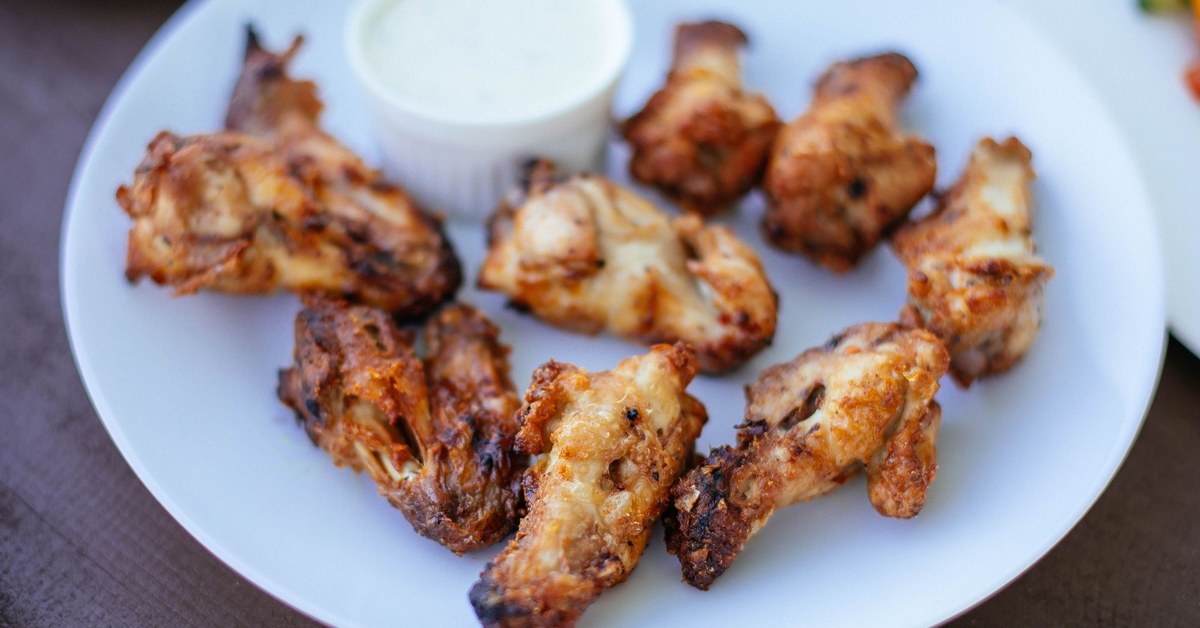
You don't need a deep fryer for crispy wings. Dry them well, toss them with a little baking powder and salt, and bake them on a rack at 425°F (220°C) for 45–50 minutes, flipping once. The skin turns golden, tight and covered in tiny blisters, and it stays crunchy even after you toss it in sauce.
While they bake, warm butter and hot sauce together on the stove. Toss, pile on a platter, and put out the celery and blue cheese. That's game day sorted.
What you need
This makes about 30–36 pieces, enough for 4–6 people as part of a spread.
- 3 lb (1.4 kg) chicken wings, split into flats and drumettes. Buying them already split saves you 10 minutes with a knife. If yours are whole, cut through the two joints and save the tips for stock.
- 1 tablespoon aluminum-free baking powder. Baking powder, not baking soda. Soda tastes soapy here.
- 2 teaspoons kosher salt. Use 1 teaspoon if you have table salt.
- For buffalo sauce: ½ cup (120 ml) hot sauce like Frank's RedHot, 4 tablespoons (57 g) unsalted butter, and if you like, 1 teaspoon Worcestershire and ¼ teaspoon garlic powder.
- A rimmed sheet pan and an oven-safe wire rack. The rack lets hot air reach the underside and lets fat drip away, which is half the secret to crisp skin.
- A small saucepan, a big bowl and an instant-read thermometer.
Wings from the freezer? Give them a full night in the fridge first. Our thawing time calculator tells you how long a bag of your size needs.
How to bake crispy chicken wings
- Heat the oven. Set it to 425°F (220°C) with a rack in the upper-middle position. Line the sheet pan with foil (cleanup gets much easier) and set the wire rack on top. A light spray of oil on the rack keeps the skin from sticking.
- Dry the wings. Spread them on paper towels and press more towels on top. You want the skin to feel tacky, not slick. Surface water turns to steam in the oven, and steam keeps skin soft.
- Coat them. In a large bowl, stir the baking powder and salt together first so there are no lumps, then add the wings and toss for a good 30 seconds. Each piece should look lightly dusted, almost matte. No white clumps.
- Space them out. Lay the wings on the rack skin side up with a finger's width between pieces. Crowded wings steam instead of crisp. If they don't fit, use two pans and swap positions halfway.
- Bake 25 minutes. The fat starts to render and the bottoms turn golden. The kitchen will smell like roast chicken.
- Flip and bake 20–25 minutes more. Use tongs to turn each piece. Keep going until the skin is deep golden brown, tight, and covered in small bubbles. Bigger wings can take up to 55 minutes total.
- Check the temperature. Slide a thermometer into the thickest part of a drumette without touching bone. You want at least 165°F (74°C), and for the most tender, fall-off-the-bone meat, 175–190°F (79–88°C).
- Rest 5 minutes on the rack. The skin firms up a little more as it cools slightly.
Make the buffalo sauce on the stove
While the second side bakes, put the hot sauce, butter, Worcestershire and garlic powder in a small saucepan over low heat. Stir as the butter melts, about 3–4 minutes. Take it off the heat once it's smooth, glossy and just starting to steam. Don't let it boil, or the butter separates and the sauce looks greasy instead of creamy. Pour it into the big bowl, add the hot wings, and toss until every piece is coated.
Want it hotter? Add a pinch of cayenne. Milder? Use 6 tablespoons of butter to the same amount of hot sauce.
Air fryer and stovetop options
Air fryer wings
Toss the wings in baking powder and salt the same way. Arrange them in a single layer, not touching, and air fry at 380°F (195°C) for 20 minutes, shaking the basket or flipping halfway. Then turn it up to 400°F (205°C) for 5–6 minutes until the skin crackles. Most baskets hold about 1 lb (450 g) at a time, so cook in batches and keep finished wings warm in a 200°F (95°C) oven.
Stovetop-finish wings
No room in the oven because the pizza is in there? You can cook wings in a big skillet. Put them skin side down in a cold 12-inch cast iron or stainless pan with 1 tablespoon of oil, turn the heat to medium, and let the fat render slowly for 12–15 minutes until the skin is golden. Flip, partly cover, and cook 10–12 minutes more on medium-low, turning once or twice, until they reach 175°F (79°C). Uncover for the last 2 minutes and pour in the sauce, tossing until it clings. The skin won't be as shatter-crisp as baked, but the glazed, sticky finish is great.
Chicken wing timing and temperature chart
Times are for split wings straight from the fridge, about 10–12 pieces per pound. Use them as a guide and check with a thermometer.
| Method | Temperature | Time | Flip | Target inside |
|---|---|---|---|---|
| Oven, on a rack | 425°F (220°C) | 45–50 min | At 25 min | 175–190°F (79–88°C) |
| Oven, low then high | 250°F (120°C), then 425°F (220°C) | 30 min, then 40–45 min | Before raising heat | 175–190°F (79–88°C) |
| Air fryer | 380°F (195°C), then 400°F (205°C) | 20 min, then 5–6 min | At 10 min | 175–190°F (79–88°C) |
| Skillet | Medium, then medium-low | 22–27 min | After skin is golden | At least 175°F (79°C) |
| Oven from frozen | 425°F (220°C) | 65–75 min | At 35 min | 175–190°F (79–88°C) |
| Buffalo sauce | Low heat | 3–4 min | Stir often | Steaming, not boiling |
For every other cut of chicken, our doneness temperatures chart has the numbers in one place.
“The skin is deep golden and blistered and the fat has stopped spitting. Pull the tray and get them into the sauce while they're hot.”
How to tell when chicken wings are done
Wings are forgiving. Thanks to all that skin and connective tissue, they stay juicy well past 165°F, so you can chase color and crunch without worrying.
Sight
- Raw skin looks pale and loose. Done skin is deep golden brown, pulled tight over the meat, and covered in small blisters.
- Rendered fat collects on the foil below and the skin itself looks dry, not wet or rubbery.
- The meat near the bone at the tip of a drumette pulls back slightly, showing a bit of bone.
Sound
- When you open the oven, you hear a lively crackle from the pan. A soft hiss means there's still fat rendering out of the skin.
- Tap a wing with tongs. Crisp skin makes a light, hollow click.
Smell
- It goes from a mild raw-chicken smell to a rich roast-chicken aroma, a lot like the skin on a holiday bird. That's your sign to check them.
Touch
- Squeeze a drumette with tongs. Done wings feel firm, and the joint between the two bones in a flat wiggles loosely.
- The skin feels stiff and crackly, not soft and flabby.
Temperature
USDA lists 165°F (74°C) as the safe minimum for all poultry, wings included. That's safe, but wings are better higher. At 175–190°F (79–88°C) the collagen softens and the meat slides off the bone. Measure the thickest drumette, keeping the probe off the bone, which reads hot.
When you're also watching the game, a second set of eyes helps. That's the moment Pan is built for: it spots the skin going from golden to deep and blistered and tells you the tray is ready.
How many wings per person
For a game day party where wings are the main event, plan on 6–8 pieces per person. If they share the table with chips, dips, sliders and pizza, 3–4 per person is plenty. As a rule of thumb, 1 lb (450 g) of split wings gives you 10–12 pieces, so:
- 4 hungry fans: 3 lb (1.4 kg), one full sheet pan.
- 8–10 guests with other snacks: 4 lb (1.8 kg), two pans.
- A big watch party of 15–20: 8–10 lb (3.6–4.5 kg). Bake in rounds, two pans at a time, and sauce each batch as it comes out.
Tips for crispier wings
- Dry them the night before. After tossing with baking powder and salt, leave the wings on the rack uncovered in the fridge for 8–24 hours. The skin dries out and bakes up extra crisp.
- Use the rack. Wings baked flat on a pan sit in their own fat and the bottoms stay soft.
- Sauce at the last minute. Toss right before serving. Wings that sit in sauce for 30 minutes lose their crunch.
- Keep sauce on the side for dry rub fans. Season half the batch with lemon pepper or a smoky dry rub and leave it unsauced.
- Rewarm leftovers in the oven, not the microwave, at 400°F (205°C) for 8–10 minutes. Our guide to reheating fried chicken works the same way for wings, and they should reach 165°F (74°C).
What to serve with chicken wings
The classics are classic for a reason: celery and carrot sticks, blue cheese or ranch dressing, and plenty of napkins. For a fuller spread, add a pan of corn on the cob, a tray of oven fries, or sliders. If your crew wants more chicken, chicken drumsticks use the same oven and similar timing, so you can bake them side by side.
And if you'd rather go boneless, pan-fried chicken thighs cut into strips and tossed in the same buffalo sauce make an easy second platter.
For sticky wings, toss them in hoisin sauce or a soy and mirin glaze.
Pan watches it for you
Pan tells you when the wings are ready to sauce
In the oven or air fryer, Pan watches the color and texture of the skin and lets you know when to flip and when they're ready to come out. On the stove, it keeps an eye on the butter so the sauce comes together smooth.
- Skin pale and soft with fat starting to pool: give them more time
- Skin golden on the bottom and releasing from the rack: time to flip
- Skin deep golden, tight and covered in small blisters: ready to pull
- Butter fully melted into the hot sauce and just starting to steam: take the sauce off the heat
Pan AI is on iPhone • Android.
Common questions
How long do you bake chicken wings at 425°F?
About 45–50 minutes on a rack, flipping once at the 25-minute mark. Larger wings can need up to 55 minutes. Go by the skin: it should look deep golden, tight and blistered, and the meat should read 175–190°F (79–88°C).
Why do you put baking powder on chicken wings?
Baking powder raises the skin's pH, which helps it brown faster and dry out into a crisp, bubbly shell in the oven. Use aluminum-free baking powder, not baking soda, and keep it to about 1 teaspoon per pound so you don't taste it.
What internal temperature should chicken wings be?
USDA says all poultry is safe at 165°F (74°C). Wings have lots of connective tissue, though, so they get more tender and pull off the bone more easily when you take them to 175–190°F (79–88°C).
How many chicken wings per person?
Plan on 6–8 pieces (flats and drumettes) per person as a main, or 3–4 per person when there are plenty of other snacks. One pound of split wings is roughly 10–12 pieces.
Can you air fry chicken wings?
Yes. Air fry at 380°F (195°C) for 20 minutes, shaking the basket halfway, then raise it to 400°F (205°C) for 5–6 minutes to crisp the skin. Cook in a single layer, in batches if needed.
Can you cook frozen chicken wings without thawing?
You can bake them from frozen, but they take about 50% longer and the skin won't get as crisp because of the surface water. For the best texture, thaw them in the fridge overnight, then pat them very dry.
Sources
- USDA FSIS: Safe Minimum Internal Temperature Chart
- USDA FSIS: Chicken from Farm to Table
- RecipeTin Eats: Crispy Oven Baked Chicken Wings
- Jessica Gavin: Baked Chicken Wings
Reviewed against USDA FSIS guidance. How we choose sources and fix mistakes: editorial policy.
Keep cooking
- Meat & poultryHow to Cook Chicken DrumsticksBake chicken drumsticks at 425°F for 35–45 minutes, or pan-sear then cover for 25–30, until 175–185°F inside. Safe at 165°F; juiciest a bit higher.
- Meat & poultryPan Fried Chicken ThighsPan fry chicken thighs skin side down over medium until golden, flip, and cook to 175°F. Times for bone-in, boneless and skinless thighs, plus doneness cues.
- Leftovers & reheatingHow to Reheat Fried ChickenReheat fried chicken on a rack in a 400°F oven for 15–25 minutes, or in a 375°F air fryer for 8–12, until it reaches 165°F. Crispy skin, juicy meat.
- Start hereHow to Tell When Food Is DoneHow to tell when chicken, steak, fish, chorizo, eggs, pasta, rice, cheesecake and pecan pie are done, with safe temperatures and simple sight and touch cues.
- Meat & poultryHow to Cook Duck BreastScore duck breast skin, start it skin-side down in a cold pan and render 10–15 minutes over medium-low, then flip for 1–3 minutes. USDA temp and doneness cues.
- Meat & poultryHow to Cook Ground ChickenBrown ground chicken in an oiled skillet over medium-high for 8–10 minutes, breaking it up, until no pink remains and it reaches 165°F (74°C). Tips and times.
- Free toolInternal temperature chartSafe and perfect internal temperatures for steak, chicken, salmon, pork and more, plus a printable PDF.
- Free toolThawing time calculatorHow long to thaw a turkey, chicken, ground beef or fish safely, in the fridge or cold water.
- Free toolReheating guideHow to reheat fried chicken, steak, prime rib, rice and 20+ leftovers so they taste fresh.