How to Roast a Chicken
Quick answer
Pat a 4–5 lb (1.8–2.3 kg) chicken dry, salt it well, rub it with butter or oil and roast it breast side up at 425°F (220°C) for about 20 minutes per pound, so 80–100 minutes. It is done when the thickest part of the breast and the inner thigh read 165°F (74°C). Rest it 15 minutes before carving.
Handy for this: Internal temperature chart · Thawing time calculator
At a glance
- Take the chicken out of the fridge 30–45 minutes ahead, remove the giblets and pat it very dry.
- Heat the oven to 425°F (220°C) with a rack in the lower middle.
- Season inside and out with salt and pepper, stuff the cavity with lemon, garlic and herbs, and rub the skin with butter or oil.
- Tie the legs, tuck the wing tips, and set the bird breast side up in a roasting pan or skillet.
- Roast about 20 minutes per pound, until the breast and thigh both read 165°F (74°C).
- Rest 15 minutes on a board, make gravy from the pan drippings, then carve.
The short version
A dry bird, plenty of salt and a hot oven. That's most of it. Pat a 4–5 lb chicken dry, season it, rub it with butter and roast it breast side up at 425°F (220°C) for about 20 minutes per pound. When the thickest part of the breast and the inner thigh both read 165°F (74°C), it's done.
Then let it sit for 15 minutes. That rest is when you make the gravy, finish the sides and set the table, and it keeps the meat juicy when you carve.
What you need
- A whole chicken, 4–5 lb (1.8–2.3 kg). This size feeds four with a little left over. Air-chilled birds tend to have drier skin, which crisps faster.
- Salt and pepper. About 2 teaspoons of kosher salt and ½ teaspoon of pepper. It looks like a lot. It isn't, once it's spread over the whole bird.
- Fat. 2 tablespoons (28 g) of soft butter or olive oil for the skin.
- Aromatics. A halved lemon, a halved head of garlic and a few sprigs of thyme or rosemary for the cavity. A sliced onion under the bird is optional, but it flavors the drippings.
- A roasting pan or a 12-inch oven-safe skillet. Cast iron works beautifully. Low sides let hot air reach the thighs.
- An instant-read thermometer and kitchen twine. The thermometer is the one tool you really can't skip.
If your chicken is still frozen, plan ahead. The thawing time calculator tells you how long it needs in the fridge.
How to roast a whole chicken, step by step
- Dry it well. Take the chicken out of the fridge 30–45 minutes before roasting. Pull out the giblet bag, then pat the skin and the cavity dry with paper towels. Wet skin steams instead of browning.
- Heat the oven. Set it to 425°F (220°C) with a rack in the lower middle, so the top of the bird isn't too close to the heating element.
- Season generously. Sprinkle salt and pepper inside the cavity first, then all over the outside, including under the wings and legs. If you have time, do this the night before and leave the bird uncovered in the fridge. The skin dries out and roasts up crackly.
- Fill and rub. Tuck the lemon, garlic and herbs into the cavity. Rub the butter or oil over the skin, paying extra attention to the breast.
- Truss loosely. Tie the ends of the legs together with twine and tuck the wing tips under the back. This keeps the bird compact so it cooks evenly.
- Roast. Set the chicken breast side up in the pan, on the onion slices if you're using them. Roast about 20 minutes per pound without opening the door for the first 45 minutes.
- Check the temperature. About 15 minutes before the estimated time, push the thermometer into the thickest part of the breast and then into the inner thigh near the joint, without touching bone. You want 165°F (74°C) in both.
- Rest. Tip the bird so the juices in the cavity run into the pan, then move it to a board. Leave it uncovered for 15 minutes so the skin stays crisp.
- Carve. Cut through the skin between the thigh and the body, pop the leg out at the joint, then slice the breast off the bone in one piece and cut it crosswise.
While it rests, pour off most of the fat, set the pan over medium heat and whisk in flour and broth. Our guide on how to make gravy from pan drippings walks you through it in about 10 minutes.
Roast chicken cooking times by weight
These are for an unstuffed bird straight from a 30-minute rest on the counter, roasted at 425°F (220°C). Ovens vary, so the thermometer has the final word.
| Chicken weight | Oven temp | Approx. roasting time | Pull temp | Rest |
|---|---|---|---|---|
| 3 lb (1.4 kg) | 425°F (220°C) | 55–65 min | 165°F (74°C) | 10 min |
| 3½ lb (1.6 kg) | 425°F (220°C) | 65–75 min | 165°F (74°C) | 10–15 min |
| 4 lb (1.8 kg) | 425°F (220°C) | 75–85 min | 165°F (74°C) | 15 min |
| 5 lb (2.3 kg) | 425°F (220°C) | 1 hr 35 min–1 hr 45 min | 165°F (74°C) | 15 min |
| 6 lb (2.7 kg) | 400°F (200°C) | About 2 hr | 165°F (74°C) | 20 min |
| Spatchcocked, 4 lb (1.8 kg) | 425°F (220°C) | 45–50 min | 165°F (74°C) | 10 min |
For bigger birds, dropping to 400°F (200°C) gives the inside time to catch up before the skin goes too dark. For every other meat, the doneness temperature chart has the numbers in one place.
“The breast just hit 165°F and the skin is deep golden. Pull it now and let it rest 15 minutes.”
How to tell when a roast chicken is done
A thermometer gives you the certain answer, but the bird gives you plenty of hints on the way there.
Sight
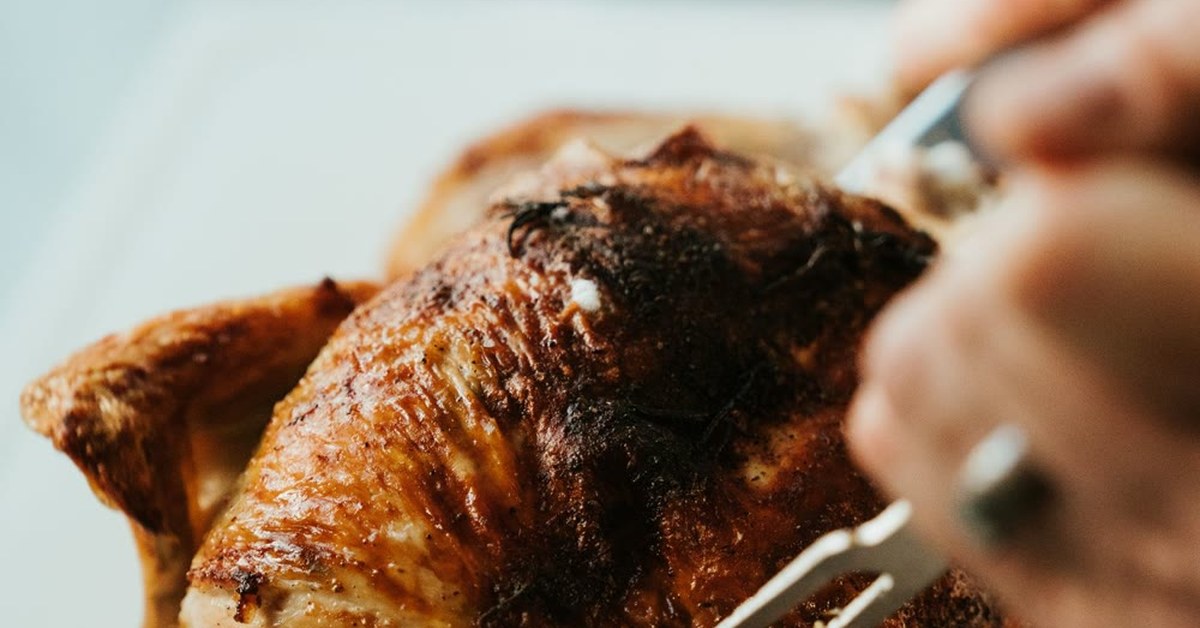
- The skin starts pale and slightly wet-looking, then turns tight, glossy and golden brown. A deep, even mahogany on the breast usually means you're within 10–15 minutes.
- The skin on the drumsticks pulls back from the knuckle and shows a little bone.
- When you tip the bird, the juices from the cavity run clear, not pink. Color alone isn't proof of safety, but it's a good sign to go get the thermometer.
Sound
- Early on, the pan is fairly quiet. As fat renders, you'll hear a steady, busy sizzle through the oven door.
- Loud popping and spitting means the drippings are reducing hard. Add ¼ cup (60 ml) of water or broth to keep them from going too dark.
Smell
- Around the halfway point the kitchen smells of roasting garlic and lemon. Near the end, it shifts to a deep, savory roast smell. If you catch a sharp, acrid note, the drippings need that splash of liquid.
Touch
- Wiggle a drumstick. When it moves loosely in its socket, the dark meat is close.
- Press the breast with tongs. Raw breast feels soft and squishy, while cooked breast feels firm with a slight spring.
Temperature
USDA lists 165°F (74°C) as the safe temperature for whole chicken. Check the thickest part of the breast and the inner thigh, and don't let the probe touch bone, which reads hot. Thighs are lovely at 175°F (79°C), so if the breast hits 165°F first, you're in great shape. Leftovers should be reheated to 165°F (74°C) too.
If you'd like a second pair of eyes, Pan can watch the skin and drippings through the oven window and let you know when it's time to bring the thermometer over.
Tips for crispy skin and juicy meat
- Salt early if you can. A dry-brine of 12–24 hours in the fridge, uncovered, seasons the meat deeply and gives the crispest skin.
- Butter under the skin. Slide your fingers under the breast skin and spread a tablespoon of butter there. It bastes the white meat from the inside.
- Skip the basting. Opening the oven every 15 minutes lets the heat out, and the liquid softens the skin. One look at the halfway point is plenty.
- Spatchcock for speed. Cutting out the backbone and pressing the bird flat cuts the roasting time nearly in half and cooks the breast and thighs more evenly.
- Give it space. If you roast vegetables in the same pan, keep them around the bird, not under it, so they brown instead of steam.
- Save the carcass. Simmer the bones with an onion, a carrot and water for 2–3 hours for a rich stock.
What to serve with roast chicken
Roast chicken loves something crisp and something soft next to it. Put a tray of crispy roast potatoes on the rack below the bird for the last 45 minutes, or make a pot of mashed potatoes for the gravy. Green beans, roasted carrots or a simple salad round it out.
Cooking for two, or just want the dark meat? Try our guide on how to cook chicken thighs in the oven. And if you have leftovers, shred them into fried rice, soup or sandwiches the next day. For another Sunday centerpiece, try a herb-crusted pork loin roast or a slow-braised pot roast.
Leftovers keep 3–4 days; see how long does chicken last in the fridge for raw and cooked times.
Roast fennel wedges in the same pan. Here's what fennel is and how to cut it.
Once it's out of the oven, sprinkle on sumac for a bright, lemony finish.
Leftovers? Pull the meat and freeze cooked chicken in portions.
For a Levantine twist, rub the skin with olive oil and za'atar.
Out of thyme? See substitute for thyme.
Pan watches it for you
Pan tells you when to pull the bird
Pan watches the skin color and the drippings through the oven door and checks in with your thermometer reading. It speaks up when the skin has gone from pale to deep gold and the meat is close to 165°F, so you can pull it on time.
- Skin turning from pale and matte to glossy and golden: about halfway
- Drippings sizzling hard and turning dark brown: add a splash of water
- Thigh skin pulled back from the knuckle and juices running clear: start checking temp
- Breast and thigh at 165°F (74°C): out of the oven, rest 15 minutes
Pan AI is on iPhone • Android.
Common questions
How long do you roast a chicken at 425°F?
Plan on about 20 minutes per pound. A 3½ lb bird takes roughly 70 minutes, a 4 lb bird about 80 minutes and a 5 lb bird about 1 hour 40 minutes. Start checking the temperature 15 minutes before the end.
What temperature should a roast chicken be inside?
USDA says whole chicken is safe at 165°F (74°C). Check the thickest part of the breast and the inner thigh, without touching bone. Many cooks like the thigh a little higher, around 175°F (79°C), for more tender dark meat.
Should I roast a chicken covered or uncovered?
Uncovered. Dry heat is what makes the skin crisp and golden. If the breast or wing tips darken faster than you like before the meat is ready, lay a loose piece of foil over just those spots.
Do you put water in the pan when roasting a chicken?
You don't need to. A dry pan gives you more browned drippings for gravy. If the drippings start to smoke near the end, splash in ¼ cup (60 ml) of water or broth.
Why rest a roast chicken?
Resting for 15 minutes lets the juices settle back into the meat, so they stay in the slices instead of running onto the board. The bird also climbs a few degrees while it rests.
Can I roast a chicken from frozen?
It's safe, but it takes about 50% longer and the skin won't crisp as well. Thawing in the fridge is better, and a 4 lb chicken needs about a day. Our thawing time calculator gives you the exact window.
Sources
- USDA FSIS: Safe Minimum Internal Temperature Chart
- USDA FSIS: Chicken from Farm to Table
- RecipeTin Eats: Roast Chicken
Reviewed against USDA FSIS guidance. How we choose sources and fix mistakes: editorial policy.
Keep cooking
- Thanksgiving & holidaysHow to Make GravyMake gravy with a roux: cook 2 tbsp fat and 2 tbsp flour for 2–3 minutes, whisk in 1 cup warm broth, and simmer 5–8 minutes until it coats a spoon.
- Thanksgiving & holidaysHow to Make Roast PotatoesParboil potatoes 8–10 minutes, rough them up, then roast in hot fat at 425°F (220°C, gas 7) for 45–60 minutes, turning once, until crisp and golden.
- Meat & poultryHow to Cook Chicken Thighs in the OvenBake bone-in chicken thighs at 425°F for 35–45 minutes, boneless for 18–25, until they reach at least 165°F. Skin side up for crisp, golden skin.
- Thanksgiving & holidaysHow to Cook a Turkey BreastRoast a bone-in turkey breast at 325°F: 4 to 6 lb takes about 1½ to 2¼ hours. Pull at 165°F and rest 15 to 20 minutes. Boneless times, chart and cues.
- Meat & poultryHow to Cook Duck BreastScore duck breast skin, start it skin-side down in a cold pan and render 10–15 minutes over medium-low, then flip for 1–3 minutes. USDA temp and doneness cues.
- Meat & poultryHow to Cook Ground ChickenBrown ground chicken in an oiled skillet over medium-high for 8–10 minutes, breaking it up, until no pink remains and it reaches 165°F (74°C). Tips and times.
- Free toolInternal temperature chartSafe and perfect internal temperatures for steak, chicken, salmon, pork and more, plus a printable PDF.
- Free toolThawing time calculatorHow long to thaw a turkey, chicken, ground beef or fish safely, in the fridge or cold water.