How to Poach an Egg
Quick answer
Bring 3 inches of water to a bare simmer, about 180–190°F (82–88°C). Drain a fresh egg in a fine-mesh strainer to lose the thin white, tip it into a small bowl and slide it into the water. Cook 3 minutes for a runny yolk or 4 for a firmer one, then lift it out with a slotted spoon and blot it dry.
Handy for this: Boiled egg timer · Boiling times chart
At a glance
- Fill a wide pot with about 3 inches of water and bring it to a bare simmer.
- Crack the egg into a fine-mesh strainer and let the thin white drain for 20 seconds.
- Tip the egg into a small bowl.
- Stir the water into a gentle swirl and slide the egg into the center.
- Cook 3 minutes for a runny yolk or 4 minutes for a firmer yolk.
- Lift the egg out with a slotted spoon, blot it on a towel and season.
The short version
A poached egg wants quiet water. Bring a wide pot of water to a bare simmer, drain the egg in a fine-mesh strainer to get rid of the loose white, then slide it in from a small bowl. Give it 3 minutes for a runny yolk or 4 minutes for a thicker one, lift it out with a slotted spoon, and blot it dry.
That's really it. Vinegar and the famous whirlpool help a little. Fresh eggs and gentle heat help a lot more.
What you need
- Fresh eggs. The fresher the egg, the tighter the white. Check the pack date and use your newest carton.
- A wide pot or deep skillet. About 3 inches (7–8 cm) of water. Wide is better than tall, since it's easier to get the egg in and out.
- A fine-mesh strainer. This is the step that makes poached eggs look like the ones in restaurants.
- A small bowl or ramekin for each egg.
- A slotted spoon and a folded paper towel for blotting.
- Vinegar, optional. About 1 teaspoon per quart (1 liter) of water. White vinegar has the mildest taste.
How to poach an egg, step by step
- Heat the water. Bring the water up over medium-high heat, then turn it down until tiny bubbles form on the bottom of the pot and only an occasional bubble rises. That's around 180–190°F (82–88°C). Add vinegar now if you're using it. Skip salt in the water, which can loosen the white.
- Drain the egg. Crack the egg into a fine-mesh strainer set over a bowl. Let it sit about 20 seconds and swirl it gently. The thin, watery white runs through, and the thick white stays snug around the yolk.
- Tip it into a ramekin. Pour the egg from the strainer into a small bowl. This gives you control when it goes in the water.
- Swirl and slide. For a single egg, stir the water in a slow circle to make a gentle whirlpool. Lower the ramekin right to the surface and slide the egg into the center. The motion wraps the white around the yolk.
- Cook 3–4 minutes. Leave it alone for the first minute. After that, you can nudge it with the spoon so it doesn't rest on the bottom. Three minutes gives a runny yolk, four gives a thick, jammy one.
- Lift and blot. Scoop the egg up with a slotted spoon, rest the spoon on a folded paper towel for a few seconds, and trim any ragged edges with the side of the spoon if you like. Season with salt and pepper and serve.
Poached egg timing table
For large eggs straight from the fridge, in water held at a bare simmer. Count from the moment the egg goes in.
| Yolk | Time | Water | How it looks |
|---|---|---|---|
| Very runny | 2½–3 min | 180–190°F (82–88°C) | White just set, yolk loose under a thin veil |
| Runny (classic) | 3 min | 180–190°F (82–88°C) | White opaque, yolk wobbles |
| Jammy | 4 min | 180–190°F (82–88°C) | Yolk thick, gives slowly when pressed |
| Firm | 5–6 min | 180–190°F (82–88°C) | Yolk set all the way through |
| Make-ahead rewarm | About 1 min | Hot tap water or 150°F (65°C) | Warm through, yolk still soft |
The egg timer works nicely here too: set it for your yolk and keep your eyes on the pot.
Poaching for a crowd and making them ahead
Several eggs at once
Skip the swirl. Use a wide, deep skillet and slide the eggs in one at a time around the edge, about 15 seconds apart, going clockwise. Lift them out in the same order. Four eggs in a 10-inch pan is comfortable.
Make-ahead poached eggs
This is the brunch trick. Poach the eggs to the runny stage, then slip them straight into a bowl of ice water. They keep, covered, in the fridge for up to 2 days. To serve, rest them in hot water for about a minute until warm. Perfect for eggs Benedict for six.
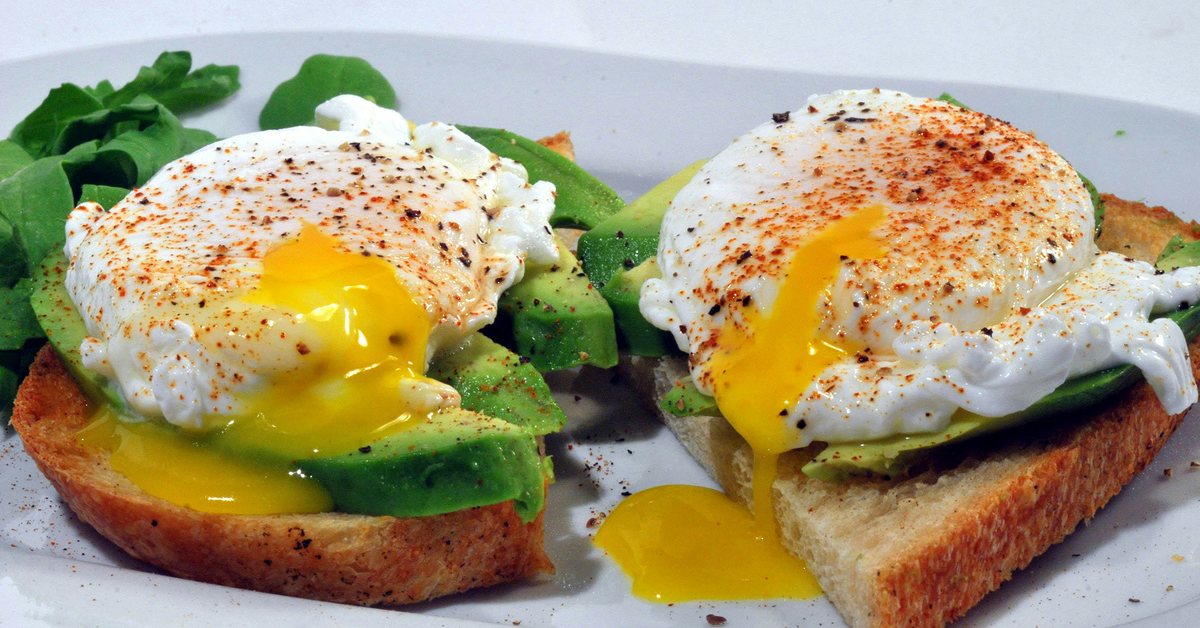
“The white is fully opaque and the yolk still wobbles under it. Lift it out now for a runny center.”
How to tell when a poached egg is ready
Poached eggs move fast, but they show you everything. Here's what to watch for.
Sight
- The white starts clear and turns milky in seconds. It's set when it's fully opaque and has no clear, jelly-like patches, especially right on top of the yolk.
- The water should look calm, with only small bubbles on the bottom. Rolling bubbles mean it's too hot and the white will shred.
Sound
- You should hear almost nothing. A steady bubbling sound means turn the heat down a notch.
Smell
- If you used vinegar, a sharp smell rising from the pot is normal. A quick dip in a bowl of warm water before serving takes away any vinegar taste.
Touch
- Lift the egg on the slotted spoon and press the yolk gently with your fingertip. Runny feels like a water balloon, jammy gives slowly and springs back a little, firm feels solid.
- The white should feel set and hold its shape on the spoon, not drape over the sides.
Temperature and safety
USDA advises cooking eggs until both the white and yolk are firm, and cooking egg dishes to 160°F (71°C). A runny poached egg is a much-loved classic, but if you're cooking for young children, older adults, pregnant people or anyone with a weakened immune system, use pasteurized-in-shell eggs or cook them to the firm stage, 5–6 minutes.
The first minute is where it's easy to get distracted with toast. Pan can watch that window for you: it sees the white go opaque and tells you out loud when it's time to lift the egg.
Tips for neat poached eggs
- Freshness beats every trick. An egg laid this week holds together on its own. An older egg spreads, no matter how much you swirl.
- Don't skip the strainer. It's 20 seconds and it removes the wispy strands before they happen.
- Keep the water calm. If you see big bubbles, pull the pot off the heat for 30 seconds.
- Use a wide pot. More surface area means the water temperature drops less when the egg goes in.
- Blot well. A dry egg won't make your toast soggy.
- Season on the plate. Flaky salt, cracked pepper, chives or a few drops of hot sauce are all a poached egg needs.
What to serve with poached eggs
Put a poached egg on buttered toast, avocado toast, a bowl of warm grains or a pile of sautéed spinach. Split two over English muffins with ham and hollandaise for eggs Benedict. They're also lovely on roasted asparagus, a warm lentil salad, or a bowl of ramen in place of a jammy egg.
Want a version that keeps in the fridge for the week? Our guide on how to boil eggs covers soft, jammy and hard-boiled. For a weekend breakfast with more going on, try a folded omelette, or line up some crisp strips from our bacon guide next to your eggs. Every other way to cook an egg, with times, lives on our egg cooking guide.
Cooked too many eggs? Here's whether hard-boiled eggs can be frozen.
Prefer them fried? Over easy eggs take 2–3 minutes until the white sets, then 20–30 seconds after the flip.
Pan watches it for you
Pan watches the water and the white
Pan keeps an eye on the water so it stays at a gentle simmer, then watches the white turn from clear to opaque and speaks up when the egg is ready to lift.
- Tiny bubbles on the pot bottom, surface barely moving: the water is right
- Big bubbles breaking the surface: turn the heat down before the egg goes in
- White wrapped around the yolk and fully opaque: about 3 minutes in
- Yolk still jiggles when nudged with the spoon: lift it now for runny
Pan AI is on iPhone • Android.
Common questions
How long do you poach an egg?
About 3 minutes in barely simmering water for a set white and runny yolk, and about 4 minutes for a yolk that's thick and starting to set. Extra-large eggs may need 30 seconds more.
Do you need vinegar to poach an egg?
No. Vinegar helps the white set a little faster, but a fresh egg and a quick drain in a fine-mesh strainer do more for a neat shape. If you use vinegar, 1 teaspoon per quart of water is plenty.
Why do my poached eggs spread out in wispy strands?
The thin, watery part of the white spreads in the water. Draining the egg in a strainer first removes it, and fresher eggs have less of it. Water that's bubbling too hard also tears the white apart.
Can you poach eggs ahead of time?
Yes. Poach them, slip them into ice water, and refrigerate for up to 2 days. Rewarm them in hot water for about 1 minute before serving.
Can you poach more than one egg at a time?
Yes. Skip the swirl, use a wide pan, and slide eggs in one at a time around the edge, about 15 seconds apart. Lift them out in the same order.
Are poached eggs with runny yolks safe?
USDA advises cooking eggs until the yolk and white are firm. For runny poached eggs, pasteurized-in-shell eggs are a safer choice, especially for young children, older adults, pregnant people and anyone with a weakened immune system.
What water temperature is best for poaching eggs?
Aim for about 180–190°F (82–88°C), where tiny bubbles form on the bottom of the pot and only an occasional bubble rises. A full rolling boil at 212°F (100°C) tears the white apart.
Can you poach an egg in the microwave?
Yes. Crack an egg into a mug with 1/2 cup (120 ml) of water, pierce the yolk gently with a toothpick, cover with a saucer and microwave on high for 45 to 60 seconds, then in 15-second bursts until the white is opaque. Microwaves vary, so your first egg sets your timing.
Sources
- USDA FSIS: Shell Eggs from Farm to Table
- FoodSafety.gov: Safe Minimum Internal Temperatures
- Love and Lemons: Poached Eggs
Reviewed against USDA FSIS and FoodSafety.gov guidance. How we choose sources and fix mistakes: editorial policy.
Keep cooking
- Eggs & breakfastHow to Boil EggsBoil eggs by lowering them into boiling water: 6 minutes for soft, 7 for jammy, 11–12 for hard-boiled, then chill in ice water. Easy-peel tips included.
- Eggs & breakfastHow to Fry an EggFry a sunny side up egg over medium-low heat, covered, for 2–3 minutes until the white sets and the yolk stays runny. Times for every fried egg style.
- Eggs & breakfastHow to Make Scrambled EggsMake scrambled eggs over medium-low heat in butter for 3–5 minutes, folding slowly and pulling them off while still glossy. Soft, fluffy and diner styles.
- Eggs & breakfastHow to Make an OmeletteMake an omelette with 3 eggs in a buttered 8-inch nonstick pan over medium heat for 2–3 minutes, lifting the edges, then fill, fold and slide it out.
- Eggs & breakfastHow to Make CrepesMake crepes by resting a thin batter 30 minutes, then cooking 3 tbsp at a time over medium heat for 60–90 seconds a side. Ratios, flip cues, lemon and sugar.
- Eggs & breakfastHow to Cook Bacon in the OvenBake bacon at 400°F (205°C) for 15–20 minutes on a foil-lined sheet or a rack, 20–25 for thick-cut. Or start it in a cold oven. Flat, even strips.
- Free toolBoiled egg timerSoft, jammy or hard: exact minutes for your egg size, with a built-in timer.
- Free toolBoiling times chartHow long to boil chicken, shrimp, potatoes, corn, broccoli and 30+ more foods.