How to Make an Omelette
Quick answer
Whisk 3 eggs with a pinch of salt. Melt 1 tablespoon of butter in an 8-inch nonstick skillet over medium heat until it foams, and pour in the eggs. Lift the set edges and tilt the pan so raw egg runs under. After 1½–2 minutes, when the top is nearly set, fill one half, fold, cook 30 seconds and slide it out.
Handy for this: What can I make? · Boiled egg timer
At a glance
- Whisk 3 eggs with a pinch of salt until smooth.
- Melt butter in an 8-inch nonstick skillet over medium heat until it foams.
- Pour in the eggs, stir for 5 seconds, then let them settle.
- Lift the set edges and tilt the pan so raw egg flows underneath, for 1–1½ minutes.
- When the top is almost set, add fillings to one half.
- Fold the omelette in half, cook 30 seconds and slide it onto a plate.
The short version
An omelette is three eggs, a small buttered pan and about three minutes. Cook the eggs over medium heat, lifting the edges so the raw egg runs underneath. When the top is almost set but still a little glossy, scatter the filling over one half, fold, and slide it out. The center stays tender, the outside is smooth and pale golden.
What you need
- Eggs. 3 large eggs per omelette.
- Butter. About 1 tablespoon. It adds flavor and keeps the eggs from sticking.
- An 8-inch nonstick skillet. The size really matters. In a bigger pan the eggs spread too thin and set before you can fold. Our skillet vs frying pan guide explains why sloped sides help here.
- A silicone spatula. Thin and flexible, for lifting edges and folding.
- Fillings, ready to go. About ¼–½ cup in total. Grate the cheese and cook any vegetables before you start the eggs.
How to make an omelette, step by step
- Prep the filling first. The eggs take three minutes, so have everything ready. Raw onions, peppers and mushrooms should be cooked and warm. Our guides on cooking mushrooms and sautéing onions are handy here.
- Whisk the eggs. Beat 3 eggs with a pinch of salt for about 30 seconds, until there are no streaks of white.
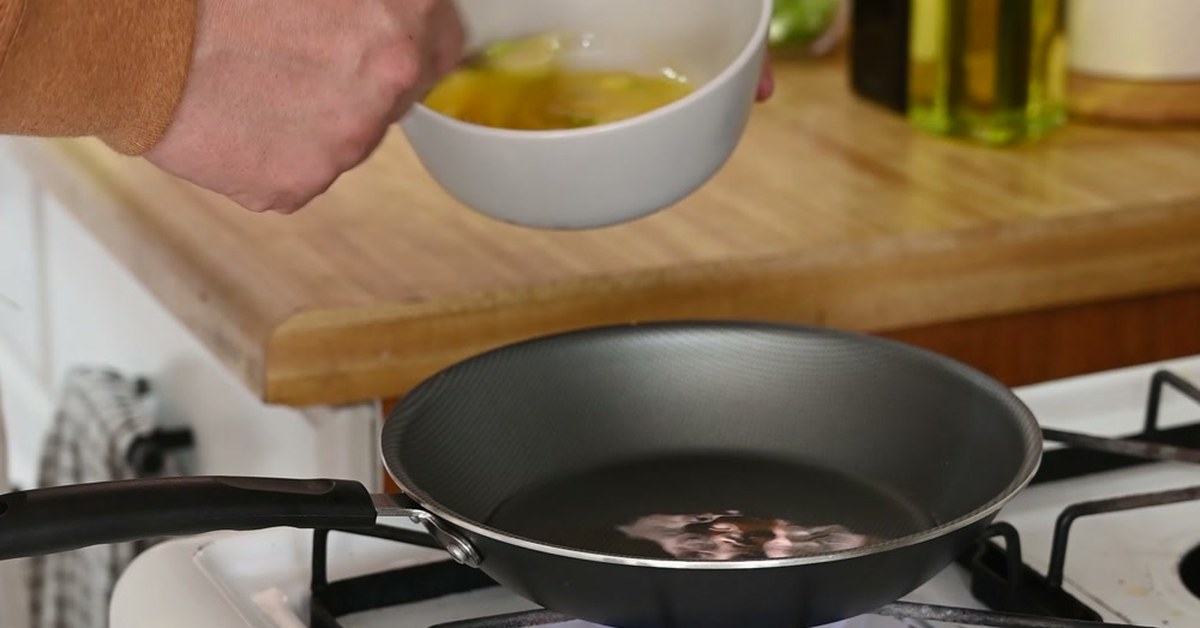
- Heat the butter. Set the pan over medium heat and add the butter. When it's melted and foaming but not browning, about 1 minute, it's ready.
- Pour and stir briefly. Pour in the eggs and stir with the spatula for about 5 seconds to make a few small curds, then let them settle into an even layer.
- Lift and tilt. As the edges set, push one edge toward the center with the spatula and tilt the pan so the raw egg runs into the gap. Work your way around the pan. Do this for 1–1½ minutes.
- Fill. When the top is mostly set but still moist and shiny, sprinkle the filling over one half. Cheese goes on first so it melts against the warm egg.
- Fold and finish. Slide the spatula under the empty half and fold it over the filling. Cook about 30 seconds more, until the cheese starts to melt. Tilt the pan over a plate and let the omelette slide out.
Omelette timing table
For a 3-egg omelette in an 8-inch nonstick pan with eggs straight from the fridge.
| Style | Heat | Set the eggs | After filling | Outside |
|---|---|---|---|---|
| Classic folded | Medium | 1½–2 min | 30 sec | Pale gold, smooth |
| French rolled | Medium-low | About 2 min, stirring | Roll, 15 sec | Pale yellow, no color |
| Diner style | Medium-high | About 1 min | 30–45 sec | Golden spots |
| Egg white (4 whites) | Medium | About 2 min | 30 sec | White, set |
| Two-person (5–6 eggs, 10-inch pan) | Medium | 2½–3 min | 45 sec | Pale gold |
Omelette styles and fillings
Classic American folded
The method above. Lift-and-tilt cooking, a half-moon fold and a generous filling. Forgiving and quick.
French rolled
Medium-low heat and constant small stirs with the spatula while shaking the pan, until the eggs look like loose scrambled eggs. Smooth them flat, let the bottom set for 10 seconds, then roll the omelette from the handle side toward the far edge. It's soft and custardy inside with no browning at all. A little chopped chives and nothing else is the classic.
Favorite fillings
- Cheese. Cheddar, Gruyère or Swiss. About ¼ cup, grated finely so it melts fast.
- Western. Diced ham, onion and green pepper, cooked first, with cheddar.
- Mushroom and spinach. Sautéed mushrooms, wilted spinach and a little feta or goat cheese.
- Bacon and cheese. Crumbled crisp bacon with sharp cheddar.
- Herb. Chives, parsley and tarragon stirred into the eggs.
“The top is almost set and still a little shiny. Add your filling now and fold.”
How to tell when an omelette is ready to fold
An omelette has two moments: when to fill, and when to plate. Your senses tell you both.
Sight
- The edges set first and turn opaque, then pull away from the pan.
- Fill when the top is no longer runny but still has a moist sheen. If it looks dry and matte, fold right away.
- For a classic omelette the outside should be pale gold. Deep brown means the heat was a bit high; it still tastes good.
Sound
- A gentle sizzle when the eggs go in is right. No sound at all means the pan needs another minute.
Smell
- The butter should smell sweet and milky. A nutty smell means it's starting to brown, so pour the eggs in now.
Touch
- Give the pan a shake. When the whole omelette slides freely, the bottom is set and it's ready to fold.
- Press the center gently with the spatula after folding. It should feel soft but not liquid.
Temperature and safety
USDA recommends cooking egg dishes to 160°F (71°C). For an omelette, that means no visible liquid egg when you serve it. Use cooked meats and vegetables for fillings, and serve right away.
The fill-and-fold moment comes fast, usually while you're reaching for the cheese. That's the moment Pan watches: it sees the top lose its runny shine and tells you out loud when to fill and fold.
Tips for a better omelette
- One omelette, one pan. Make them one at a time in an 8-inch pan. Keep finished ones warm in a 200°F (95°C) oven.
- Don't overfill. More than ½ cup of filling makes the omelette tear when you fold.
- Warm fillings, not cold. Cold fillings straight from the fridge cool the eggs and won't melt the cheese.
- Dry your vegetables. Squeeze cooked spinach and drain mushrooms so they don't leak into the eggs.
- Brush with butter. A little soft butter on top as it hits the plate gives a restaurant-style shine.
What to serve with an omelette
Toast and a simple green salad make it a meal at any time of day. Breakfast potatoes, fresh fruit or a few slices of tomato with salt are great too. Not sure what to put inside? Tell our what can I make tool what's in your fridge and it'll suggest fillings.
If you'd rather skip the fold, soft scrambled eggs take the same ingredients and even less attention.
Feeding more than one? A frittata is the same idea, finished in the oven and cut into wedges.
Leftover yolks or whites? Freeze them in ice cube trays.
Try a filling of spinach and feta cheese; go easy on the salt.
Thawed spinach is a quick filling; see can you freeze spinach.
Fines herbes include tarragon; see substitute for tarragon for swaps.
Pan watches it for you
Pan tells you when to fill and fold
Pan watches the eggs set from the edges in and speaks up when the top is almost firm, the moment to add your filling and fold.
- Butter foaming with no brown specks: pour in the eggs
- Edges set and pulling from the pan: lift them and tilt
- Top still shiny but no longer runny: add the filling
- Omelette slides when you shake the pan: fold and plate
Pan AI is on iPhone • Android.
Common questions
How many eggs do you use for an omelette?
Three large eggs make a generous one-person omelette in an 8-inch pan. Two eggs work in a 6- or 7-inch pan. For more than one person, make separate omelettes; they only take about 3 minutes each.
How long do you cook an omelette?
About 2–3 minutes over medium heat: 1½–2 minutes to set the eggs, then about 30 seconds after you fill and fold. A French-style omelette over medium-low takes about the same.
Should you add milk to an omelette?
It's optional. A tablespoon of milk makes the eggs a little softer, but too much makes the omelette thin and harder to fold. Many cooks use just eggs and salt.
What are the best omelette fillings?
Shredded cheese, ham, cooked bacon, sautéed mushrooms, onions, peppers, spinach and fresh herbs. Keep fillings to about ½ cup and cook any raw vegetables first so they don't make the eggs watery.
Why does my omelette stick or tear?
Usually the pan wasn't hot enough when the eggs went in, or there wasn't quite enough butter. Use a nonstick pan, wait for the butter to foam, and loosen the edges with a spatula before you fold.
What temperature should an omelette reach?
USDA recommends cooking egg dishes to 160°F (71°C). In practice, that means the eggs are set with no visible liquid when you fold and serve.
Sources
- USDA FSIS: Shell Eggs from Farm to Table
- USDA FSIS: Safe Minimum Internal Temperature Chart
- FoodSafety.gov: Safe Minimum Internal Temperatures
Reviewed against USDA FSIS and FoodSafety.gov guidance. How we choose sources and fix mistakes: editorial policy.
Keep cooking
- Eggs & breakfastHow to Make Scrambled EggsMake scrambled eggs over medium-low heat in butter for 3–5 minutes, folding slowly and pulling them off while still glossy. Soft, fluffy and diner styles.
- Vegetables & fruitHow to Cook MushroomsSauté sliced mushrooms in a hot, uncrowded skillet 8–10 minutes, salting at the end, until golden brown and tender. Times for sautéed and roasted mushrooms.
- Vegetables & fruitHow to Sauté OnionsSauté onions in 1 tablespoon of fat over medium heat: soft in 5 minutes, golden in 10 to 15, caramelized in 40+. Plus quick green bean and shrimp sautés.
- Start hereSkillet vs Frying Pan: What's the Difference?A skillet and a frying pan are the same pan: flat bottom, flared sides, no lid. Here is what does differ (material, size, sauté pans) and which to buy first.
- Eggs & breakfastHow to Make CrepesMake crepes by resting a thin batter 30 minutes, then cooking 3 tbsp at a time over medium heat for 60–90 seconds a side. Ratios, flip cues, lemon and sugar.
- Eggs & breakfastHow to Cook Bacon in the OvenBake bacon at 400°F (205°C) for 15–20 minutes on a foil-lined sheet or a rack, 20–25 for thick-cut. Or start it in a cold oven. Flat, even strips.
- Free toolWhat can I make?Type what is in your fridge and get simple recipes you can cook right now.
- Free toolBoiled egg timerSoft, jammy or hard: exact minutes for your egg size, with a built-in timer.