How to Cook Asparagus
Quick answer
Snap off the woody bottom 1–2 inches of each spear. On the stove, cook the spears in 1 tablespoon of oil or butter over medium-high for 5–7 minutes, turning a few times, until bright green and tender-crisp. Or roast with oil and salt at 425°F (220°C) for 10–15 minutes. Steam 3–5 minutes or boil 2–4.
Handy for this: Boiling times chart · What can I make?
At a glance
- Rinse the asparagus and snap or cut off the woody bottom 1–2 inches.
- Heat 1 tablespoon of oil or butter in a large skillet over medium-high.
- Lay the spears in a single layer and cook 2–3 minutes without moving them.
- Turn the spears and cook 3–4 minutes more until bright green and tender-crisp.
- Or roast at 425°F (220°C) for 10–15 minutes, or steam 3–5 minutes.
- Season with salt, pepper, lemon zest and a squeeze of juice.
The short version
Asparagus is one of the quickest vegetables you can cook. Snap off the woody ends, then sauté the spears in a hot skillet for 5–7 minutes or roast them at 425°F (220°C) for 10–15. Either way, they're ready when they turn bright green, a few spots go golden brown, and the thick end bends just a little when you lift a spear.
The biggest factor is thickness. Pencil-thin spears cook in half the time of thick ones, so check the size of your bunch before you start.
What you need
- Asparagus. One bunch, about 1 pound (450 g), serves 3–4 as a side. Look for firm, straight spears with tight, closed tips. The cut ends should look moist, not dried out or split.
- A large skillet. A 12-inch pan fits a whole bunch in one layer. Cast iron gives the best browning.
- Tongs. They make turning a pan full of spears quick and easy.
- Fat. Olive oil, butter, or a mix. About 1 tablespoon for the stove, 1½–2 for roasting.
- Seasoning. Salt, black pepper, half a lemon, and garlic or Parmesan if you like.
How to trim asparagus
The bottom of each spear is tough and woody. Pick up one spear and bend it near the bottom until it snaps. It breaks right where the tender part begins. Line the rest of the bunch up next to it and cut them all at the same spot with a knife. That's faster than snapping every spear and keeps them even.
For thick spears (thicker than your thumb), peel the bottom third with a vegetable peeler. The skin there is fibrous, and peeling makes the whole spear tender.
How to cook asparagus on the stove
- Rinse and dry. Rinse the spears under cool running water, paying attention to the tips where grit can hide. Pat them dry so they brown instead of steaming.
- Heat the pan. Set a large skillet over medium-high heat for about 2 minutes. Add 1 tablespoon of olive oil and wait until it shimmers.
- Add the spears. Lay them in a single layer, all pointing the same way. A little overlap is fine, but a crowded pan steams.
- Leave them alone. Cook 2–3 minutes without moving them, so the undersides get golden-brown spots.
- Turn and cook. Roll the spears with tongs and cook 3–4 minutes more, turning once or twice, until bright green and tender-crisp.
- For thick spears, add 2 tablespoons of water and cover the pan for the last 2 minutes. The steam cooks the centers through.
- Finish. Turn off the heat. Add a pat of butter and a sliced garlic clove and toss for 30 seconds. Season with salt, pepper, lemon zest and a squeeze of juice.
Other ways to cook asparagus
Roasted
Heat the oven to 425°F (220°C). Toss the spears with 1½ tablespoons of olive oil and ½ teaspoon of salt and spread them on a sheet pan in one layer. Roast 10–15 minutes, shaking the pan once, until the tips are crisp and lightly browned. Finish with grated Parmesan and lemon.
Steamed
Bring 1 inch of water to a boil under a steamer basket. Add the spears, cover, and steam 3–5 minutes until bright green and just tender. Steamed asparagus is lovely with melted butter or a spoonful of hollandaise.
Boiled or blanched
Drop the spears into a wide pan of salted boiling water and cook 2–4 minutes. For salads or make-ahead platters, move them straight to ice water for 1 minute to stop the cooking and keep them bright.
Grilled
Toss thick spears with oil and salt and lay them across the grates over medium-high heat. Grill 4–6 minutes, turning a few times, until marked and tender.
Our air fryer asparagus guide has times for thin, medium and thick spears: 7–10 minutes at 400°F for most.
Asparagus cooking times
Thin spears are pencil width or less, medium are about ⅜ inch (1 cm) across, and thick are ½ inch (1.3 cm) or more.
| Method | Heat | Thin spears | Medium spears | Thick spears |
|---|---|---|---|---|
| Skillet (sautéed) | Medium-high | 3–4 min | 5–7 min | 7–9 min (lid for last 2) |
| Roasted | 425°F (220°C) | 8–10 min | 10–12 min | 12–15 min |
| Steamed | Boiling water, covered | 2–3 min | 3–4 min | 4–5 min |
| Boiled | Rolling boil, salted | 1½–2 min | 2–3 min | 3–4 min |
| Grilled | Medium-high | 3–4 min | 4–5 min | 5–6 min |
Our boiling times chart has the same kind of numbers for broccoli, green beans, corn and more.
“The spears just turned bright green with a few golden spots. Give them one more turn, then they're ready.”
How to tell when asparagus is done
Asparagus goes from crisp to limp quickly, so start checking at the low end of the time range.
Sight
- Raw asparagus is a dull, slightly gray green. When it's tender-crisp, it turns bright and glossy.
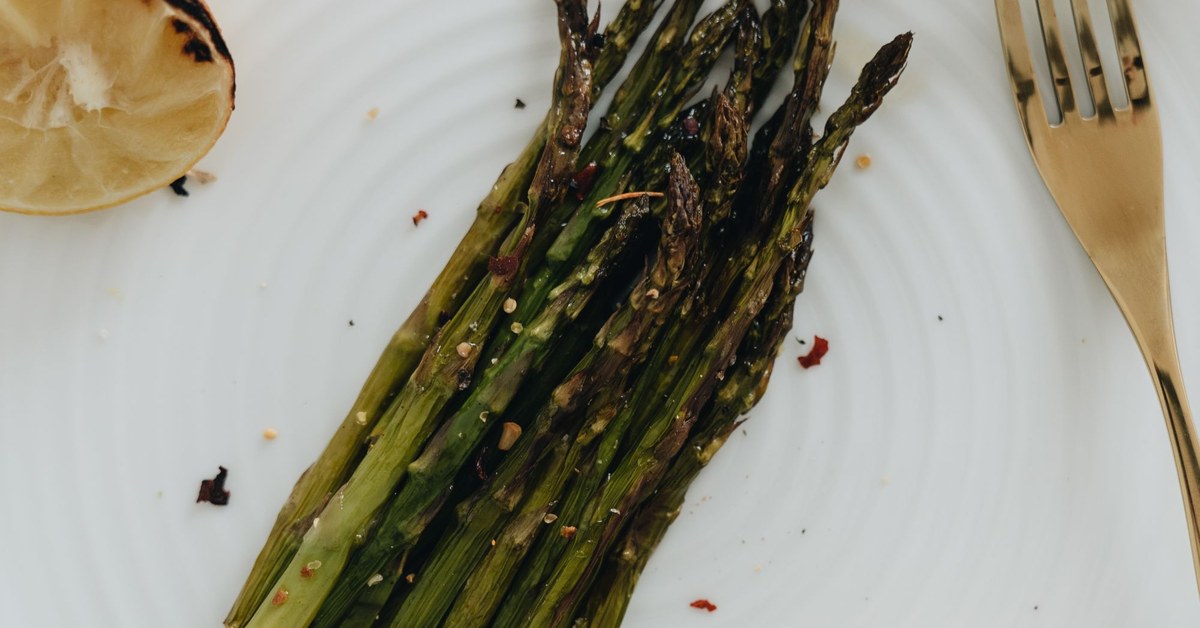
- In the skillet or oven, golden-brown spots on the sides tell you the sugars are caramelizing. The tips crisp up first and may darken at the edges, which is delicious.
- If the color fades to army green and the spears look wrinkled, they've gone soft. Still tasty, just past tender-crisp.
Sound
- A steady sizzle when the spears hit the pan means the heat is right. If there's no sizzle, wait for the oil to shimmer next time.
- Adding water to the pan makes a loud hiss that settles into a soft bubble under the lid.
Smell
- Cooking asparagus smells green and grassy at first, then sweet and a little nutty as it browns. Garlic in the pan smells mellow and fragrant when it's ready; take the pan off the heat as soon as the slices turn pale gold.
Touch
- Lift one spear from the middle with tongs. Tender-crisp asparagus bends slightly at the ends but doesn't flop. A spear that hangs limp is soft-cooked.
- Pierce the thick end with a paring knife. It should go in with light resistance.
Temperature and safety
Fresh vegetables don't have a safe minimum temperature, so texture is your guide. Rinse asparagus before cooking, refrigerate cooked leftovers within 2 hours, and use them within 3–4 days. Reheat to 165°F (74°C), per USDA, or enjoy them cold in a salad.
When the spears are in the pan alongside a piece of fish, it's easy to miss that bright-green window. Pan watches both and tells you when it's time to turn the asparagus.
Tips for great asparagus
- Sort by size. If your bunch has mixed thicknesses, start the thick spears 2 minutes before the thin ones.
- Salt at the end on the stove. Salt draws out water and slows browning. Season once the spears have some color.
- Use high heat. Medium-high in the pan and 425°F in the oven give you browning before the insides go soft.
- Store it like flowers. Stand the bunch upright in a jar with an inch of water in the fridge. It stays crisp for 3–5 days.
- Add crunch and richness. Toasted almonds, a fried or poached egg, shaved Parmesan, or a drizzle of balsamic all work well.
What to serve with asparagus
Asparagus and salmon are a spring classic, and they cook in about the same time. Follow our how to cook salmon on the stove guide and cook the asparagus in the same pan after the fish comes out. It's also great with seared scallops, steak, or roast chicken.
For brunch, top a pile of spears with a runny egg; our guide on how to poach an egg walks you through it. And if you're building a full plate of greens, broccoli and green beans use almost the same methods and timing.
Another spring vegetable worth learning: how to cook artichokes, steamed and eaten leaf by leaf.
For a salty, crisp wrap, roll the spears in prosciutto before roasting.
Top it with golden slices of pan-fried halloumi.
A little tarragon butter is classic here; see substitute for tarragon.
Bought too much? See can you freeze asparagus for blanching times by thickness.
Pan watches it for you
Pan tells you when to turn the spears
Pan watches the color of the spears and the browning where they touch the pan. It speaks up when it's time to turn them and when they look bright green and tender-crisp.
- Undersides showing golden-brown spots: time to turn
- Spears shifting from dull to bright, glossy green: tender-crisp, almost ready
- Garlic slices turning pale gold: pull the pan now
- Tips starting to look dry and dark: they're at the crispy end, serve right away
Pan AI is on iPhone • Android.
Common questions
How long does asparagus take to cook on the stove?
Medium spears take 5–7 minutes in a skillet over medium-high heat. Thin spears are done in 3–4 minutes, and thick spears take 7–9 minutes, often with a splash of water and a lid for the last 2 minutes.
How long do you roast asparagus at 425°F?
Thin spears roast in 8–10 minutes, medium spears in 10–12 minutes and thick spears in 12–15 minutes at 425°F (220°C). They're ready when the tips are crisp and the thick end bends slightly when you lift a spear.
How do you trim asparagus?
Bend one spear near the bottom until it snaps; it breaks where the woody part ends. Line the rest of the bunch up against it and cut them all at the same spot. For thick spears, you can also peel the bottom third.
Is thin or thick asparagus better?
Both are good. Thin spears cook fast and are great for quick sautés. Thick spears are meatier and juicier and hold up well to roasting and grilling. Just don't mix sizes in the same pan, or cook the thick ones a few minutes longer.
How do you keep asparagus fresh?
Trim the ends, stand the bunch upright in a jar with about an inch of water, and loosely cover the tops with a plastic bag. Refrigerate and use within 3–5 days.
Why is my asparagus stringy?
Stringy asparagus usually means the woody bottoms weren't trimmed far enough, or the spears are older. Snap them where they break naturally and peel the lower part of thick spears.
Sources
- FDA: Selecting and Serving Produce Safely
- USDA FSIS: Leftovers and Food Safety
- Jessica Gavin: The Ultimate Guide to Cooking Asparagus
Reviewed against FDA and USDA FSIS guidance. How we choose sources and fix mistakes: editorial policy.
Keep cooking
- Fish & seafoodHow to Cook Salmon on the StovePan-sear salmon skin side down over medium-high heat for 4–6 minutes, flip, and cook 2–3 minutes more. Timing by thickness and how to tell salmon is done.
- Vegetables & fruitHow to Cook BroccoliSteam broccoli florets 4–5 minutes, boil 2–3, sauté 6–8 or roast at 425°F for 18–22 until bright green and fork-tender. Times and cues for every method.
- Vegetables & fruitHow to Cook Vegetables on the StoveCook asparagus, carrots, potatoes, sweet potatoes, green beans and broccoli on the stove with one simple method, clear times, and easy cues for tender-crisp.
- Fish & seafoodHow to Pan Sear ScallopsPan sear scallops in a very hot pan: dry them well, sear 2 to 3 minutes undisturbed, flip, and cook 1 to 2 more. Times by size and clear doneness cues.
- Vegetables & fruitHow to Cook EggplantPan-fry ½-inch eggplant slices 3–4 minutes per side, or roast cubes at 425°F for 20–25 minutes, until golden and creamy inside. Prep, times and cues.
- Vegetables & fruitHow to Cook Frozen CornSauté frozen corn in butter over medium-high for 6–8 minutes, boil it 3–5 minutes, microwave 4–5 minutes or roast at 425°F for 20–25 minutes. No thawing needed.
- Free toolBoiling times chartHow long to boil chicken, shrimp, potatoes, corn, broccoli and 30+ more foods.
- Free toolWhat can I make?Type what is in your fridge and get simple recipes you can cook right now.