How to Make Chicken Noodle Soup
Quick answer
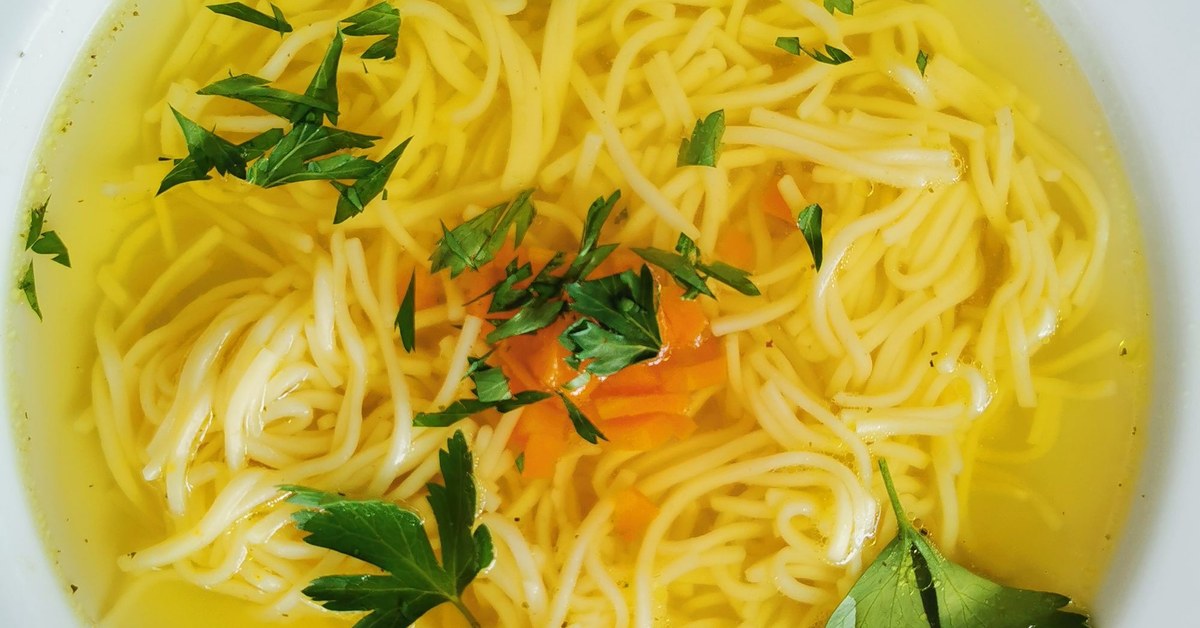
Cook diced onion, carrots and celery in butter 6–8 minutes, add garlic, then 10 cups of chicken broth with thyme and bay leaves. Add 2 lb of bone-in chicken and simmer gently 25–30 minutes, until it reaches 165°F (74°C). Shred the chicken, cook 6 oz of egg noodles in the broth 6–8 minutes, return the chicken and finish with parsley and lemon.
Handy for this: Internal temperature chart · Boiling times chart · Reheating guide
At a glance
- Melt butter in a large pot and cook onion, carrots and celery 6–8 minutes; add garlic for 1 minute.
- Add the broth, thyme, bay leaves, salt, pepper and bone-in chicken and bring to a boil.
- Lower to a gentle simmer and cook 25–30 minutes until the chicken reaches 165°F (74°C).
- Lift out the chicken, let it cool 10 minutes, then shred it and discard the bones.
- Bring the broth back to a boil and cook the egg noodles 6–8 minutes until tender.
- Return the chicken, add parsley and lemon juice, taste for salt and serve.
The short version
Real chicken noodle soup takes about an hour, all in one pot on the stove. Soften onion, carrots and celery in butter. Add broth and bone-in chicken and let it simmer gently until the chicken hits 165°F (74°C). Pull the chicken out, shred it, cook the egg noodles right in the broth, then stir the chicken back in.
The bones give the broth body, the gentle simmer keeps the meat soft, and the noodles go in last so they don't turn mushy.
What you need
- Chicken. 2 lb (900 g) bone-in chicken thighs, breasts or a mix, skin removed. Thighs make a richer broth; breasts give neat white meat.
- Vegetables. 1 large yellow onion, diced; 3 carrots and 3 celery ribs, sliced about ¼ inch (6 mm) thick; 3 cloves garlic, minced.
- Fat. 2 tablespoons butter or olive oil.
- Broth. 10 cups (2.4 L) of low-sodium chicken broth, or homemade. Our guide on how to make chicken stock shows how.
- Seasoning. 2 bay leaves, 1 teaspoon dried thyme (or 4 sprigs fresh), 1 teaspoon kosher salt and ½ teaspoon black pepper.
- Noodles. 6 oz (170 g) dried wide egg noodles, about 3 cups.
- To finish. 2 tablespoons chopped fresh parsley and 1 tablespoon lemon juice, if you like.
- Equipment. A 6–8 quart soup pot, tongs, two forks and an instant-read thermometer.
How to make chicken noodle soup on the stove
- Soften the vegetables. Melt the butter in the pot over medium heat. Add the onion, carrots and celery with a pinch of salt. Cook 6–8 minutes, stirring now and then, until the onion is translucent and the carrots just start to soften.
- Add the garlic. Stir in the garlic and cook 1 minute, until fragrant.
- Add broth and chicken. Pour in the broth and add the bay leaves, thyme, salt and pepper. Nestle the chicken pieces into the pot so they're fully covered.
- Bring it up, then turn it down. Raise the heat to high until the broth just reaches a boil, then turn it to medium-low. You want small, lazy bubbles, not a churning boil. Skim off any gray foam that rises in the first few minutes.
- Simmer the chicken. Cook 25–30 minutes, uncovered or partly covered. Check the thickest piece with a thermometer away from the bone. It's done at 165°F (74°C).
- Shred. Move the chicken to a cutting board and let it cool about 10 minutes. Pull the meat off the bones and shred it into bite-size pieces with two forks. Discard the bones and the bay leaves.
- Cook the noodles. Bring the broth back to a steady boil and add the noodles. Cook 6–8 minutes, stirring once or twice, until tender with a little chew.
- Finish. Turn the heat to low and stir the chicken back in. Add the parsley and lemon juice. Taste and add salt until the broth tastes full and savory. Serve right away.
Chicken noodle soup timing table
Times are for a full pot at a gentle simmer. Start checking the chicken at the low end of the range.
| Step | Heat | Time | Done when |
|---|---|---|---|
| Onion, carrots, celery | Medium | 6–8 min | Onion translucent |
| Garlic | Medium | 1 min | Fragrant |
| Bone-in thighs or breasts | Gentle simmer | 25–30 min | 165°F (74°C) |
| Boneless thighs or breasts | Gentle simmer | 15–20 min | 165°F (74°C) |
| Cool and shred | Off heat | 10 min | Cool enough to handle |
| Wide egg noodles | Steady boil | 6–8 min | Tender with slight chew |
| Rotisserie chicken, added at end | Low | 2–3 min | Hot through |
| Reheat leftovers | Medium-high | 5–10 min | Rolling boil, 165°F (74°C) |
Using a different pasta shape? Check our boiling times chart and add a minute or two, since soup simmers a little cooler than a pasta pot.
“The broth is at a steady, gentle simmer now. Keep it right here so the chicken stays tender.”
How to tell when chicken noodle soup is done
There are two things to get right: chicken that's cooked through but still juicy, and noodles that are tender but not soft and swollen.
Sight
- The onion turns from white to glassy, and the celery turns a brighter green, when the vegetables are ready for the broth.
- A gentle simmer has small bubbles breaking around the edges and a few in the middle. A full, rolling boil with the chicken in will tighten the meat.
- Cut into the thickest piece of chicken: the meat is white or light tan with no pink, and the juices run clear.
- Noodles look plump and slightly translucent at the edges when they're ready.
Sound
- A soft sizzle when the vegetables hit the butter means the heat is right. If they crackle and spit, turn it down.
- A quiet burble means a simmer. A loud rumble means the heat is too high.
Smell
- After 15–20 minutes the kitchen smells like proper chicken soup: savory, a little sweet from the carrots, with thyme in the background.
Touch
- Cooked chicken shreds easily with two forks. If it resists and feels rubbery, it may still be under, so check the temperature.
- Bite a noodle. It should be soft all the way through with a little spring.
Temperature and safety
USDA says all chicken must reach 165°F (74°C). Put an instant-read thermometer into the thickest part of the largest piece, not touching the bone. Our internal temperature chart has every number in one place. When you reheat leftovers, bring the soup back to a rolling boil and to 165°F (74°C).
The hardest part of this soup is keeping that gentle simmer while you get on with other things, and it's where Pan helps: it watches the bubbles and lets you know if the pot creeps up to a hard boil.
Tips for the best chicken noodle soup
- Keep the chicken on the bone. It's the easiest way to give boxed broth a homemade taste.
- Skin off, flavor in. Pulling off the skin before simmering keeps a greasy layer from forming on top.
- Don't boil the chicken hard. A rolling boil makes chicken dry and stringy. Gentle bubbles are all you need.
- Cook the noodles separately if you'll have leftovers. Boil them in salted water, toss with a little butter, and add them to each bowl.
- Salt at the end. Broths vary a lot in saltiness, so taste before adding more.
- A little lemon. A squeeze just before serving brightens the whole pot.
Easy variations
Roast chicken leftovers
Have leftovers from a roast chicken? Simmer the carcass in the broth for 45 minutes for extra flavor, strain, then continue with the vegetables and add the shredded meat at the end.
Chicken and rice
Swap the noodles for ¾ cup (140 g) long-grain white rice and simmer 15–18 minutes.
Lemony and green
Add 3 cups (90 g) baby spinach and the zest of a lemon with the chicken at the end.
What to serve with chicken noodle soup
Crackers, buttered toast or a grilled cheese sandwich are all you need. For a fuller dinner, add a simple green salad or some steamed broccoli.
Want to go further with soup? Our soup basics guide gives you a template for any pot, and French onion soup is a cozy weekend project. For leftovers, the reheating guide covers stove and microwave times.
To freeze it, leave out the noodles; see how to freeze soup.
Swap the noodles for orzo; see how to cook orzo so it doesn't soak up the broth.
Swap the noodles for orzo, the small rice-shaped pasta.
Frozen celery works here; see how to freeze celery.
Use frozen shredded chicken; see can you freeze cooked chicken.
Frozen carrots go straight into the pot; see can you freeze carrots.
Pan watches it for you
Pan tells you when the simmer is right
Chicken stays tender in a gentle simmer and tightens up in a hard boil. Pan watches the vegetables as they soften and the bubbles in the pot, and tells you when to turn the heat down or move to the next step.
- Onion translucent and celery bright green: add the garlic and broth
- Big rolling bubbles with chicken in the pot: turn it down to a simmer
- Gray foam gathering on the surface: skim it off
- Noodles swelling and floating: taste one, they're close
Pan AI is on iPhone • Android.
Common questions
How long do you simmer chicken for chicken noodle soup?
Bone-in thighs and breasts take about 25–30 minutes at a gentle simmer. Boneless pieces take 15–20 minutes. Check the thickest piece with a thermometer; it's safe at 165°F (74°C).
What chicken is best for chicken noodle soup?
Bone-in thighs give the richest broth and stay juicy. A mix of thighs and breasts gives you both dark and white meat. Removing the skin keeps the soup from getting greasy.
Should I cook the noodles in the soup?
If you'll eat it all right away, yes, the noodles soak up flavor. If you expect leftovers, cook the noodles separately in salted water and add them to each bowl. Otherwise they keep absorbing broth and turn soft.
Can I use a rotisserie chicken?
Yes. Skip the poaching step, simmer the vegetables in the broth for 10 minutes, cook the noodles, then stir in 3–4 cups of shredded rotisserie chicken just to heat it through.
How do I make the broth taste richer?
Use homemade stock if you have it, keep the chicken on the bone while it simmers, and add a Parmesan rind or a teaspoon of soy sauce. A squeeze of lemon at the end makes the flavors pop.
How long does chicken noodle soup keep?
Refrigerate within 2 hours and eat within 3–4 days. Reheat on the stove to 165°F (74°C), bringing the broth back to a boil. Freeze it without the noodles for up to 3 months.
Sources
- USDA FSIS: Chicken from Farm to Table
- USDA FSIS: Leftovers and Food Safety
- Jessica Gavin: Chicken Noodle Soup
Reviewed against USDA FSIS guidance. How we choose sources and fix mistakes: editorial policy.
Keep cooking
- Soups & stewsHow to Make SoupMake soup by softening aromatics 8–10 minutes, adding stock, then simmering ingredients in order of cook time, 20–40 minutes total. Timing table and template.
- Soups & stewsHow to Make Chicken StockMake chicken stock by simmering bones and vegetables gently for 3–4 hours, never at a hard boil. Skim, strain, cool fast, then fridge 3–4 days or freeze.
- Meat & poultryHow to Roast a ChickenRoast a whole chicken at 425°F for about 20 minutes per pound, until the breast and thigh read 165°F. Rest 15 minutes, then make gravy from the pan.
- Rice, pasta, grains & beansHow to Cook PastaCook pasta in 4 quarts of well-salted, rolling water per pound, stirring often, for 8–12 minutes until al dente. Exact times for every common shape.
- Soups & stewsHow to Make Beef StewMake beef stew by browning chuck in batches, then simmering it in a Dutch oven for 2–2½ hours until fork-tender. Exact times, cues and vegetable timing.
- Soups & stewsHow to Make French Onion SoupMake French onion soup by caramelizing onions 45–60 minutes over medium-low heat, simmering them in beef broth 20–30 minutes, then broiling cheese toast on top.
- Free toolInternal temperature chartSafe and perfect internal temperatures for steak, chicken, salmon, pork and more, plus a printable PDF.
- Free toolBoiling times chartHow long to boil chicken, shrimp, potatoes, corn, broccoli and 30+ more foods.
- Free toolReheating guideHow to reheat fried chicken, steak, prime rib, rice and 20+ leftovers so they taste fresh.