How to Make French Onion Soup
Quick answer
Cook 3 lb of thinly sliced yellow onions in butter and oil over medium-low for 45–60 minutes, stirring every 5–10 minutes, until deep golden. Stir in garlic and flour, deglaze with wine or sherry, add 6 cups of beef broth and thyme, and simmer 20–30 minutes. Top bowls with toasted baguette and Gruyère and broil 2–4 minutes until bubbling.
Handy for this: Reheating guide · Cooking oil smoke points · AI recipe generator
At a glance
- Slice 3 lb yellow onions thin and cook them in butter and oil over medium-low heat, stirring every 5–10 minutes, for 45–60 minutes until deep golden brown.
- Stir in garlic for 1 minute, then flour for 1 minute.
- Deglaze with white wine or sherry and scrape up the brown bits.
- Add beef broth, thyme, bay leaf and Worcestershire and simmer 20–30 minutes; season.
- Toast baguette slices in the oven at 400°F (200°C) for 8–10 minutes.
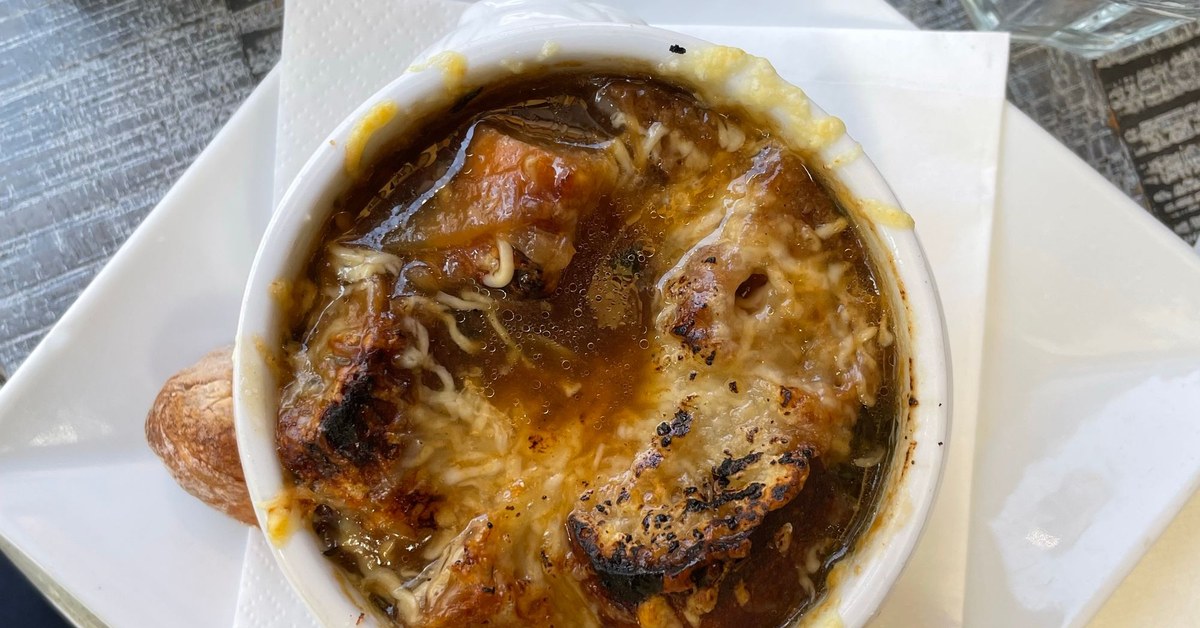
- Ladle soup into ovenproof bowls, top with toast and Gruyère and broil 2–4 minutes until bubbly and browned.
The short version
French onion soup is just onions, broth, bread and cheese, but the onions do all the work. Cook a big pile of thinly sliced onions slowly in butter for 45–60 minutes until they're soft, sticky and deep golden brown. Add a little flour and wine, pour in beef broth, and simmer 20–30 minutes. Then top each bowl with toasted bread and Gruyère and broil until the cheese bubbles and browns.
Give the onions the full time. There's no shortcut that tastes the same.
What you need
- Onions. 3 lb (1.4 kg) yellow onions, about 5 large, halved and sliced thin, around ⅛ inch (3 mm). It looks like far too much, but they cook down to about a quarter of their volume.
- Fat. 4 tablespoons (55 g) unsalted butter and 1 tablespoon olive oil. The oil helps keep the butter from browning too fast.
- Seasoning. 1 teaspoon kosher salt, ½ teaspoon sugar (optional, helps the onions color), black pepper and 1 teaspoon Worcestershire sauce.
- To build the soup. 3 cloves garlic, minced; 2 tablespoons all-purpose flour; ½ cup (120 ml) dry white wine or dry sherry.
- Broth and herbs. 6 cups (1.4 L) beef broth, 2 sprigs fresh thyme (or ½ teaspoon dried) and 1 bay leaf.
- Topping. 6 slices of baguette cut ¾ inch (2 cm) thick, and 6 oz (170 g) Gruyère, grated, about 2 cups.
- Equipment. A wide Dutch oven or heavy pot (5–7 quart), a wooden spoon, 6 ovenproof bowls and a rimmed baking sheet.
How to make French onion soup
- Start the onions. Melt the butter with the oil in the pot over medium heat. Add the onions and salt. They'll pile up high. Stir to coat, then cover for 10 minutes so they wilt and release their juice.
- Caramelize low and slow. Uncover, turn the heat to medium-low and add the sugar if using. Cook 45–60 minutes, stirring every 5–10 minutes. As a brown layer forms on the bottom of the pot, scrape it up into the onions. If it gets very dark, add 2 tablespoons of water and scrape. For more on how onions change, see our guide on how to sauté onions.
- Add garlic and flour. When the onions are jammy and a deep amber color, stir in the garlic for 1 minute, then sprinkle in the flour and stir 1 minute more.
- Deglaze. Pour in the wine or sherry and scrape up every brown bit. Let it bubble 1–2 minutes until mostly evaporated.
- Simmer. Add the broth, thyme, bay leaf and Worcestershire. Bring to a boil, then lower to a gentle simmer and cook 20–30 minutes, partly covered. Remove the thyme stems and bay leaf. Taste and season with salt and pepper.
- Toast the bread. While the soup simmers, heat the oven to 400°F (200°C). Lay the baguette slices on the baking sheet and toast 8–10 minutes, flipping once, until dry and lightly golden.
- Broil. Switch the oven to broil and set a rack about 6 inches (15 cm) from the heat. Put the ovenproof bowls on the baking sheet, fill them with hot soup, float a toast on each and pile on the Gruyère. Broil 2–4 minutes, until the cheese bubbles and has browned spots.
- Serve carefully. The bowls are very hot. Set each on a plate and let it sit a minute or two before eating.
French onion soup timing table
Times are for 3 lb of onions in a 5–7 quart pot. A wider pot caramelizes a bit faster; a narrow, deep one takes longer.
| Stage | Heat | Time | What the onions look like |
|---|---|---|---|
| Wilt, covered | Medium | 10 min | Soft, juicy, still white |
| Soft and pale | Medium-low | 15–20 min in | Limp, light gold |
| Golden | Medium-low | 30–40 min in | Honey colored, sweet |
| Deep caramelized | Medium-low | 45–60 min in | Deep amber, jammy |
| Garlic, flour, deglaze | Medium | 3–4 min | Brown bits lifted |
| Simmer with broth | Low | 20–30 min | Silky, flavors blended |
| Toast bread | 400°F (200°C) | 8–10 min | Dry, light golden |
| Broil cheese | High broil | 2–4 min | Bubbling with brown spots |
“The onions are deep amber and jammy, and the brown film on the bottom is getting dark. Time for the garlic and flour.”
How to tell when the onions are ready
The whole soup depends on how far you take the onions. Here's how to read them.
Sight
- At first the onions turn limp and translucent. Around the halfway mark they're light gold. They're ready when they're a deep amber, like dark honey or a well-brewed tea, and have collapsed into a soft, jammy tangle.
- Watch the bottom of the pot. A brown film builds up between stirs. That film is flavor, but if it turns very dark in spots, add a splash of water and scrape.
- Under the broiler, the cheese is done when it's bubbling all over with golden-brown spots.
Sound
- Early on, the onions hiss and steam as they release liquid. As they caramelize, the sound drops to a soft, sticky sizzle. A sharp crackle means the heat is a little too high.
Smell
- The smell goes from sharp and raw to sweet, then to a rich, almost toffee-like aroma. A bitter, acrid note means the bottom has gone a little too far; lower the heat and add water.
Touch
- Pinch a strand of onion (once it cools a little). Fully caramelized onions are completely soft and sticky, with no crunch left at all.
- When you stir, they should feel heavy and slump together instead of springing apart.
Temperature
Caramelization happens slowly, and medium-low heat is the safest place to do it. The butter and oil mix gives you a little more room before the fat starts to smoke; our smoke point chart explains why. When you reheat leftover soup, bring it to a rolling boil and to 165°F (74°C), as USDA advises for soups and broths.
This is a long, slow stretch where attention matters more than skill, and Pan is good company for it: it watches the color of the onions and the bottom of the pot, and tells you when to scrape, add water, or move on.
Tips for great French onion soup
- Slice pole to pole. Cutting the halves from root to tip helps the slices keep their shape instead of melting into mush.
- Use a wide pot. More surface area means more onions touching the bottom, which means faster, more even color.
- Don't rush with high heat. Turning the burner up gets the outside dark before the inside softens. Medium-low and patience give you sweet, even onions.
- Dry toast holds up. Well-toasted bread soaks up broth without dissolving into the bowl.
- Grate your own cheese. Pre-shredded cheese has anti-caking powder that keeps it from melting as smoothly.
- Make the onions ahead. Caramelized onions keep 4–5 days in the fridge, so you can do the long part on Sunday and finish the soup on a weeknight in 30 minutes.
What to serve with French onion soup
A bowl of French onion soup is rich, so pair it with something fresh: a crisp green salad with a sharp mustard vinaigrette is the classic partner. For a bigger dinner, serve smaller bowls as a starter before a pan-seared steak or a roast chicken.
Want more slow, cozy cooking? Try beef stew or learn the pattern behind every pot in how to make soup. Reheating leftovers? Check the reheating guide.
The same oven toasts make party snacks: see how to make crostini.
Want a creamy finish? Crème fraîche won't curdle in hot soup.
Bought a big bag? Here's how to freeze onions for soups.
The classic topping is Gruyère, which melts smooth and browns well.
Pan watches it for you
Pan tells you how far the onions have gone
Caramelizing onions takes close to an hour and changes slowly, then quickly. Pan watches the color of the onions and the brown layer on the bottom of the pot, and tells you when to stir, add a splash of water, or move on.
- Onions limp and pale gold: keep going, they're about halfway
- Brown film on the bottom getting very dark: add 2 tbsp water and scrape
- Onions deep amber and jammy: add the garlic and flour
- Cheese bubbling with brown spots under the broiler: take the bowls out
Pan AI is on iPhone • Android.
Common questions
How long does it take to caramelize onions for French onion soup?
Plan on 45–60 minutes over medium-low heat for 3 lb of onions. They go soft and pale first, then golden, then a deep amber brown. Turning the heat up to speed it along usually leaves them dark on the outside and still crunchy inside.
What onions are best for French onion soup?
Yellow onions are the classic choice. They have enough sugar to caramelize well and enough bite to keep the soup from tasting too sweet. You can mix in a sweet onion or a couple of shallots.
What cheese goes on French onion soup?
Gruyère is traditional because it melts smoothly and browns well under the broiler. Comté, Swiss, Emmental or a mix of Gruyère and Parmesan also work.
Can I make French onion soup without wine?
Yes. Deglaze with ½ cup (120 ml) extra broth and add 1–2 teaspoons of sherry vinegar or balsamic vinegar at the end for the same brightness.
Can I make French onion soup ahead?
Yes, and it gets better. Make the soup up to 3 days ahead and refrigerate. Reheat it to a rolling boil and 165°F (74°C), then add the toast and cheese and broil right before serving.
What if I don't have ovenproof bowls?
Put the toasted bread on a baking sheet, pile on the cheese, and broil 2–3 minutes until bubbly. Float the cheese toasts on top of the soup in regular bowls.
Sources
- USDA FSIS: Leftovers and Food Safety
- RecipeTin Eats: French Onion Soup
- Jessica Gavin: French Onion Soup
Reviewed against USDA FSIS guidance. How we choose sources and fix mistakes: editorial policy.
Keep cooking
- Vegetables & fruitHow to Sauté OnionsSauté onions in 1 tablespoon of fat over medium heat: soft in 5 minutes, golden in 10 to 15, caramelized in 40+. Plus quick green bean and shrimp sautés.
- Soups & stewsHow to Make SoupMake soup by softening aromatics 8–10 minutes, adding stock, then simmering ingredients in order of cook time, 20–40 minutes total. Timing table and template.
- Soups & stewsHow to Make Beef StewMake beef stew by browning chuck in batches, then simmering it in a Dutch oven for 2–2½ hours until fork-tender. Exact times, cues and vegetable timing.
- Soups & stewsHow to Make Chicken Noodle SoupMake chicken noodle soup by simmering bone-in chicken in broth with vegetables for 25–30 minutes to 165°F, then shredding it and cooking noodles 6–8 minutes.
- Soups & stewsHow to Make ChiliMake beef chili by browning ground beef to 160°F, blooming the spices, then simmering with tomatoes for 45–90 minutes. Beans optional, times and cues inside.
- Soups & stewsHow to Make Lentil SoupMake lentil soup on the stove in 40–50 minutes: soften onion, carrot and celery, add lentils and broth, then simmer 15–20 min for red or 25–35 for brown.
- Free toolReheating guideHow to reheat fried chicken, steak, prime rib, rice and 20+ leftovers so they taste fresh.
- Free toolSmoke point of oils, with the best oil for each jobSmoke points of 20+ oils and fats, and the best oil for searing, frying and cast iron.
- Free toolAI recipe generatorType what is in your fridge and get one simple, step-by-step recipe that uses only what you have.