How to Make a Frittata
Quick answer
Heat the oven to 400°F (200°C). Whisk 8 eggs with ½ cup milk and ½ teaspoon salt. Warm 2 cups of cooked fillings in a 10-inch oven-safe skillet over medium heat, pour in the eggs, stir gently 1–2 minutes, then cook undisturbed 3–4 minutes until the edges set. Bake 8–12 minutes, until the center is just set and reads 160°F (71°C).
Handy for this: Internal temperature chart · What can I make?
At a glance
- Heat the oven to 400°F (200°C) with a rack in the middle.
- Whisk 8 eggs, ½ cup (120 ml) milk, ½ tsp salt and pepper; stir in half the cheese.
- Warm 1 tbsp oil and 2 cups cooked fillings in a 10-inch oven-safe skillet over medium heat.
- Pour in the eggs and stir gently for 1–2 minutes until soft curds form.
- Cook without stirring 3–4 minutes, until the edges are set and the top is still wet.
- Top with the rest of the cheese and bake 8–12 minutes, until the center is set and 160°F (71°C).
- Rest 5 minutes, loosen the edges and slice into wedges.
The short version
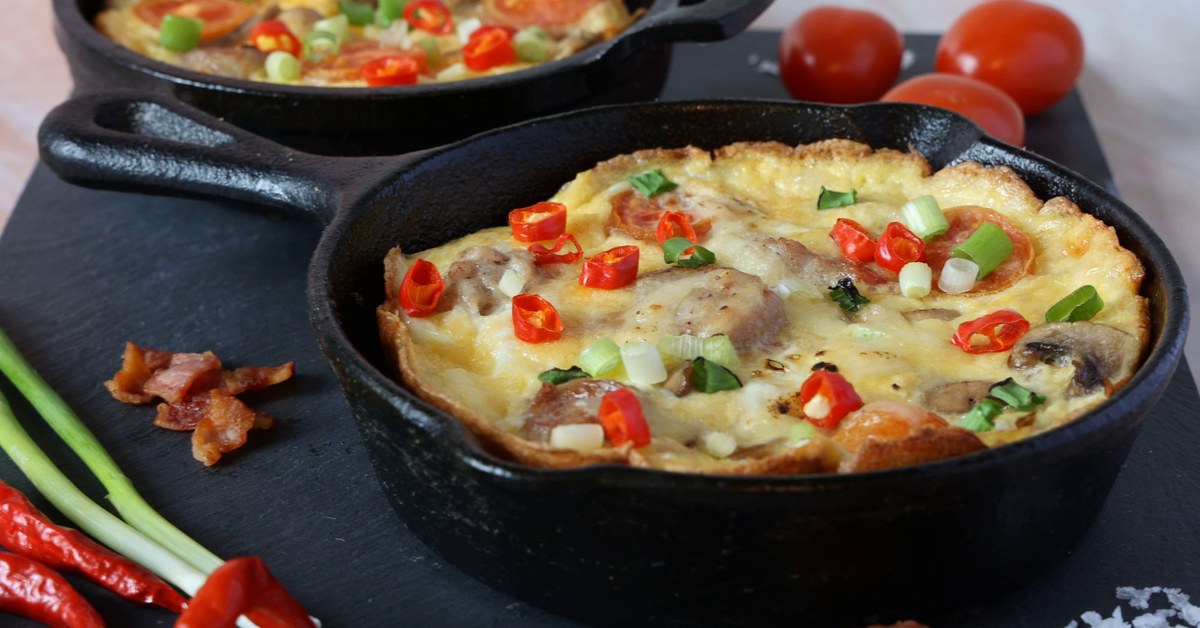
A frittata is eggs and fillings cooked in one skillet: started on the stove, finished in the oven. Whisk 8 eggs with a splash of milk and salt, pour them over warm cooked fillings in a 10-inch oven-safe skillet, stir gently until curds form, then let the edges set. Slide the pan into a 400°F (200°C) oven for 8–12 minutes until the center is just set and reaches 160°F (71°C).
It's one of the best ways to use up leftovers. That half tray of roasted vegetables, the last potato, a bit of ham: all of it becomes dinner for six with one pan to wash.
What you need
- 8 large eggs for a 10-inch skillet. Use 12 for a 12-inch skillet.
- ½ cup (120 ml) milk or half-and-half. It keeps the eggs tender. Too much makes them loose, so measure it.
- 1 cup (about 100 g) shredded cheese, divided. Cheddar, Gruyère, mozzarella, feta and goat cheese all work.
- 2 cups (about 250 g) cooked fillings. Leftovers are perfect. Fresh vegetables should be cooked first.
- An oven-safe skillet. Cast iron is ideal. Check that a nonstick pan and its handle are rated for 400°F (200°C).
- Oven mitts. The handle stays very hot after the oven. Drape a towel over it as a reminder.
Best fillings for a leftover frittata
Almost anything savory works, as long as it's cooked and not too wet. Here are some combinations to start with:
- Potato and onion: diced cooked potatoes and slow-cooked sautéed onions with cheddar.
- Spinach and feta: 5 oz (140 g) fresh spinach wilted and squeezed dry, with feta and dill.
- Roasted vegetables: leftover peppers, zucchini or broccoli from a sheet pan, with mozzarella.
- Ham and Swiss: diced holiday ham and Gruyère. A great use for leftovers from the holidays.
- Sausage and pepper: crumbled cooked sausage, sliced peppers and parmesan.
- Mushroom and herb: browned mushrooms with thyme and goat cheese.
Staring at a fridge of odds and ends? Our what can I make tool suggests combinations from what you have.
How to make a frittata step by step
- Heat the oven. Set it to 400°F (200°C) with a rack in the middle.
- Whisk the eggs. Beat the eggs, milk, salt and pepper for about 30 seconds, until fully blended with no streaks of white. Stir in half the cheese.
- Warm the fillings. Heat the oil or butter in the skillet over medium heat. Add the cooked fillings and stir for 2–3 minutes until hot. If you're using raw vegetables, cook them here first until tender and any water has cooked off.
- Add the eggs. Spread the fillings evenly and pour the eggs over them. Gently stir with a silicone spatula for 1–2 minutes, pulling the set egg from the bottom so soft curds form. This makes the texture even.
- Set the edges. Stop stirring. Cook undisturbed for 3–4 minutes, until the edges are set and just pulling from the sides of the pan. The center will still look wet.
- Finish in the oven. Scatter the rest of the cheese on top and move the skillet to the oven. Bake 8–12 minutes, until the center is set and puffed.
- Rest and slice. Let it sit 5 minutes; it firms as it rests. Run a spatula around the edge and slide it onto a board, or slice it right in the pan.
Step 5 is the moment Pan watches for on the stovetop: it tells you when the edges are set and it's time to move the pan to the oven.
Broiler finish: faster and more golden
Short on time? Cook the frittata on the stove over medium-low a few minutes longer, about 6–8 minutes, until only the top ¼ inch is wet. Then put it under the broiler, 4–6 inches from the element, for 2–4 minutes. Watch it closely through the oven window; it goes from pale to golden fast. Check the center temperature before serving.
Frittata timing chart
| Skillet | Eggs | Stovetop | Oven at 400°F (200°C) | Done at |
|---|---|---|---|---|
| 8-inch | 6 | 4–5 min | 7–10 min | 160°F (71°C) |
| 10-inch | 8 | 4–6 min | 8–12 min | 160°F (71°C) |
| 12-inch | 12 | 5–7 min | 12–16 min | 160°F (71°C) |
| 10-inch, broiler finish | 8 | 6–8 min | 2–4 min under broiler | 160°F (71°C) |
| 10-inch, lid on stovetop only | 8 | 12–15 min, low, covered | None | 160°F (71°C) |
“The edges are set and pulling from the sides, but the top is still glossy. Move it to the oven now.”
How to tell when a frittata is done
Sight
- On the stove, the edges turn opaque and set first while the middle stays glossy. That's your cue for the oven.
- In the oven, the center puffs and looks matte, not shiny. The cheese on top is melted and golden in spots.
Touch
- Give the pan a gentle shake. A done frittata moves as one piece; the center doesn't ripple like liquid.
- Press the middle gently with a finger or spatula. It should spring back.
Sound and smell
- A soft sizzle when the eggs hit the warm fillings means the pan is the right heat. A nutty, toasty smell from the cheese tells you the top is browning.
Temperature
USDA recommends cooking egg dishes to 160°F (71°C). Insert an instant-read thermometer into the center. Our doneness temperatures chart lists it with other dishes, and the eggs guides cover every other way to cook them.
Tips for a tender frittata
- Keep the stovetop heat at medium. High heat toughens the bottom before the center sets.
- Squeeze out greens. Wilted spinach and kale hold a lot of water.
- Pull it when just set. It keeps cooking from the hot pan as it rests.
- Season the fillings, too. A pinch of salt on the vegetables makes the whole frittata taste better.
- Want something faster for one? Our guide on how to make an omelette takes about 3 minutes.
Storing and reheating
Frittata is a great make-ahead breakfast or lunch. Cool it, cut it into wedges and refrigerate within 2 hours; it keeps 3–4 days. Eat it cold, at room temperature for a short time, or reheat wedges in the microwave or a 350°F (175°C) oven until 165°F (74°C). It slots right into an easy weekly dinner plan as the leftover-clearing night.
Try a leek and potato frittata; here's what a leek is and which part to use.
Thawed frozen cottage cheese is fine in egg bakes like this.
Grated Gruyère is a great match for ham and onions.
Frozen spinach works well here; squeeze it dry first. See can you freeze spinach.
Frozen asparagus works here; see can you freeze asparagus.
Pan watches it for you
Pan watches the stovetop start
The first 5 minutes happen on the stove, and that's where Pan helps: it watches the eggs form curds, tells you when to stop stirring and when the edges are set and ready for the oven. Once the skillet goes in the oven, a thermometer takes over.
- Fillings sizzling and hot: pour in the eggs
- Soft curds forming across the pan: stop stirring
- Edges set and pulling away from the sides: move it to the oven
- Top still wet in the middle: that's normal, the oven finishes it
Pan AI is on iPhone • Android.
Common questions
What temperature should a frittata be cooked to?
USDA says egg dishes should reach 160°F (71°C). Check the center with an instant-read thermometer; it should also look set and spring back when touched.
How long do you bake a frittata?
An 8-egg frittata in a 10-inch skillet takes about 8–12 minutes in a 400°F (200°C) oven after starting on the stove. A 12-egg frittata in a 12-inch skillet takes 12–16 minutes.
Can I make a frittata without an oven?
Yes. After the edges set, cover the skillet with a lid, lower the heat to low and cook 8–12 minutes until the top is set. It won't brown on top, but it cooks through evenly.
What's the difference between a frittata and an omelette?
An omelette is cooked quickly on the stove and folded around a filling. A frittata mixes the filling into the eggs, starts on the stove and finishes in the oven, and is served in wedges.
Why is my frittata watery?
Raw vegetables release water as they cook. Sauté fresh vegetables first and squeeze out greens like spinach, or use cooked leftovers, before adding the eggs.
How long does frittata keep in the fridge?
Refrigerate it within 2 hours and eat it within 3–4 days. It's good cold or reheated to 165°F (74°C).
Sources
- USDA FSIS: Shell Eggs from Farm to Table
- USDA FSIS: Safe Minimum Internal Temperature Chart
- FoodSafety.gov: Safe Minimum Internal Temperatures
Reviewed against USDA FSIS and FoodSafety.gov guidance. How we choose sources and fix mistakes: editorial policy.
Keep cooking
- Eggs & breakfastHow to Make an OmeletteMake an omelette with 3 eggs in a buttered 8-inch nonstick pan over medium heat for 2–3 minutes, lifting the edges, then fill, fold and slide it out.
- Eggs & breakfastHow to Make Scrambled EggsMake scrambled eggs over medium-low heat in butter for 3–5 minutes, folding slowly and pulling them off while still glossy. Soft, fluffy and diner styles.
- Vegetables & fruitHow to Cook SpinachSauté spinach with garlic in a hot skillet for 2–3 minutes, just until wilted and bright green. A 10 oz bag cooks down to about 1 cup. Ratios and cues.
- Vegetables & fruitHow to Cook MushroomsSauté sliced mushrooms in a hot, uncrowded skillet 8–10 minutes, salting at the end, until golden brown and tender. Times for sautéed and roasted mushrooms.
- Eggs & breakfastHow to Make CrepesMake crepes by resting a thin batter 30 minutes, then cooking 3 tbsp at a time over medium heat for 60–90 seconds a side. Ratios, flip cues, lemon and sugar.
- Eggs & breakfastHow to Cook Bacon in the OvenBake bacon at 400°F (205°C) for 15–20 minutes on a foil-lined sheet or a rack, 20–25 for thick-cut. Or start it in a cold oven. Flat, even strips.
- Free toolInternal temperature chartSafe and perfect internal temperatures for steak, chicken, salmon, pork and more, plus a printable PDF.
- Free toolWhat can I make?Type what is in your fridge and get simple recipes you can cook right now.