How to Cook Filet Mignon
Quick answer
Pat two 1½–2 inch filets dry, salt them and sear in a smoking-hot oven-safe skillet with oil, 2–3 minutes per side. Baste with butter, garlic and thyme for 1 minute, then roast at 400°F (205°C) for 4–8 minutes. Pull at 125°F for medium-rare and rest 5–10 minutes. USDA's safe minimum for beef is 145°F (63°C).
Handy for this: Steak cooking time calculator · Internal temperature chart · Cooking oil smoke points
At a glance
- Take the filets out of the fridge 30 minutes ahead, pat dry and salt all over.
- Heat the oven to 400°F (205°C) and an oven-safe skillet over medium-high for 4–5 minutes.
- Add oil and sear the filets 2–3 minutes per side without moving them, then sear the edges briefly.
- Add butter, garlic and thyme and baste the steaks with the foaming butter for about 1 minute.
- Move the pan to the oven and roast 4–8 minutes, checking the center with a thermometer.
- Pull the filets 5–10°F below your target and rest them 5–10 minutes.
- Spoon the pan butter over the top and serve.
The short version
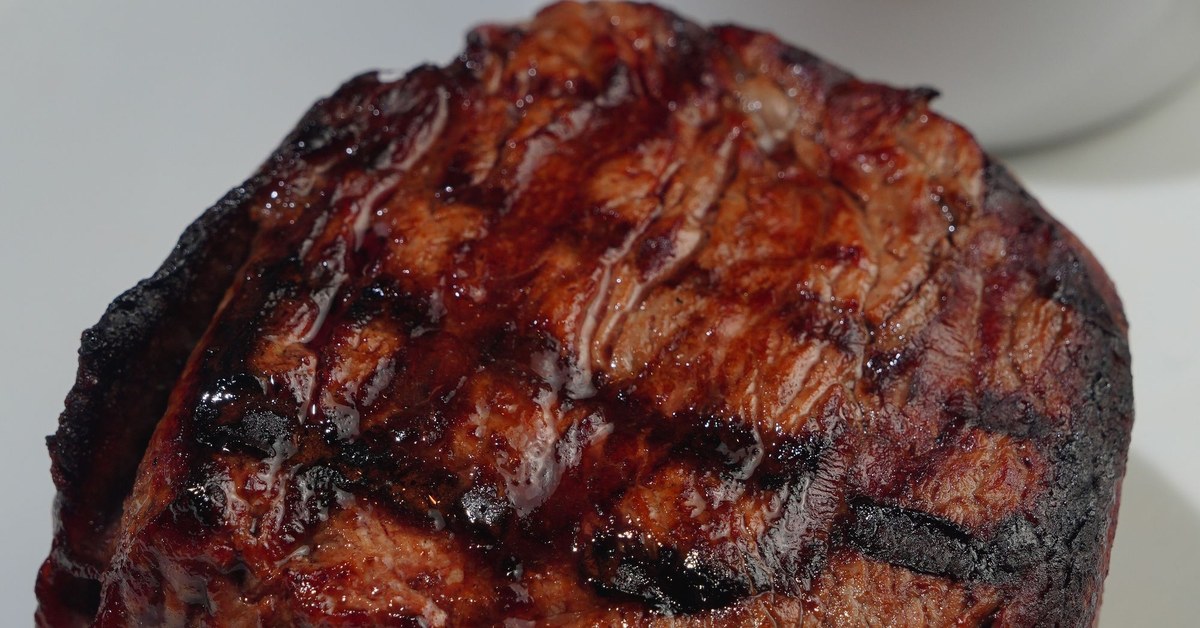
Filet mignon is thick and lean, so it does best with a two-step cook. Sear it hard in a hot skillet for a deep brown crust, baste it with foaming butter, garlic and thyme, then slide the whole pan into a 400°F (205°C) oven for a few minutes so the center warms through gently. Pull it at 125°F (52°C) for medium-rare, rest it, and spoon the butter over the top.
It takes about 20 minutes of actual cooking, one pan and one thermometer. A very good night in for two.
What you need
This is a dinner for two. Double everything for four, and use a 12-inch pan.
- 2 filet mignon steaks, 6–8 oz (170–225 g) each and 1½–2 inches thick. Thicker filets give you more room to build a crust before the center goes past medium-rare. Ask the butcher for center-cut pieces so they're even.
- 1 teaspoon kosher salt and ½ teaspoon black pepper.
- 1 tablespoon high-smoke-point oil, like avocado, canola or peanut. Our smoke points chart shows which oils handle a hard sear.
- 2 tablespoons (28 g) unsalted butter, 2 smashed garlic cloves and 2–3 sprigs of thyme or rosemary for basting.
- A 10-inch oven-safe skillet. Cast iron is ideal because it holds heat when the cold steak lands. Heavy stainless works too. Skip nonstick, which isn't made for this heat or for the oven.
- Tongs, a large spoon and an instant-read thermometer. With a cut this pricey, the thermometer is the most useful tool you own.
How to cook filet mignon in a pan and oven
- Prep the steaks. Take them out of the fridge 30–45 minutes before cooking. Pat them very dry with paper towels, then salt all sides, edges included. If they look loose or lopsided, tie kitchen twine around the middle to keep them round.
- Heat the oven and the pan. Set the oven to 400°F (205°C). Put the skillet over medium-high heat for 4–5 minutes, until a drop of water dances and vanishes in a second or two.
- Add the oil. Swirl it in. When it shimmers and sends up the first wisp of smoke, it's ready.
- Sear the first side. Lay the filets in, placing them away from you. They should sizzle loudly right away. Leave them alone for 2–3 minutes, until the bottom is deep mahogany and the steak lets go of the pan without tugging.
- Sear the second side and the edges. Flip and sear another 2 minutes. Then use tongs to hold each filet on its side and roll it around for 15–20 seconds per section to brown the edges.
- Butter baste. Turn the heat to medium. Add the butter, garlic and herbs. When the butter foams, tilt the pan toward you so it pools, and spoon it over the steaks again and again for about 1 minute. Season with pepper now.
- Finish in the oven. Move the skillet to the oven. Roast 4–6 minutes for 1½-inch filets or 6–8 minutes for 2-inch filets. Start checking at 4 minutes by sliding the thermometer in from the side to the very center.
- Pull early and rest. Take them out 5–10°F below your target (see the chart below). Use an oven mitt, because the handle is very hot. Move the steaks to a plate and rest them 5–10 minutes. Spoon the pan butter over the top before serving.
Thinner filets, about 1¼ inches or less, can stay on the stove the whole time. After the sear, turn the heat to medium-low and keep flipping every minute while you baste until they hit temperature. Our guide to cooking steak on the stove walks through that method in detail.
Filet mignon temperature and timing chart
Times are for steaks seared 2–3 minutes per side, then roasted at 400°F (205°C). Carryover cooking during the rest raises the center about 5–10°F, a bit more on thick filets.
| Doneness | Pull at | After resting | Oven time, 1½ in | Oven time, 2 in |
|---|---|---|---|---|
| Rare | 115–120°F (46–49°C) | 120–125°F (49–52°C) | 3–4 min | 4–6 min |
| Medium-rare | 125°F (52°C) | 130–135°F (54–57°C) | 4–6 min | 6–8 min |
| Medium | 135°F (57°C) | 140–145°F (60–63°C) | 6–8 min | 8–10 min |
| USDA safe minimum | 140°F (60°C) | 145°F (63°C), plus 3-min rest | 7–9 min | 9–11 min |
Our doneness temperatures chart has the same numbers for every other cut, from pork chops to salmon.
“The crust is deep brown on both sides and the butter is foaming and nutty. Baste a few more spoonfuls, then into the oven.”
How to tell when filet mignon is done
A filet is too thick to judge by time alone. Use your senses for the sear, and the thermometer for the center.
Sight
- The crust is ready to flip when the bottom third of the steak's side has turned from red to brown and the seared face is a deep, even mahogany.
- Once it's resting, the juices on the plate should be light and few. Lots of red juice usually means it needs a longer rest before slicing.
Sound
- A loud, steady sizzle when the steak hits the pan means the heat is right. A weak hiss means the pan wasn't hot enough, so give it another minute next time.
- When the butter goes in, it crackles and foams. As the foam quiets down and the butter smells nutty, it's toasting nicely and time to move to the oven.
Smell
- Browned butter, garlic and thyme smell sweet and toasty. If the butter smells sharp and acrid, it's getting too dark, so get the pan into the oven.
Touch
- Press the top of the filet with a fingertip. Rare feels soft and squishy, medium-rare springs back gently, and medium feels firm with only a slight give. It's a helpful check, but the thermometer is more reliable on a thick cut.
Temperature
Insert the thermometer from the side into the very center, since that's the slowest part to cook. Pull rare at 115–120°F (46–49°C), medium-rare at 125°F (52°C) and medium at 135°F (57°C). USDA's safe minimum for whole cuts of beef is 145°F (63°C) with a 3-minute rest. Many people enjoy filet rarer than that; for anyone pregnant, older, very young or immunocompromised, cook to 145°F.
When you're also setting the table and opening the wine, it helps to have someone watching the stove. That's what Pan does here: it sees the crust go deep brown and tells you when to flip, baste and move to the oven.
Tips for a great filet mignon
- Salt ahead if you can. Salting 1–24 hours ahead and leaving the steaks uncovered in the fridge seasons them deeper and dries the surface for a better crust.
- Don't crowd the pan. Two filets in a 10-inch skillet is right. Four need a 12-inch pan or two batches.
- Want an even edge-to-edge pink? Try the reverse sear method. You bake the filets low first, then sear at the end. It's great for 2-inch steaks.
- Make a quick pan sauce. While the steaks rest, set the skillet over medium, add ¼ cup (60 ml) red wine or beef broth, scrape up the browned bits and simmer 1–2 minutes. Swirl in a pat of butter.
- Slice or serve whole. Filets are usually served whole. If you slice, cut across the grain into ½-inch slices.
- Leftovers? Rewarm gently so they don't go past medium. Our guide on how to reheat steak shows the low-oven method; leftovers should reach 165°F (74°C) for safety.
What to serve with filet mignon
For a date night for two, keep the sides simple so you can sit down while the steak is still warm. Creamy mashed potatoes and a pan of asparagus are the classic pairing, and both can be ready before the steaks go in. Sautéed mushrooms in the leftover steak butter are hard to beat.
Planning a Valentine's dinner? Start the potatoes first, cook the asparagus while the oven heats, then give the steaks your full attention for the last 20 minutes. Finish with something light, like berries and whipped cream.
Pan watches it for you
Pan tells you when to flip and baste
Filet is thick and lean, so the crust and the timing matter. Pan watches the oil, the color on each side and the butter, and tells you when to flip, when to baste and when to move the pan to the oven.
- Oil shimmering with the first thin wisps of smoke: the pan is ready
- Bottom edge turned deep brown and the steak lifts easily: flip now
- Butter foaming and turning light hazelnut: start basting
- Butter getting dark and smoky: move the pan to the oven
Pan AI is on iPhone • Android.
Common questions
How long do you cook filet mignon in the oven?
After a 2–3 minute sear on each side, a 1½-inch filet needs about 4–6 minutes at 400°F (205°C) for medium-rare, and a 2-inch filet needs 6–8 minutes. Ovens and pans vary, so check the center with a thermometer starting at 4 minutes.
What temperature should filet mignon be?
Pull it at 115–120°F (46–49°C) for rare, about 125°F (52°C) for medium-rare and 135°F (57°C) for medium. It rises 5–10°F as it rests. USDA's safe minimum for whole cuts of beef is 145°F (63°C) followed by a 3-minute rest.
Can you cook filet mignon only on the stove?
Yes, for filets about 1¼ inches thick or less. Sear both sides, then turn the heat to medium-low and keep flipping every minute while you baste with butter until it reaches temperature. Thicker filets are easier with the oven finish.
Should you tie filet mignon?
If your filets are loose or uneven, tie a piece of kitchen twine around the middle. It keeps them round and tall so they cook evenly. Snip it off before serving.
Why is my filet mignon tough?
Filet is the most tender cut, so toughness usually means it went a little too far past medium. Use a thermometer and pull it early. A dry surface and a hot pan also give you crust without overcooking the inside.
Is it safe to eat filet mignon medium-rare?
USDA recommends whole cuts of beef reach 145°F (63°C) with a 3-minute rest. Many people choose rare or medium-rare filet; if you're cooking for someone who is pregnant, older or immunocompromised, use 145°F as your target.
Sources
- USDA FSIS: Safe Minimum Internal Temperature Chart
- America's Test Kitchen: Steak Doneness Chart
- ThermoWorks: Steak Temperature Guide
Reviewed against USDA FSIS guidance. How we choose sources and fix mistakes: editorial policy.
Keep cooking
- Meat & poultryHow to Cook Steak on the StoveCook steak on the stove in a hot cast iron pan: 3–4 minutes per side for a 1-inch medium-rare steak, then rest 5 minutes. Timing chart and doneness cues.
- Thanksgiving & holidaysHow to Reverse Sear SteakReverse sear a ribeye: bake at 250°F until 10 to 15°F below your target, then sear 1 minute per side in a very hot skillet. Times, pull temps and cues inside.
- Vegetables & fruitHow to Cook AsparagusSauté asparagus in a hot skillet 5–7 minutes or roast at 425°F for 10–15 until bright green and tender-crisp. Trimming, times and doneness cues inside.
- Vegetables & fruitHow to Make Mashed PotatoesBoil peeled Yukon Gold chunks in salted water 15–20 minutes until a fork slides in, then mash with warm butter and milk. Ratios, times and fixes inside.
- Meat & poultryHow to Cook Duck BreastScore duck breast skin, start it skin-side down in a cold pan and render 10–15 minutes over medium-low, then flip for 1–3 minutes. USDA temp and doneness cues.
- Meat & poultryHow to Cook Ground ChickenBrown ground chicken in an oiled skillet over medium-high for 8–10 minutes, breaking it up, until no pink remains and it reaches 165°F (74°C). Tips and times.
- Free toolSteak cooking time calculatorMinutes per side by thickness and doneness, pan, grill or reverse sear, with pull temps.
- Free toolInternal temperature chartSafe and perfect internal temperatures for steak, chicken, salmon, pork and more, plus a printable PDF.
- Free toolSmoke point of oils, with the best oil for each jobSmoke points of 20+ oils and fats, and the best oil for searing, frying and cast iron.