When to Flip Steak (and How to Know It's Done)
Quick answer
Flip a steak when it lifts off the pan without sticking and the bottom has a deep golden crust, usually after 2–4 minutes for a 1-inch steak on a hot pan. You can flip once or every minute; frequent flipping cooks more evenly. Doneness is decided by the inside, so check with a thermometer. USDA's safe minimum for steak is 145°F (63°C) with a 3-minute rest.
Handy for this: Internal temperature chart · Cooking oil smoke points
At a glance
- Pat the steak dry and salt it on both sides.
- Heat a heavy skillet over medium-high until a thin layer of oil shimmers.
- Lay the steak in, away from you.
- Leave it alone for 2–4 minutes until it releases and the underside has a deep golden crust.
- Flip it with tongs.
- Optional: add butter, garlic and herbs and baste for the last minute or two.
- Check the center with an instant-read thermometer.
- Rest the steak at least 3–5 minutes on a board or warm plate.
- Slice against the grain and serve.
The short version
Flip a steak when two things are true: it lifts off the pan without sticking, and the underside has a deep golden crust. On a properly hot pan, a 1-inch steak gets there in about 2–4 minutes. If it clings to the pan, it isn't ready yet. Give it another 30 seconds.
How many times you flip is up to you. One flip is simple and gives a big, even crust. Flipping every minute or so cooks the inside a little more evenly. Either way, the flip is about the outside. Doneness is about the inside, and a thermometer is the final word there.
“The edges have gone opaque about a quarter of the way up and the steak is releasing from the pan. Flip it now.”
Steak doneness temperature chart
Steak keeps cooking after it leaves the pan. Carryover usually adds about 5°F, so take it off a little before your target.
| Doneness | Take off the heat | After a 3-minute rest | What the center looks like |
|---|---|---|---|
| Rare | 120–125°F (49–52°C) | About 125–130°F | Cool, deep red center |
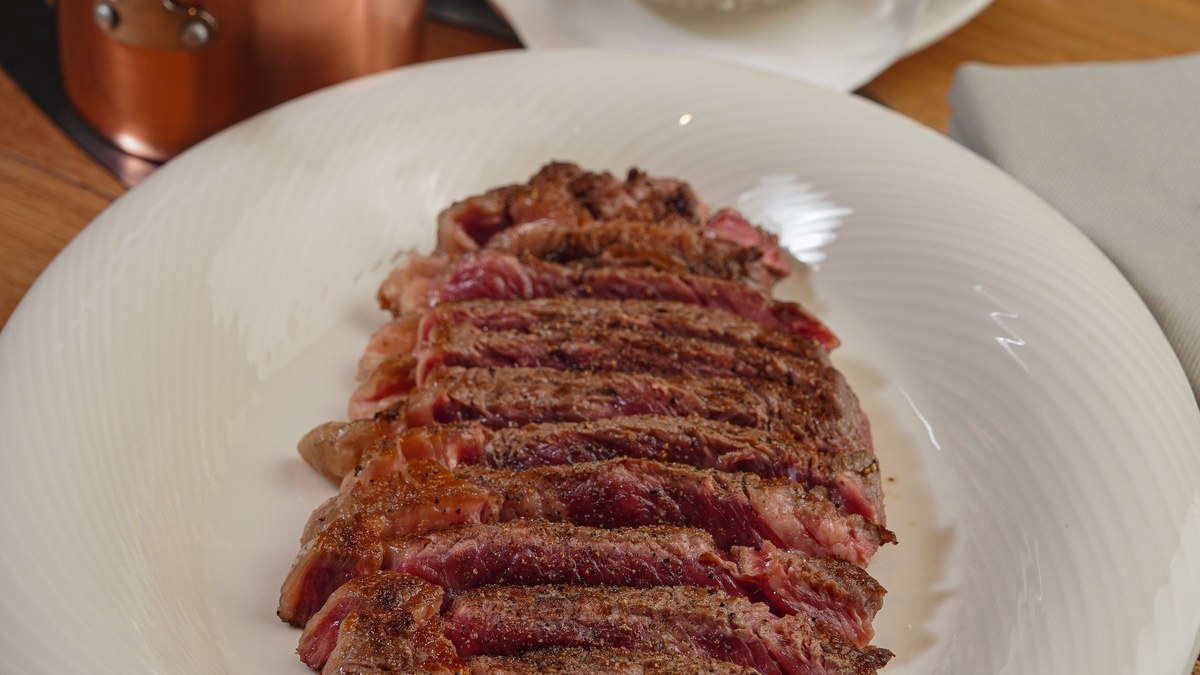
| Medium rare | 130–135°F (54–57°C) | About 135–140°F | Warm, red-pink center |
| Medium | 140–145°F (60–63°C) | About 145°F (63°C) | Pink center |
| Medium well | 150°F (66°C) | About 155°F | Slight pink |
| Well done | 160°F (71°C) | 160°F+ | No pink |
The USDA safe minimum for beef steaks is 145°F (63°C) with a 3-minute rest. Rare and medium-rare are a personal choice below that line. Burgers follow a different rule: ground beef needs 160°F (71°C). Our steak internal temp guide goes deeper on pull temps, and the doneness temperatures chart covers every cut.
How to know it's time to flip
What it looks like
- The edges turn from red to opaque about a quarter of the way up the side.
- If you lift a corner with tongs, the underside shows a deep golden crust, not a pale gray.
- Small beads of moisture start to appear on the top surface.
What it sounds like
- A loud, steady sizzle from the moment the steak goes in. If the pan goes quiet right away, it wasn't hot enough. Our guide on how to tell if oil is hot enough shows the shimmer test and the other cues.
What it feels like
- The tongs lift it cleanly. If it sticks, the crust hasn't set. Wait 30 seconds and try again rather than prying it loose.
This is the exact moment Pan AI was built for: point your phone at the pan and it watches the edges and the sizzle, then says "Flip it now" out loud so you're not lifting the steak every 20 seconds. It tells you what it sees on the outside; the thermometer still decides the inside.
Time per side by thickness
These are starting points for a hot skillet with a single flip. Thicker steaks need more time and gentler heat once the crust is set.
| Thickness | First side | Second side, medium rare | Second side, medium |
|---|---|---|---|
| ¾ inch | 2–3 min | 1–2 min | 2–3 min |
| 1 inch | 3–4 min | 2–3 min | 4–5 min |
| 1½ inches | 4–5 min | 4–5 min | 6–7 min, lower heat |
Start checking the center a minute before the low end. A thermometer reading beats any timer.
One flip or many?
Cooks have argued about this for years, and both sides have a point.
- One flip. Leave it alone until the crust forms, flip once, finish the second side. It's easy to follow, and you get a single, even crust. Great for beginners.
- Frequent flipping. Turn the steak every 30–60 seconds. Each side gets a short burst of heat and then rests, so the inside cooks more evenly from edge to center. The crust builds a little more slowly.
- A simple timed middle ground. For a 1-inch steak, try 3 minutes, flip, 3 minutes, flip, 2 minutes, flip, 2 minutes. Then check the center.
Thicker steaks, over about 1½ inches, often do better with a reverse sear: low oven first, hot pan last.
Step by step: pan-seared steak
- Pat dry and salt. Dry the surface with paper towels and salt both sides. A dry steak forms a crust; a wet one steams.
- Heat the pan. Use a heavy skillet over medium-high. Add a thin layer of high smoke point oil and wait until it shimmers. The smoke points chart helps you pick the oil.
- Lay the steak away from you. That way any spatter goes away from you, too.
- Leave it alone for 2–4 minutes. Don't move it or press it.
- Flip. When it releases and the crust is deep golden, turn it with tongs.
- Baste (optional). Add a knob of butter, a crushed garlic clove and a sprig of thyme. Tilt the pan and spoon the foaming butter over the steak for the last minute or two.
- Check the temperature. Slide an instant-read thermometer in from the side so the tip sits in the center.
- Rest 5 minutes. Move it to a board or warm plate. At least 3 minutes, longer for thick cuts.
- Slice against the grain. Short fibers make every bite more tender.
Want more detail on pans, oils and cuts? See how to cook steak on the stove.
Checking doneness without a thermometer
The press test is a rough guide. Press the center of the steak with a fingertip: rare feels soft and yielding, medium-rare gives a little, medium springs back, and well done feels firm. You can also make a small cut near the center and look at the color. Both get easier with practice, but they're less precise than a thermometer, which is the final word for the inside.
Common mistakes
- A wet, cold steak in a cold pan. It sticks and turns gray instead of golden. Dry it, let it sit out 20–30 minutes, and preheat the pan.
- Moving it before the crust forms. If it sticks, it isn't ready.
- Pressing it with the spatula. That squeezes out juice and doesn't speed anything up.
- Crowding the pan. Two steaks in a small skillet drop the heat. Use a bigger pan or cook one at a time.
- Cutting it right away. Rest first so the juices stay in the steak.
- Using only time. Steaks vary in thickness and pans vary in heat. Time gets you close; a thermometer or the press test confirms it.
Keep going
The same "leave it alone until it releases" rule works for salmon skin; salmon internal temp covers when fish is done. Cooking chicken tonight? How to tell if chicken is done has the 165°F rule and the cues to look for. Steak and eggs for breakfast? See how to boil eggs.
On the grill, the same rule applies: wait until it releases. See how to grill steak.
Using the air fryer instead? Air fryer steak has times by thickness and doneness, flipped once halfway.
Pan watches it for you
Pan calls the flip, your thermometer calls the doneness
Pan can't see inside the steak. It watches the edges change color, listens to the sizzle, keeps the clock for each side, and tells you out loud when it looks ready to flip and when to check the center with a thermometer.
- Oil shimmering: lay the steak in
- Edges opaque a quarter of the way up: flip it now
- Sizzle going quiet early: the pan may need more heat
- Deep golden crust on both sides: check the center temperature
Pan AI is on iPhone • Android.
Common questions
How many times should you flip a steak?
Once is fine, and so is flipping often. A single flip gives you one big, even crust and is easier to manage. Flipping every 30–60 seconds cooks the inside a little more evenly. Both work; pick the one that's easier for you.
How long do you cook a steak on each side for medium rare?
For a 1-inch steak over medium-high to high heat, about 3–4 minutes per side. Take it off the heat at 130–135°F (54–57°C) and rest it. Medium-rare is below the USDA safe minimum of 145°F (63°C) with a 3-minute rest, so it's a personal choice.
Should you flip steak every minute?
You can. Flipping every minute or so cooks the steak evenly from edge to center and can shorten the cook a bit. The crust forms a little more slowly, so give the pan plenty of heat.
How do you know when steak is done without a thermometer?
Press the center: rare feels soft, medium gives a little, well done feels firm. You can also make a small cut near the center and look. Both are less precise than a thermometer, which is the final word for the inside.
Why does my steak stick when I try to flip it?
Usually the crust hasn't formed yet or the pan wasn't hot enough. Wait 30 seconds and try again. A dry steak and a properly preheated pan release much more easily.
Is the temperature different for burgers?
Yes. Ground beef needs 160°F (71°C) in the center, because grinding spreads surface bacteria through the meat. Whole steaks are safe at 145°F (63°C) with a 3-minute rest.
How long before flipping a steak?
Usually 2–4 minutes, once it releases from the pan easily and has a deep golden crust. A 1-inch steak takes about 3–4 minutes on the first side.
How often should you flip a steak in a pan?
Once is enough: a single flip gives one big, even crust. You can also flip every minute, which cooks a little more evenly, as long as the pan stays hot.
When do you flip a 1½-inch steak?
After about 4–5 minutes on the first side. Then give it 4–5 minutes for medium rare, or 6–7 minutes on lower heat for medium. Steaks thicker than about 1½ inches often do better with a reverse sear.
Sources
- USDA FSIS: Safe Minimum Internal Temperature Chart
- USDA FSIS: Beef from Farm to Table
- FoodSafety.gov: Safe Minimum Internal Temperatures
Reviewed against USDA FSIS and FoodSafety.gov guidance. How we choose sources and fix mistakes: editorial policy.
Keep cooking
- Start hereSteak Internal TempMedium-rare steak finishes at 130–135°F (54–57°C); USDA's safe minimum is 145°F (63°C) with a 3-minute rest. Pull temps, final temps and carryover.
- Meat & poultryHow to Cook Steak on the StoveCook steak on the stove in a hot cast iron pan: 3–4 minutes per side for a 1-inch medium-rare steak, then rest 5 minutes. Timing chart and doneness cues.
- Thanksgiving & holidaysHow to Reverse Sear SteakReverse sear a ribeye: bake at 250°F until 10 to 15°F below your target, then sear 1 minute per side in a very hot skillet. Times, pull temps and cues inside.
- Meat & poultryHow to Cook Filet MignonSear filet mignon 2–3 minutes per side in a hot skillet, then roast at 400°F for 4–8 minutes and pull at 125°F for medium-rare. Butter baste and temp chart.
- Start hereChatGPT for Cooking vs Pan AI: What Changes on December 11, 2026ChatGPT voice changes on Dec 11, 2026, and Live has no video. An honest ChatGPT cooking alternative that watches your pan, and where ChatGPT still wins.
- Start herePan AI vs Samsung FoodSamsung Food saves recipes, plans meals and builds shopping lists. Pan AI watches your pan and tells you when to flip. Where each one is better, side by side.
- Free toolInternal temperature chartSafe and perfect internal temperatures for steak, chicken, salmon, pork and more, plus a printable PDF.
- Free toolSmoke point of oils, with the best oil for each jobSmoke points of 20+ oils and fats, and the best oil for searing, frying and cast iron.