How to Make Stuffing
Quick answer
Dry 1¼ lb of bread cubes in a 250°F oven 40–50 minutes. Sauté 2 cups onion and 1½ cups celery in ½ cup butter 8–10 minutes. Toss the bread with the vegetables, herbs, 2½ cups warm broth and 2 beaten eggs. Bake in a buttered 9×13 dish at 350°F (175°C), covered 25 minutes, then uncovered 15–20 until golden and 165°F (74°C) inside.
Handy for this: Turkey cooking time calculator · Internal temperature chart
At a glance
- Cut 1¼ lb of bread into ¾-inch cubes and dry them at 250°F for 40–50 minutes, or leave out overnight.
- Melt ½ cup butter in a large skillet and cook the onion and celery over medium heat for 8–10 minutes until soft.
- Stir in garlic, sage, thyme, salt and pepper and cook 1 minute.
- Toss the bread cubes with the vegetables and parsley in a large bowl.
- Whisk 2½ cups warm broth with 2 eggs, pour over the bread and toss until evenly moist.
- Spread in a buttered 9 x 13-inch dish, cover with foil and bake at 350°F for 25 minutes.
- Uncover and bake 15–20 minutes more, until the top is golden and the center reads 165°F.
The short version
Stuffing is dried bread cubes tossed with onion and celery cooked in butter, herbs, warm broth and, if you like, a couple of eggs. Bake it in a buttered dish at 350°F (175°C): covered with foil for about 25 minutes so it heats through and stays moist, then uncovered for 15–20 minutes so the top turns golden and crisp. It's done when the center reaches 165°F (74°C).
The one step people skip is drying the bread. Dry bread soaks up broth like a sponge and keeps its shape. Fresh bread turns to paste. Give it 40–50 minutes in a low oven, or leave the cubes out overnight.
What you need
This fills a 9 x 13-inch dish and serves 10–12 as a side.
- 1¼ pounds (565 g) sturdy bread. A plain white sandwich loaf, French bread, Italian bread or a mild sourdough all work. That's about 12 cups of ¾-inch cubes. Avoid very soft, sweet bread.
- ½ cup (1 stick / 113 g) unsalted butter, plus a little for the dish.
- 1 large yellow onion, chopped (about 2 cups), and 3–4 celery ribs, chopped (about 1½ cups). Include the celery leaves; they have lots of flavor.
- Herbs: 2 tablespoons chopped fresh sage, 1 tablespoon fresh thyme leaves and ¼ cup chopped parsley. Dried works too: use 2 teaspoons sage and 1 teaspoon thyme.
- 2 cloves garlic, 1 teaspoon kosher salt and ½ teaspoon black pepper.
- 2½–3 cups (600–720 ml) warm broth. Turkey or chicken broth, low-sodium if possible. Vegetable broth makes it vegetarian.
- 2 large eggs (optional) for a stuffing that holds together and slices neatly.
- Tools: a serrated knife, two rimmed baking sheets, a large skillet, a big mixing bowl, a 9 x 13-inch baking dish, foil and an instant-read thermometer.
How to make stuffing, step by step
- Cube the bread. Cut the bread, crusts and all, into ¾-inch cubes. Spread them in a single layer on two baking sheets.
- Dry the bread, 40–50 minutes. Bake at 250°F (120°C), stirring halfway, until the cubes feel dry and crisp on the outside, like croutons that haven't browned. Or leave them out on the counter, loosely covered with a towel, for 1–2 days. Let them cool.
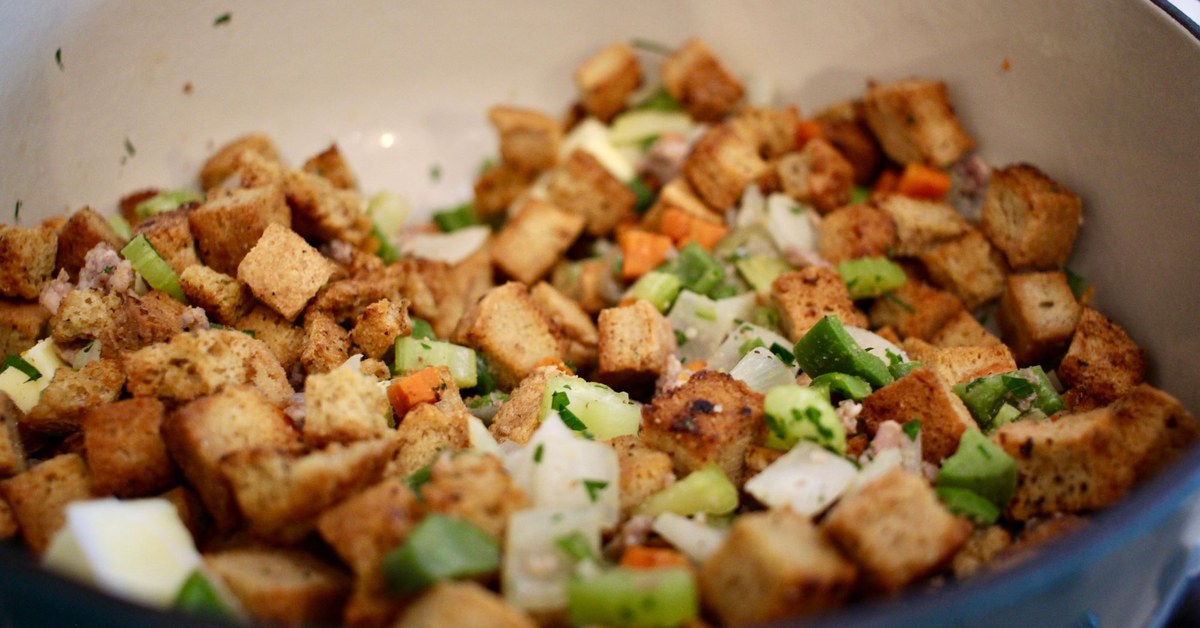
- Cook the vegetables, 8–10 minutes. Melt the butter in a large skillet over medium heat. When the foam settles, add the onion and celery with a pinch of salt. Cook, stirring every minute or two, until the onion is soft and translucent and the celery has lost its crunch. You want soft and sweet, not deeply browned. The guide to sautéing onions shows what each stage looks like.
- Add the aromatics, 1 minute. Stir in the garlic, sage, thyme, salt and pepper. Cook just until the garlic smells fragrant, then take the pan off the heat.
- Combine. Put the dried bread in your largest bowl. Scrape in the vegetables and every bit of butter, add the parsley, and toss well.
- Add the liquid. Whisk the eggs (if using) into 2½ cups of warm broth. Pour it over the bread a little at a time, tossing gently with a big spoon or your hands. Let it sit 5 minutes so the bread absorbs it. Squeeze a handful: it should hold together and feel moist, with no puddle at the bottom of the bowl. If it's still dry and crumbly, add up to ½ cup more broth.
- Bake covered, 25 minutes. Heat the oven to 350°F (175°C). Butter the baking dish and spread the stuffing in loosely; don't pack it down. Dot the top with a tablespoon of butter if you like a richer crust. Cover tightly with foil and bake.
- Bake uncovered, 15–20 minutes. Take off the foil and keep baking until the top is golden brown and crisp at the edges and the center reads 165°F (74°C). Let it rest 5–10 minutes before serving.
Stuffing inside the turkey
Stuffing baked in the bird soaks up the turkey juices and is very rich, but it needs a little care. Mix the stuffing just before it goes into the turkey; don't stuff the bird the night before. Pack it loosely, about ¾ cup of stuffing per pound of turkey, since it expands as it cooks. Bake any extra in a small buttered dish.
A stuffed turkey takes longer to roast. Our turkey cooking time calculator gives stuffed and unstuffed times by weight, and the full turkey roasting guide covers the rest. The turkey and the stuffing both need to reach 165°F (74°C); check the center of the stuffing separately, as explained in our turkey internal temperature guide. If the bird is done before the stuffing is, spoon the stuffing into a dish and bake it on its own while the turkey rests. Let the turkey rest 20 minutes before you take the stuffing out.
Stuffing baking time chart
Times are for a 350°F (175°C) oven. Every version should reach 165°F (74°C) in the center.
| How you're baking it | Covered | Uncovered | Total |
|---|---|---|---|
| 9 x 13-inch dish, freshly mixed | 25 min | 15–20 min | 40–45 min |
| 8 x 8-inch dish (half batch) | 20 min | 10–15 min | 30–35 min |
| 9 x 13-inch dish, mixed and chilled | 30–35 min | 15–20 min | 45–55 min |
| Muffin tin, buttered (stuffing cups) | None | 20–25 min | 20–25 min |
| Inside the turkey | Roasts with the bird; add about 15–30 min to the roast | Until 165°F in the center | |
| Reheating baked stuffing | 20–25 min | 5 min | 25–30 min |
The doneness temperatures chart has the safe numbers for every other part of the meal.
“The onion and celery are soft and translucent with just a little gold at the edges. Add the herbs now.”
How to tell when stuffing is done
You want a moist, tender center and a golden, crunchy top. Here's how to know you've got both.
Sight
- The top is golden brown with darker, crisp edges where the bread touches the dish. The bread cubes on top look toasted, not pale and soft.
- When you lift a spoonful from the center, there's no liquid pooling at the bottom of the dish, and egg-bound stuffing looks set rather than wet.
Sound
- Pull the dish out and listen. You'll hear a faint sizzle of butter around the edges. Tap the top with a spoon; done stuffing sounds crisp, not soft and damp.
Smell
- Toasted bread, browned butter and sage. That buttery-toast smell gets stronger in the last few minutes of uncovered baking.
Touch
- Press the center with the back of a spoon. It should spring back a little and feel moist and tender, not wet or soupy. The edges should feel firm and crunchy.
Temperature
Slide an instant-read thermometer into the center of the dish. It should read 165°F (74°C), which is the USDA number for stuffing, whether it's baked in a dish or in the bird. With eggs in the mix, that also takes care of the 160°F (71°C) egg target. The stovetop part is earlier: Pan can watch the onion and celery in the skillet and tell you when they're soft and ready for the herbs.
Variations
- Sausage stuffing. Brown 1 pound of bulk pork or Italian sausage in the skillet first, breaking it up, until no pink remains and it reaches 160°F (71°C). Our sausage guide has the details. Cook the onion and celery in the sausage fat with 4 tablespoons of butter instead of 8.
- Cornbread dressing. Swap half or all of the bread for day-old crumbled cornbread. It soaks up liquid faster, so start with 2 cups of broth.
- Apple and herb. Add 1 diced tart apple with the celery and ½ cup dried cranberries with the bread.
- Mushroom. Brown 8 ounces of sliced mushrooms before the onion goes in, and use vegetable broth for a vegetarian version.
Tips for great stuffing
- Dry, not toasted. The bread should be dry all the way through but still pale. Deeply browned cubes don't absorb broth as well.
- Warm the broth. Warm broth soaks into the bread faster and evenly. Taste it first; if it's well seasoned, the stuffing will be too.
- Don't pack it. Spoon it into the dish loosely. Pressed-down stuffing bakes dense and heavy.
- Foil first, then off. Covering keeps the inside moist while it heats. Uncovering at the end gives you the crisp top everyone fights over.
- Prep in pieces. Dry the bread up to 3 days ahead, chop and cook the vegetables the day before, then mix and bake on the day.
- Leftovers. Refrigerate within 2 hours and eat within 3–4 days. Reheat covered at 350°F with a splash of broth until it reaches 165°F (74°C).
What to serve with stuffing
Stuffing belongs on a plate with roast turkey and a ladle of gravy made from the pan drippings. Round out the table with mashed potatoes, cranberry sauce and a dish of green bean casserole, which bakes at the same 350°F, so the two can share the oven while the turkey rests.
The day after, press leftover stuffing into a hot buttered skillet and let it crisp for 3–4 minutes per side, then top it with a fried egg. It might be the best meal of the whole weekend.
Prep ahead: celery freezes well for cooked dishes like stuffing.
No thyme or marjoram? See substitute for thyme and substitute for marjoram.
Pan watches it for you
Pan tells you when the vegetables are ready
The flavor base of stuffing is onion and celery cooked slowly in butter. Pan watches the skillet and tells you when they've softened and turned translucent, before they go too dark.
- Butter foaming and the foam settling: add the onion and celery
- Onion pieces turning from white to see-through: keep stirring, a few minutes left
- Vegetables soft, translucent and just golden at the edges: add the herbs and garlic
- Garlic fragrant after about 1 minute: take the skillet off the heat
Pan AI is on iPhone • Android.
Common questions
How long do you bake stuffing at 350?
Bake a 9 x 13-inch pan of stuffing at 350°F (175°C) for 35–45 minutes in total: about 25 minutes covered with foil, then 15–20 minutes uncovered so the top turns golden and crisp. The center should reach 165°F (74°C).
What is the difference between stuffing and dressing?
Strictly speaking, stuffing is cooked inside the bird and dressing is baked in a separate dish. In practice the names are regional. Many people in the South say dressing for any version, often made with cornbread, while most other Americans say stuffing either way.
Is it safe to cook stuffing inside the turkey?
Yes, if the stuffing reaches 165°F (74°C) in the center. Stuff the turkey loosely just before roasting, about ¾ cup per pound of bird, and check the stuffing with a thermometer. If the turkey is done and the stuffing isn't, spoon it into a dish and keep baking it.
Do you have to put eggs in stuffing?
No. Eggs bind the stuffing and make it a little firmer and more custardy, which helps it hold together on a plate. Without eggs it's looser and more crumbly. If you skip them, use about ½ cup less broth.
Can you make stuffing ahead of time?
Dry the bread up to 3 days ahead and keep it in a sealed bag. Sauté the vegetables a day ahead and refrigerate them. Combine everything with the broth just before baking. You can also bake it fully a day ahead and reheat it covered at 350°F until it reaches 165°F.
Why is my stuffing soggy or dry?
Soggy stuffing usually means the bread wasn't dry enough or there was too much broth. Dry stuffing needs more liquid. The mixture should feel moist and hold together when you squeeze a handful, without liquid pooling in the bowl.
Sources
- USDA FSIS: Safe Minimum Internal Temperature Chart
- FoodSafety.gov: Safe Minimum Internal Temperatures
- Love and Lemons: Stuffing Recipe
- Jessica Gavin: Easy Stuffing Recipe
Reviewed against USDA FSIS and FoodSafety.gov guidance. How we choose sources and fix mistakes: editorial policy.
Keep cooking
- Thanksgiving & holidaysHow to Cook a TurkeyRoast turkey at 325°F: a 15 lb unstuffed bird takes about 3¾ to 4¼ hours. Pull it at 165°F, rest 20 to 30 minutes. Full chart, spatchcock option and cues.
- Thanksgiving & holidaysHow to Make GravyMake gravy with a roux: cook 2 tbsp fat and 2 tbsp flour for 2–3 minutes, whisk in 1 cup warm broth, and simmer 5–8 minutes until it coats a spoon.
- Thanksgiving & holidaysGreen Bean CasseroleBake green bean casserole at 350°F for 25–30 minutes, until bubbling, then add crispy onions for the last 5. Classic canned-soup and from-scratch versions.
- Vegetables & fruitHow to Sauté OnionsSauté onions in 1 tablespoon of fat over medium heat: soft in 5 minutes, golden in 10 to 15, caramelized in 40+. Plus quick green bean and shrimp sautés.
- Thanksgiving & holidaysHow to Make Beef WellingtonMake beef Wellington by wrapping seared tenderloin in duxelles, prosciutto and puff pastry, then bake at 425°F for 25–35 minutes until it reads 120–125°F.
- Thanksgiving & holidaysBoxing Day LeftoversTurn Boxing Day leftovers into bubble and squeak, turkey sandwiches, pie, hash and soup. Plus safety: chill in 2 hours, eat in 3–4 days, reheat to 165°F.
- Free toolTurkey cooking time calculatorRoast time by weight, stuffed or not, spatchcock and breast, plus thaw time and how much to buy.
- Free toolInternal temperature chartSafe and perfect internal temperatures for steak, chicken, salmon, pork and more, plus a printable PDF.