How to Cook Sausage
Quick answer
Put raw sausage links in a cold skillet with about ½ inch of water. Bring to a gentle simmer, cover and cook 8–10 minutes, turning once. Uncover, let the water cook off, add a teaspoon of oil and brown the links 4–6 minutes, rolling them often. Pork and beef sausage is done at 160°F (71°C); chicken and turkey at 165°F (74°C).
Handy for this: Internal temperature chart
At a glance
- Lay raw sausage links in a cold skillet in one layer.
- Add about ½ inch of water, bring to a gentle simmer over medium heat and cover.
- Simmer 8–10 minutes, turning the links once halfway.
- Uncover and let the remaining water cook away, about 1–2 minutes.
- Add 1 teaspoon of oil and brown the links 4–6 minutes, rolling them so every side colors.
- Check the center: 160°F for pork or beef, 165°F for chicken or turkey. Rest 2–3 minutes and serve.
The short version
Raw sausage needs two things: a fully cooked center and a browned outside. The easiest way to get both is to simmer first, then brown. Lay the links in a cold skillet, add about ½ inch (1 cm) of water, cover, and simmer 8–10 minutes. Let the water cook off, add a teaspoon of oil, and roll the links around for 4–6 minutes until they're golden all over.
Pork and beef sausage is done at 160°F (71°C). Chicken and turkey sausage needs 165°F (74°C). Patties skip the water and cook 4–5 minutes per side.
What you need
- 1 pound (450 g) raw sausage. Italian links, bratwurst-style links, breakfast links or bulk sausage for patties all work. Check the label: "fresh" or "uncooked" means you need to cook it to temperature, "fully cooked" or "smoked" means you're only heating it through.
- A 10- or 12-inch skillet with a lid. Stainless steel and cast iron give the best browning. Nonstick works and makes cleanup easy.
- About ½ cup (120 ml) water. Beer or broth also works and adds flavor.
- 1 teaspoon oil for browning, since lean chicken sausage won't give off much fat.
- Tongs to roll the links without piercing them.
- An instant-read thermometer. With sausage, this is the only way to be sure.
Cooking bratwurst specifically? Our guide on how to cook brats on the stove covers the beer-and-onion version in detail.
How to cook sausage links in a pan
- Start cold. Lay the links in the skillet in a single layer with a little space between them. Starting in a cold pan warms the casings gradually so they're less likely to split.
- Add water. Pour in about ½ inch (1 cm) of water, enough to come a third of the way up the links.
- Bring to a gentle simmer. Set the pan over medium heat. When small bubbles form around the links, cover the pan and turn the heat to medium-low. You want a lazy bubble, not a hard boil, which can burst the casings.
- Simmer 8–10 minutes. Turn the links once halfway. They'll go from pink and soft to gray-tan and firm, and the water will turn cloudy with fat.
- Uncover and reduce. Take off the lid and raise the heat to medium. Let the remaining water bubble away, 1–2 minutes. You'll hear the sound change from a soft bubble to a sizzle.
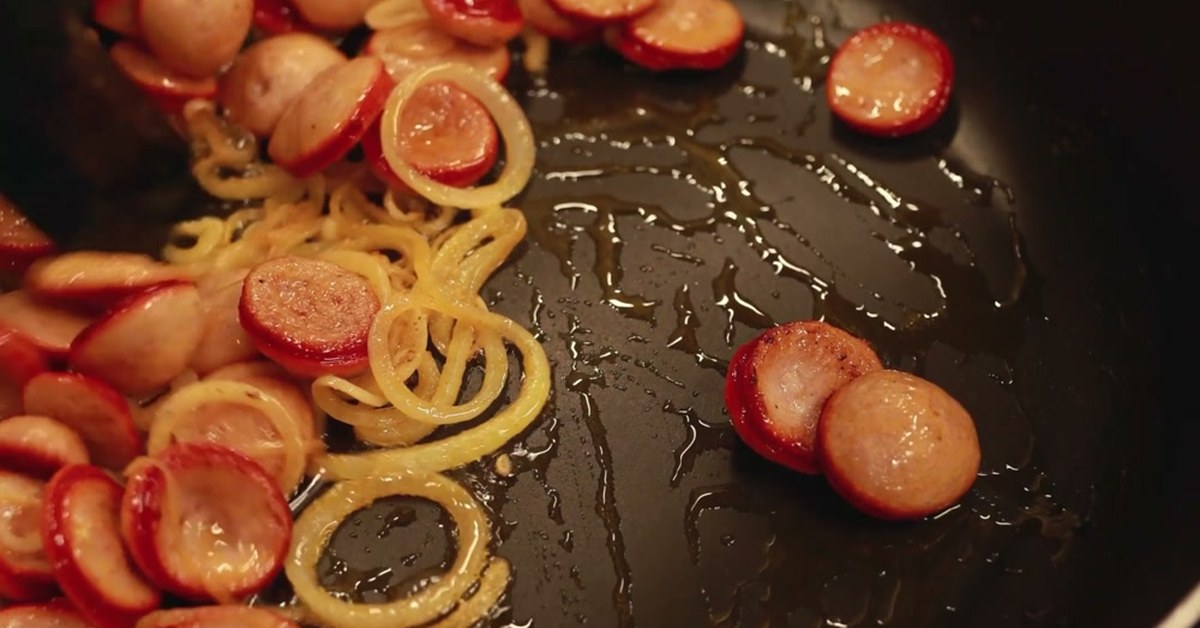
- Brown 4–6 minutes. Add 1 teaspoon of oil if the pan looks dry. Roll the links a quarter turn every minute or so until every side is deep golden brown and shiny.
- Check the temperature. Slide a thermometer into the end of a link toward the center. Look for 160°F (71°C) for pork or beef and 165°F (74°C) for chicken or turkey.
- Rest briefly. Move the sausages to a plate for 2–3 minutes. The juices settle back in instead of running out when you cut them.
Want a pan sauce? Keep the skillet on medium, add a sliced onion and a sliced bell pepper to the fat, and cook 8–10 minutes until soft and sweet. Our guide to sautéed onions shows how far to take them.
How to cook sausage patties and crumbles
Patties don't need the water step because they're thin enough to cook through while they brown. Shape bulk sausage into ½-inch-thick (1 cm) patties about 3 inches (8 cm) wide, and press a shallow dimple in the middle of each so they stay flat. Heat a skillet over medium with a teaspoon of oil, add the patties, and cook 4–5 minutes per side until browned and firm. Flip just once.
For crumbled sausage in pasta sauce or a breakfast hash, cook bulk sausage over medium-high for 7–9 minutes, breaking it into small pieces with a wooden spoon. It's done when no pink remains and the bits are browned at the edges. The method is close to browning ground beef.
Sausage cooking time chart
Times are for sausage straight from the fridge over medium heat. Thick links and frozen sausage take longer, so trust the thermometer over the clock.
| Type | Method | Time | Done at |
|---|---|---|---|
| Italian or bratwurst links (raw, about 1 inch thick) | Simmer covered, then brown | 8–10 min + 4–6 min | 160°F (71°C) |
| Breakfast links (raw, thin) | Simmer covered, then brown | 5–6 min + 4–5 min | 160°F (71°C) |
| Chicken or turkey links (raw) | Simmer covered, then brown | 8–10 min + 4–5 min | 165°F (74°C) |
| Patties, ½ inch thick | Pan-fry, flip once | 4–5 min per side | 160°F (71°C); poultry 165°F (74°C) |
| Bulk sausage, crumbled | Brown and break up | 7–9 min | 160°F (71°C), no pink left |
| Frozen raw links | Simmer covered, then brown | 12–15 min + 4–6 min | 160°F (71°C); poultry 165°F (74°C) |
| Fully cooked or smoked sausage | Brown only | 6–8 min | 165°F (74°C) or steaming hot |
Our doneness temperatures chart keeps every meat, poultry and fish target on one page.
“The water's gone and the links are deep golden on every side. Check the center for 160°F and they're ready.”
How to tell when sausage is done
Sausage looks done on the outside long before the center is ready, so use your senses for the browning and a thermometer for the finish.
Sight
- Raw sausage is pink and slightly translucent through the casing. After simmering, it turns an even gray-tan and plumps up.
- During browning, look for a deep golden to mahogany color on every side, with a glossy, tight casing. Pale stripes mean that side needs another minute.
- Clear juices are a good sign, but not proof. Some sausages stay pink inside from paprika, smoke or curing salts even when fully cooked.
Sound
- During the simmer you'll hear a soft bubbling. When the water is gone, it shifts to a steady, crackling sizzle. That's your cue to start rolling the links.
- Loud popping and spitting means the heat is too high for the fat in the pan. Turn it down a little.
Smell
- As the casings brown, you'll smell toasted fennel, garlic or sage, depending on the sausage. If the smell turns sharp and smoky, the fat in the pan is getting too dark, so lower the heat.
Touch
- Press a link with your tongs. Raw sausage feels soft and squishy. Cooked sausage feels firm and springy all the way along, with no soft spot in the middle.
- A patty that's done feels firm in the center, like the edges, when you press it with a spatula.
Temperature
USDA says raw sausage made with pork, beef, veal or lamb is safe at 160°F (71°C), and chicken or turkey sausage at 165°F (74°C). Push the thermometer in from the end of the link so the tip sits in the center. If you're watching a full pan of links, Pan can keep an eye on the browning and tell you when it's time to roll them and when they look ready to check.
Tips for juicy sausage
- Don't prick the casings. The fat inside is what keeps sausage juicy. Leave it in there.
- Keep the simmer gentle. Hard boiling makes the filling expand fast and can split the casing. Small, slow bubbles are what you want.
- Roll, don't flip. Links are round, so a quarter turn every minute gives you even color instead of two dark stripes.
- Pour off extra fat. Pork sausage can leave several tablespoons of fat. Spoon most of it out before browning, or save it for frying eggs.
- Add oil for lean sausage. Chicken and turkey sausage are lean, so a teaspoon of oil helps them brown instead of sticking.
- Use the fond. The brown bits left in the pan are full of flavor. A splash of water, broth or wine loosens them into a quick sauce.
What to serve with sausage
For breakfast, serve links or patties with soft scrambled eggs, toast and fruit. For dinner, slice Italian sausage into peppers and onions, toss it with pasta and a little of the pasta water, or pile it into a toasted roll with mustard.
Sausage and cabbage is a classic pairing. Brown the sausage, then cook shredded cabbage in the same pan using our guide on how to cook cabbage. And if you're planning a cookout-style meal, corn on the cob makes an easy side.
Cooking chorizo? Learn what chorizo is and which kind must be cooked to 160°F.
Making your own patties? See substitute for marjoram for the herb.
Pan watches it for you
Pan tells you when to uncover and when they're ready
The tricky part of sausage is the switch from simmering to browning. Pan watches the water level and the color of the casings, and tells you when the water is gone and again when every side has browned.
- Water nearly gone and the sound turning to a sizzle: start rolling the links
- One side deep golden brown: give them a quarter turn
- Casings glossy and browned all around: check the center
- Fat in the pan getting very dark: lower the heat a notch
Pan AI is on iPhone • Android.
Common questions
How long do you cook sausage in a pan?
Raw links take about 15 minutes with the simmer-then-brown method: 8–10 minutes covered in a little water, then 4–6 minutes browning. Breakfast links cook in about 10–12 minutes total, and patties take 4–5 minutes per side over medium heat.
What temperature should sausage be cooked to?
USDA says raw sausage made from pork, beef, veal or lamb should reach 160°F (71°C). Sausage made from chicken or turkey should reach 165°F (74°C). Fully cooked sausage just needs reheating to 165°F or until steaming hot.
Why simmer sausage in water first?
The water cooks the inside gently and evenly, so the center reaches a safe temperature before the outside gets too dark. Once the water cooks off, the fat left in the pan browns the casing.
Should you poke holes in sausage before cooking?
No. Piercing the casing lets juices and fat run out, which leaves the sausage drier. Gentle heat keeps the casing from splitting on its own.
Is a little pink inside sausage okay?
Color isn't a reliable guide. Some sausages stay slightly pink from curing salts, paprika or smoke even when fully cooked. Use an instant-read thermometer: 160°F for pork or beef, 165°F for poultry.
Can you cook frozen sausage without thawing?
Yes. Add frozen links to the pan with water as usual and add 4–5 minutes to the covered simmer. Separate any links that are frozen together once they soften.
Sources
- USDA FSIS: Sausages and Food Safety
- USDA FSIS: Safe Minimum Internal Temperature Chart
- Well Plated: Sausage and Peppers
Reviewed against USDA FSIS guidance. How we choose sources and fix mistakes: editorial policy.
Keep cooking
- Meat & poultryHow to Cook Brats on the StoveCook brats on the stove by browning them 5–6 minutes, then simmering in beer or water with onions for 10–12 minutes until they reach 160°F. Times and tips.
- Vegetables & fruitHow to Sauté OnionsSauté onions in 1 tablespoon of fat over medium heat: soft in 5 minutes, golden in 10 to 15, caramelized in 40+. Plus quick green bean and shrimp sautés.
- Eggs & breakfastHow to Make Scrambled EggsMake scrambled eggs over medium-low heat in butter for 3–5 minutes, folding slowly and pulling them off while still glossy. Soft, fluffy and diner styles.
- Vegetables & fruitHow to Cook CabbageSauté sliced cabbage over medium-high 8–10 minutes, braise wedges 25–30, or boil wedges 10–12 until tender and sweet. Times, cues and tips for each.
- Meat & poultryHow to Cook Duck BreastScore duck breast skin, start it skin-side down in a cold pan and render 10–15 minutes over medium-low, then flip for 1–3 minutes. USDA temp and doneness cues.
- Meat & poultryHow to Cook Ground ChickenBrown ground chicken in an oiled skillet over medium-high for 8–10 minutes, breaking it up, until no pink remains and it reaches 165°F (74°C). Tips and times.
- Free toolInternal temperature chartSafe and perfect internal temperatures for steak, chicken, salmon, pork and more, plus a printable PDF.