How to Make Roast Potatoes
Quick answer
To make roast potatoes, cut 3 lb (1.4 kg) peeled potatoes into 2-inch chunks and heat ⅓ cup of dripping, goose fat or oil in a pan at 425°F (220°C, gas 7). Boil the potatoes 8–10 minutes, drain, steam-dry and shake to rough up the edges. Tip them into the hot fat and roast 45–60 minutes, turning once, until deep golden and crisp.
Handy for this: Boiling times chart · Cooking oil smoke points
At a glance
- Heat the oven to 425°F (220°C, 200°C fan, gas mark 7) with the fat in the roasting pan.
- Peel the potatoes and cut them into 2-inch (5 cm) chunks.
- Cover with cold salted water, bring to a boil, and boil 8–10 minutes until the edges turn fluffy.
- Drain, let them steam dry for 2 minutes, then shake the pot to rough up the surfaces.
- Carefully tip the potatoes into the hot fat and turn each one to coat.
- Roast 45–60 minutes, turning once halfway, until deep golden and crisp. Salt and serve.
The short version
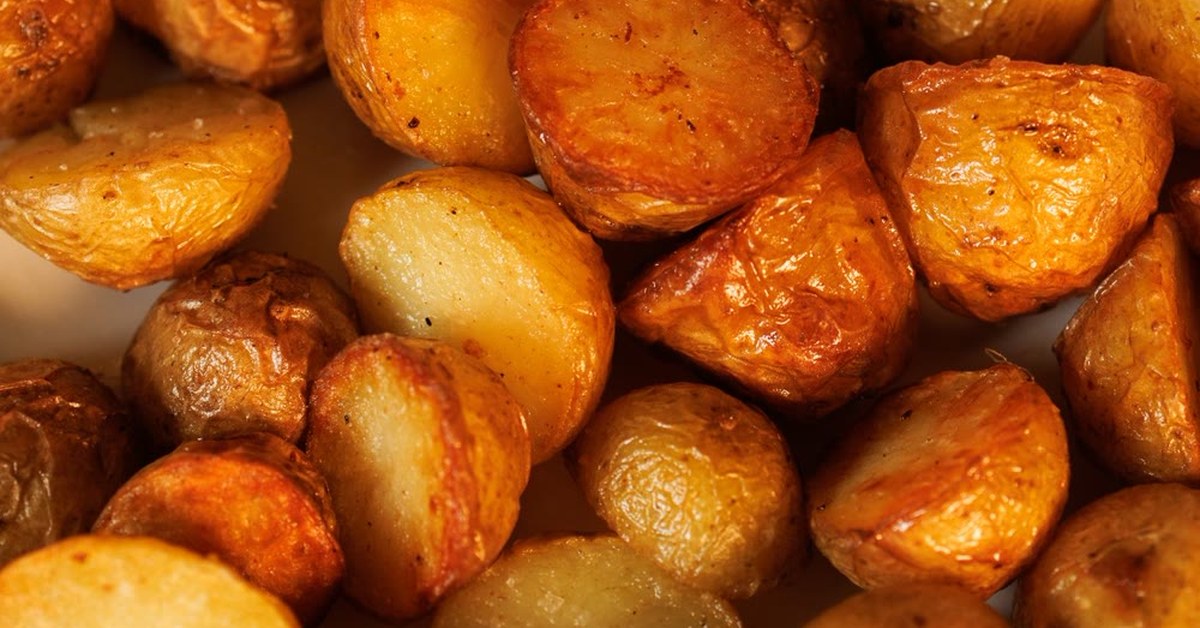
Great roast potatoes are crunchy on the outside and fluffy like mashed potato inside. The trick is three steps. Parboil the chunks for 8–10 minutes so the outsides soften. Shake them in the pot to rough up the edges. Then roast them in fat that's already very hot, at 425°F (220°C, 200°C fan, gas mark 7), for 45–60 minutes, turning once.
That ragged, starchy surface is what turns into the crisp shell. Skip the parboil and you get nice roasted potatoes, but not the shattering crunch you want next to a Sunday roast or a Christmas prime rib.
What you need
- 3 pounds (1.4 kg) potatoes for 6 people, about ½ pound (225 g) each. Floury types work best: russet or Yukon Gold in the US, Maris Piper, King Edward or Rooster in the UK.
- ⅓ cup (80 ml) fat. Beef dripping or goose fat for flavor, or a neutral oil like vegetable, canola or sunflower. Check our smoke point chart if you're picking an oil; anything above 400°F (200°C) is comfortable.
- Salt for the water (about 1 tablespoon) and flaky salt to finish.
- Garlic and rosemary, optional, added for the last 15 minutes.
- A heavy metal roasting pan or rimmed sheet pan. Metal conducts heat fast and browns better than glass or ceramic.
- A big pot and a colander.
How to make roast potatoes step by step
- Heat the oven and the fat. Put the fat in the roasting pan and set it in the oven while it heats to 425°F (220°C, 200°C fan, gas mark 7). The fat needs at least 10 minutes to get properly hot.
- Peel and cut. Peel the potatoes and cut them into roughly 2-inch (5 cm) chunks. Odd angles are good. More edges means more crunch. Keep the pieces about the same size so they finish together.
- Start in cold, salted water. Put the chunks in a large pot, cover with cold water by an inch, and add the salt. Bring it to a boil over high heat, about 8–10 minutes.
- Parboil 8–10 minutes. Once it's at a full rolling boil, cook 8–10 minutes. The potatoes are ready when the corners look soft and slightly fuzzy and a knife slides through the outside but meets a little resistance in the middle.
- Drain and steam dry. Tip them into a colander and leave them for 2–3 minutes. Steam rising off them is moisture leaving, and dry potatoes crisp much better.
- Rough them up. Put the potatoes back in the empty pot, put the lid on, and give it 3 or 4 firm shakes. The outsides should look fluffy and craggy, almost like a thin coat of mashed potato. A sprinkle of flour or semolina at this stage adds even more crunch.
- Into the hot fat. Take the pan out of the oven and set it on a heatproof surface. The fat should shimmer. Carefully spoon the potatoes in. They should sizzle loudly as they land. Turn each one to coat, then spread them out with space between.
- Roast 45–60 minutes, turning once. Roast 25–30 minutes, until the undersides are golden and release easily. Turn each potato with a metal spatula, then roast another 20–30 minutes until deep golden and crisp all over. Add garlic and rosemary for the last 15 minutes.
- Salt and serve. Lift them out with a slotted spoon, sprinkle with flaky salt, and serve right away while the shells are at their crunchiest.
Roast potato time and temperature chart
Times assume a preheated oven and fat already hot in the pan. The boiling times chart has the parboil times for other potato cuts too.
| Potato / cut | Parboil (after boiling) | Roast at 425°F / 220°C / gas 7 |
|---|---|---|
| Small chunks, 1–1½ in (3–4 cm) | 6–7 min | 35–45 min |
| Standard chunks, 2 in (5 cm) | 8–10 min | 45–60 min |
| Large halves, 3 in (7–8 cm) | 10–12 min | 60–70 min |
| Baby potatoes, halved | 6–8 min | 35–45 min |
| Parboiled, from the fridge | Done ahead | 50–65 min |
| Parboiled, from frozen | Done ahead | 60–70 min |
Oven settings at a glance
| Fahrenheit | Celsius (conventional) | Celsius (fan) | Gas mark |
|---|---|---|---|
| 400°F | 200°C | 180°C | 6 |
| 425°F | 220°C | 200°C | 7 |
| 450°F | 230°C | 210°C | 8 |
“The edges just turned soft and fluffy. Drain the potatoes now and let them steam dry.”
How to tell when roast potatoes are ready
You're looking for two things at once: a crisp outside and a fully soft inside.
Sight
- During the parboil, the edges of the chunks go from sharp to soft and slightly blurred, and a few flakes of potato float in the water. That's the moment to drain.
- In the oven, they turn from pale yellow to deep golden brown, with darker, crunchy ridges where you roughed them up.
Sound
- A loud sizzle when the potatoes hit the fat tells you it's hot enough. In the last 10 minutes, shake the pan gently. Finished potatoes rattle and clatter against the metal instead of sliding quietly.
Smell
- A toasty, nutty smell, a bit like good chips, means the outsides are browning well. If you added garlic, it should smell sweet; a sharp smell means it's gone a little far, so pull it out.
Touch
- Tap a potato with a spatula. It should feel hard and crisp, like a shell. A knife or skewer should slide into the center with no resistance at all.
Temperature
The inside of a fully cooked potato is around 205–210°F (96–99°C), which is when it turns fluffy. You rarely need to check, since the skewer test tells you the same thing. The step that matters most is the parboil, and that's where Pan is handy: it can watch the pot and tell you when the water is boiling hard and when the edges have gone fluffy, so you can get on with the rest of dinner.
Tips for crispy roast potatoes
- Hot fat first. Never put potatoes into cold fat. They soak it up and stay soft. It should shimmer and sizzle on contact.
- Give them space. Crowded potatoes steam. Use two pans if you're cooking more than about 3 pounds.
- Turn once, not more. Every time you open the oven and move them, you lose heat and break the crust that's forming.
- Season the water. Salting the parboil water seasons the potatoes all the way through.
- Roast them alongside the meat. If your roast is resting, that's the perfect window. Turn the oven up to 425°F as soon as the beef or prime rib comes out, and the potatoes finish while the meat rests and gets carved.
- Leftovers reheat well. Refrigerate within 2 hours. Reheat at 400°F (200°C) for 10–15 minutes, until hot through, 165°F (74°C). The microwave makes them soft.
What to serve with roast potatoes
Roast potatoes belong next to a big roast: beef, chicken, lamb or a holiday turkey. Spoon over plenty of homemade gravy made from the drippings. For something green, roast Brussels sprouts on the rack below, or serve buttery peas and carrots.
If you're making both mash and roasties for a crowd, use floury potatoes for both and parboil them together. Pull out the roasting batch at 8–10 minutes, and let the rest keep going until tender for mashed potatoes. One pot, two sides.
Keep a bag fresh for next time: how long do potatoes last.
For a red, smoky crust, see substitute for paprika.
Out of rosemary? See substitute for rosemary.
Want them crispy on the stove instead? Crispy hash browns are shredded russets squeezed dry and cooked 4–6 minutes per side over medium-high.
Pan watches it for you
Pan watches the parboil
The parboil is the step that decides how crisp the potatoes get. Pan watches the pot on the stove and tells you when the water is boiling hard and when the edges have gone soft and fluffy enough to drain.
- Big rolling bubbles across the whole pot: start the 8–10 minute count
- Corners of the chunks softening and looking slightly blurred: almost there
- Edges fluffy and starting to flake into the water: drain now
- Potatoes no longer steaming hard in the colander: ready to rough up
Pan AI is on iPhone • Android.
Common questions
How long do you parboil potatoes for roasting?
Boil 2-inch (5 cm) chunks for 8–10 minutes once the water is boiling. The outside should look soft and a little ragged while the center still offers some resistance to a knife. Smaller chunks need 6–7 minutes.
What temperature do you roast potatoes at?
425°F, which is 220°C in a conventional oven, 200°C in a fan oven, or gas mark 7. Hotter ovens brown faster but can leave the centers underdone; lower than 400°F (200°C) and they tend to go leathery instead of crisp.
What are the best potatoes for roast potatoes?
Floury or all-purpose potatoes. In the US use russets or Yukon Golds. In the UK Maris Piper, King Edward and Rooster are the classics. Waxy potatoes like red bliss hold their shape but don't get that fluffy, crunchy edge.
Which fat makes the crispiest roast potatoes?
Beef dripping and goose or duck fat give the deepest flavor and a very crisp shell. Vegetable, canola or sunflower oil also roast beautifully and keep them vegan. Avoid butter on its own, since the milk solids darken long before the potatoes are done.
Why aren't my roast potatoes crispy?
Usually the fat wasn't hot enough, the potatoes were wet, or the pan was crowded. Steam-dry them after draining, add them to fat that sizzles on contact, and leave space between each potato so the steam can escape.
Can you make roast potatoes ahead?
Yes. Parboil and rough them up the day before, cool, and refrigerate uncovered. Roast from cold, adding about 5–10 minutes. You can also freeze parboiled potatoes on a tray and roast from frozen in about 60–70 minutes.
Sources
Keep cooking
- Thanksgiving & holidaysHow to Cook Prime RibSear prime rib at 450°F for 15–20 minutes, then roast at 325°F about 13–15 minutes per pound to 120°F for medium-rare. Charts, reverse sear and carving.
- Vegetables & fruitHow to Make Mashed PotatoesBoil peeled Yukon Gold chunks in salted water 15–20 minutes until a fork slides in, then mash with warm butter and milk. Ratios, times and fixes inside.
- Thanksgiving & holidaysHow to Make GravyMake gravy with a roux: cook 2 tbsp fat and 2 tbsp flour for 2–3 minutes, whisk in 1 cup warm broth, and simmer 5–8 minutes until it coats a spoon.
- Vegetables & fruitHow to Cook Brussels SproutsPan-sear halved Brussels sprouts cut side down 8–10 minutes, or roast at 425°F for 20–25, until deep golden and fork-tender. Times, cues and tips.
- Thanksgiving & holidaysHow to Make Beef WellingtonMake beef Wellington by wrapping seared tenderloin in duxelles, prosciutto and puff pastry, then bake at 425°F for 25–35 minutes until it reads 120–125°F.
- Thanksgiving & holidaysBoxing Day LeftoversTurn Boxing Day leftovers into bubble and squeak, turkey sandwiches, pie, hash and soup. Plus safety: chill in 2 hours, eat in 3–4 days, reheat to 165°F.
- Free toolBoiling times chartHow long to boil chicken, shrimp, potatoes, corn, broccoli and 30+ more foods.
- Free toolSmoke point of oils, with the best oil for each jobSmoke points of 20+ oils and fats, and the best oil for searing, frying and cast iron.