How to Make Eggnog
Quick answer
Whisk 6 egg yolks with ½ cup sugar until pale. Warm 2 cups whole milk with salt and nutmeg until steaming and pour it slowly into the yolks, whisking. Stir over low heat 5–8 minutes until it reaches 160°F (71°C) and coats a spoon. Strain, add 1 cup cold cream and vanilla, and chill at least 4 hours. Add spirits once cold.
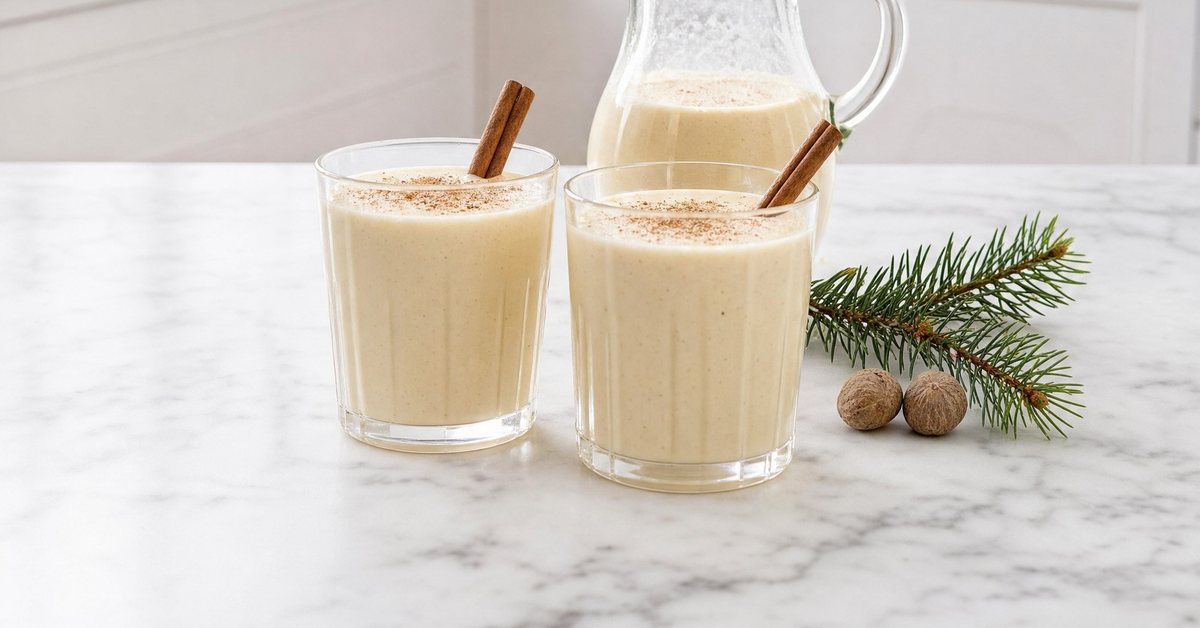
Handy for this: Internal temperature chart · Christmas dinner planner
At a glance
- Whisk 6 egg yolks and ½ cup sugar in a bowl for 1–2 minutes, until pale and thick.
- Heat 2 cups whole milk with a pinch of salt and ½ teaspoon nutmeg until it steams, with small bubbles at the edge.
- Pour the hot milk into the yolks in a thin stream while whisking, to temper the eggs.
- Return the mixture to the saucepan over low heat and stir constantly with a spatula, scraping the bottom.
- Cook 5–8 minutes, until it reaches 160°F (71°C) and coats the back of a spoon.
- Strain into a clean bowl, then stir in 1 cup cold heavy cream and 1 teaspoon vanilla.
- Cover and chill at least 4 hours, then stir in spirits if using and serve with fresh nutmeg.
The short version
Real eggnog is a stirred custard that you drink cold. You whisk egg yolks with sugar, warm milk and pour it in slowly, then cook the whole thing over low heat until it reaches 160°F (71°C) and coats the back of a spoon. After that you stir in cold cream and vanilla, chill it for at least 4 hours, and add rum or bourbon at the end if you want a grown-up version.
The cooking step matters for two reasons. First, 160°F (71°C) is the temperature the FDA and USDA point to for homemade eggnog made with raw eggs. Second, it gives you a thicker, silkier drink than the old raw-egg recipes. The whole stovetop part takes about 15 minutes. The waiting is the hard part.
What you need
This makes about 4 cups (950 ml), enough for 6–8 small glasses. Eggnog is rich, so a 4–5 ounce (120–150 ml) pour is plenty.
- 6 large egg yolks. Save the whites for meringues or an egg-white omelette the next morning. You can also use 4 whole eggs for a lighter drink.
- ½ cup (100 g) granulated sugar. Go up to ⅔ cup (135 g) if you like it sweet, or swap 2 tablespoons for maple syrup.
- 2 cups (475 ml) whole milk. Whole milk gives the right body. Lower-fat milk works but tastes thinner.
- 1 cup (240 ml) heavy cream, kept cold. It goes in after cooking and helps cool the custard down fast.
- Flavor: 1 teaspoon vanilla extract, ½ teaspoon freshly grated nutmeg, and a pinch of salt. A cinnamon stick in the milk is a nice extra.
- Optional spirits: ½ to ¾ cup (120–180 ml) of dark rum, bourbon, brandy or a mix.
- Tools: a heavy-bottomed saucepan, a whisk, a heatproof spatula, an instant-read thermometer and a fine-mesh strainer.
How to make eggnog on the stove
- Whisk the yolks and sugar. In a medium bowl, whisk the 6 yolks with the sugar for 1–2 minutes, until the mixture turns pale yellow and falls from the whisk in a thick ribbon. Set the bowl on a damp towel so it doesn't slide around later.
- Warm the milk. Pour the milk into the saucepan with the salt, nutmeg and a cinnamon stick if using. Heat over medium until it steams and tiny bubbles form around the edge, about 4–5 minutes. Don't let it come to a full boil.
- Temper the eggs. Whisking the yolks constantly, pour in about ½ cup of the hot milk in a thin stream. Add another ½ cup the same way. Then pour the warmed yolk mixture back into the saucepan with the rest of the milk. Going slowly here keeps the yolks from setting on contact.
- Cook low and stir constantly. Set the heat to low or medium-low. Stir with the spatula in slow figure-eights, scraping the bottom and the corners where the custard sets first. It will look thin and foamy at first.
- Watch for 160°F (71°C), 5–8 minutes. The foam fades, the surface turns glossy and the custard starts to feel heavier on the spatula. Check with a thermometer. When it reads 160°F (71°C) and coats the back of a spoon, it's done. Our doneness temperatures chart lists this alongside other egg dishes.
- Strain and add cream. Pour the custard through a fine-mesh strainer into a clean bowl or pitcher to catch any small cooked bits and the cinnamon stick. Stir in the cold cream and vanilla right away. The cold cream stops the cooking.
- Chill at least 4 hours. Press plastic wrap onto the surface or pour it into a lidded jar, and refrigerate 4 hours or overnight. It thickens as it chills and the nutmeg flavor gets rounder.
- Finish and serve. Stir or shake the cold eggnog. Add spirits now if using, then pour into small glasses and grate a little fresh nutmeg on top.
The coats-the-spoon test
If you don't have a thermometer, this old custard test gets you close. Dip a wooden spoon into the eggnog and lift it out. Turn it over and draw a line across the back with your finger. If the custard holds a clean line and doesn't run back into it, you're at about 160–170°F (71–77°C). If it drips right back together, keep stirring another minute and test again.
A thermometer is still the most reliable tool, and it's cheap insurance for a drink you're serving to a crowd. Stop by 175°F (79°C) at the very latest; past that point the yolks begin to curdle.
Eggnog timing chart
| Batch | Yolks | Sugar | Milk | Cream | Stovetop time | Servings |
|---|---|---|---|---|---|---|
| Small | 3 | ¼ cup (50 g) | 1 cup (240 ml) | ½ cup (120 ml) | 4–6 min | 3–4 |
| Standard | 6 | ½ cup (100 g) | 2 cups (475 ml) | 1 cup (240 ml) | 5–8 min | 6–8 |
| Party | 12 | 1 cup (200 g) | 4 cups (950 ml) | 2 cups (475 ml) | 10–14 min | 12–16 |
Bigger batches take longer to reach 160°F (71°C), so be patient and keep the heat low. If you need to convert sugar to grams for a scale, the grams to cups converter can help.
“The custard is coating the spoon and the steam is steady. Take it off the heat now and strain it.”
How to tell when eggnog is done
Sight
- At first the surface is pale and covered in small foam bubbles. As it heats, the foam melts away and the custard looks smooth and glossy, with a steady wisp of steam.
- Done custard leaves an even, opaque coat on the spatula instead of sliding off.
Sound
- Custard should stay quiet. If you hear bubbling or popping, it's too hot. Lift the pan off the heat for 20 seconds and keep stirring.
Touch
- The spatula feels noticeably heavier as you stir. If you feel little grains or bumps on the bottom of the pan, take it off the heat and strain immediately.
Temperature
Aim for 160°F (71°C). That's the one number that matters here. If you're also watching cookies in the oven and a pot of something else, Pan can watch the custard and say when it's ready to come off the stove.
Adding spirits
Add alcohol after the eggnog is fully cold, never while it's cooking. Heat drives off the flavor, and hot spirits near a gas flame are not something you want. For the standard batch, start with ½ cup (120 ml) and taste. Classic pairings:
- Dark rum for the most traditional flavor, warm and a little molasses-like.
- Bourbon for caramel and vanilla notes.
- Brandy or cognac for a softer, fruitier glass.
- Half rum, half bourbon if you can't decide.
Keep a pitcher of the plain version too, for kids and anyone skipping alcohol. If you're planning a full drinks spread, pair it with a pot of mulled wine for the adults and stovetop hot chocolate for everyone else.
Make-ahead and storage
- Make it 1–2 days ahead. Eggnog actually tastes better on day two, once the spices settle in. Keep it in a sealed jar in the coldest part of the fridge at 40°F (4°C) or below.
- Use within 3 days. Shake or whisk before serving because it thickens and the cream can rise.
- Don't leave it out for hours. Serve it from a pitcher set in a bowl of ice, and return it to the fridge within 2 hours.
- Too thick after chilling? Whisk in a splash of cold milk until it pours the way you like.
- Want it frothy? Whip ½ cup (120 ml) of cream to soft peaks and fold it in just before serving.
Fixes and tips
- Small lumps. Strain it. For a few larger curds, blend for 10 seconds with an immersion blender, then strain.
- Too thin. It will thicken a lot as it chills. If it's still thin after 4 hours, the custard didn't quite reach 160°F (71°C); next time cook it a minute or two longer.
- Too sweet. Stir in more cold milk or cream a little at a time.
- Not enough spice. Grate fresh nutmeg straight into the pitcher. Fresh nutmeg is much brighter than pre-ground.
- Using leftover whites. Freeze them in a labeled bag for up to 12 months, or use them right away for scrambled eggs mixed with a couple of whole eggs.
Serving ideas
Serve eggnog in small glasses or teacups with a grating of nutmeg and a cinnamon stick. It goes well with a plate of homemade fudge and sugar cookies, and it makes a great drink for Christmas Eve while gifts get wrapped. Leftover eggnog is excellent in French toast: use it in place of the milk and egg mixture, about ¾ cup (180 ml) per 4 slices of bread. Planning the whole holiday table? Our Christmas cooking hub pulls together the main dishes, sides and timing tools in one place.
Leftover egg whites? They keep 2–4 days in the fridge; whip them into meringue.
Cooking the egg base? A double boiler keeps the custard from curdling.
Most eggnog uses milk and heavy cream; here's what the fat levels mean.
No whole nutmeg to grate? See substitute for nutmeg.
Pan watches it for you
Pan watches the custard so the eggs stay silky
Eggnog is a low-heat job where a minute of distraction can turn smooth custard into sweet scrambled eggs. Pan watches the pot, notices when the steam and surface change, and tells you out loud when the custard is ready to come off the heat.
- Milk steaming with tiny bubbles at the edge: pour it into the yolks
- Thin, foamy custard after tempering: keep stirring on low
- Foam gone and the surface turning glossy with steady steam: it is close to 160°F (71°C)
- Custard coating the spatula in an even layer: pull it off the heat and strain
Pan AI is on iPhone • Android.
Common questions
What temperature should eggnog be cooked to?
Heat the egg and milk mixture to 160°F (71°C). That is the temperature the FDA and USDA give for making homemade eggnog with raw eggs safer. It also happens to be the point where the custard thickens and coats a spoon, so the safety step and the texture cue line up.
Does alcohol make raw-egg eggnog safe?
Don't count on it. Food safety agencies recommend cooking the egg base to 160°F (71°C) or using pasteurized eggs, rather than relying on spirits. Cook the base first, chill it, then add the alcohol for flavor.
How long does homemade eggnog last?
Cooked homemade eggnog keeps 2–3 days in a covered jar in the fridge at 40°F (4°C) or below. Versions with spirits keep about the same in practice. Give it a stir before serving, since it thickens as it sits.
Why did my eggnog turn lumpy or grainy?
The heat was too high or the pan went too long without stirring, so some of the egg set into small curds. Pour it through a fine-mesh strainer right away, or blend it for 10 seconds. Next time, keep the heat low and stir the whole time.
Can I make eggnog without alcohol?
Yes. The cooked custard version is rich and complete on its own. Add an extra ½ teaspoon of vanilla, a pinch of cinnamon, or ¼ teaspoon of rum extract if you want that holiday flavor without the spirits.
Can I use whole eggs instead of just yolks?
You can use 4 whole eggs in place of 6 yolks. The eggnog will be a little lighter and thinner. Heat it to the same 160°F (71°C), stirring constantly, since the whites set a touch faster than yolks.
Sources
Reviewed against FDA and USDA FSIS guidance. How we choose sources and fix mistakes: editorial policy.
Keep cooking
- Start hereHow to Make Hot Chocolate on the Stove, Rich and SmoothMake hot chocolate on the stove: whisk 2 cups milk with 3 oz chopped chocolate or 3 tbsp cocoa and sugar over medium-low until it steams. Never boil it.
- Start hereHow to Make Mulled WineMake mulled wine: warm 1 bottle of red wine with orange, cinnamon, cloves and honey on low for 20–30 minutes. Keep it steaming, below 170°F, never boiling.
- Start hereHow to Make FudgeMake chocolate fudge on the stove: boil sugar, milk and chocolate to soft-ball stage, 234–237°F (112–114°C), cool to 110°F (43°C), then beat until it thickens.
- Start hereHow to Make Cranberry SauceMake cranberry sauce: simmer a 12 oz bag of cranberries with 1 cup sugar and 1 cup water or orange juice for 10 minutes until they pop. It sets as it cools.
- Start hereChatGPT for Cooking vs Pan AI: What Changes on December 11, 2026ChatGPT voice changes on Dec 11, 2026, and Live has no video. An honest ChatGPT cooking alternative that watches your pan, and where ChatGPT still wins.
- Start herePan AI vs Samsung FoodSamsung Food saves recipes, plans meals and builds shopping lists. Pan AI watches your pan and tells you when to flip. Where each one is better, side by side.
- Free toolInternal temperature chartSafe and perfect internal temperatures for steak, chicken, salmon, pork and more, plus a printable PDF.
- Free toolChristmas dinner plannerGuests and menu in, a countdown timeline out, with oven clashes flagged.