How to Make Chicken Stock
Quick answer
Cover 3–4 lb (1.4–1.8 kg) of chicken bones with 4 quarts (3.8 L) of cold water and bring it slowly to a bare simmer. Skim the foam for 20–30 minutes, add onion, carrots, celery, garlic, bay and peppercorns, and simmer uncovered 3–4 hours without boiling. Strain, cool fast and refrigerate within 2 hours: 3–4 days chilled, 2–3 months frozen.
Handy for this: Reheating guide · Thawing time calculator
At a glance
- Put the chicken bones in a large stockpot and cover with 4 quarts (3.8 L) of cold water.
- Bring slowly to a bare simmer over medium heat, about 30–40 minutes.
- Skim off the gray foam that rises during the first 20–30 minutes.
- Add the onion, carrots, celery, garlic, bay leaves, peppercorns and parsley stems.
- Simmer uncovered for 3–4 hours, with just a few small bubbles breaking the surface, topping up with water if the bones poke out.
- Strain through a fine-mesh strainer and discard the solids.
- Cool quickly in shallow containers or an ice bath, refrigerate within 2 hours, and lift off the fat once chilled.
The short version
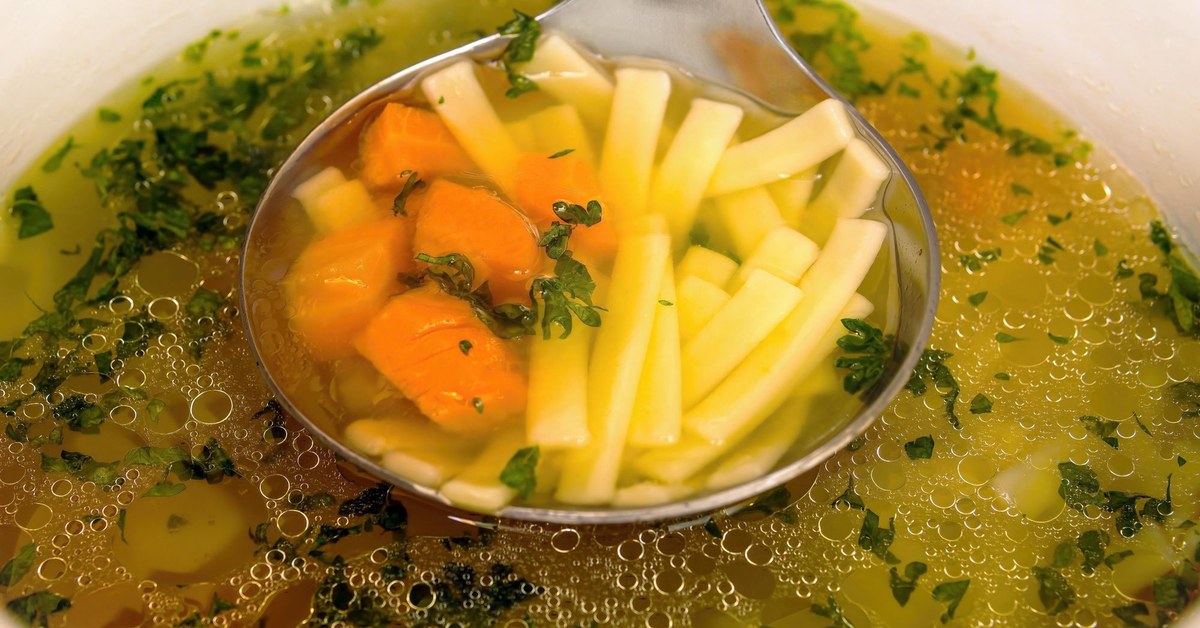
Good chicken stock takes almost no work, just time. Cover chicken bones with cold water, bring them up slowly, skim the foam, add a few vegetables, and let the pot barely simmer for 3–4 hours. Strain it, cool it fast, and you have about 3 quarts of golden stock that sets to a soft jelly in the fridge.
The one rule: never let it boil hard. A rolling boil makes stock cloudy and greasy. You want a few lazy bubbles breaking the surface, and that's it.
What you need
- 3–4 lb (1.4–1.8 kg) chicken bones. Backs, necks and wings have the most connective tissue, which gives stock its body. The carcass from a roast chicken works too, and you can save them in the freezer until you have enough. Raw chicken feet, if you can find them, make an extra-rich stock.
- 4 quarts (3.8 L) cold water. Starting cold pulls more flavor out of the bones and helps the foam rise slowly so it's easy to skim.
- 1 large yellow onion, quartered. Leave the skin on for a deeper golden color.
- 2 carrots and 2 celery ribs, in big 3-inch chunks so they don't fall apart during the long simmer.
- 4 cloves garlic, 2 bay leaves, 1 teaspoon black peppercorns and a handful of parsley stems.
- An 8–12 quart stockpot, a ladle or skimmer, a fine-mesh strainer and several shallow containers for storing.
No salt goes in yet. Unsalted stock can be reduced for sauces and gravy without getting too salty. Season the dish you use it in.
How to make chicken stock, step by step
- Load the pot. Put the bones in the stockpot and pour in the cold water. It should cover them by about 1 inch (2.5 cm).
- Heat slowly. Set the pot over medium heat. It will take 30–40 minutes to come up. Rushing it over high heat makes the foam break up into the stock instead of collecting on top.
- Skim. As it gets close to simmering, gray-brown foam rises to the surface. Lift it off with a ladle or skimmer every few minutes for the first 20–30 minutes, until only a little white foam appears.
- Add the vegetables and aromatics. Add the onion, carrots, celery, garlic, bay leaves, peppercorns and parsley stems. Push them under the liquid.
- Find the right simmer. Turn the heat down to low or medium-low. You want small bubbles breaking the surface every second or two, mostly at one side of the pot. The liquid should tremble, not roll.
- Simmer 3–4 hours, uncovered. Check every 30–45 minutes. Skim any fat or foam you see, and add a cup of hot water if the bones start to poke out above the surface.
- Strain. Turn off the heat. Lift out the big bones with tongs, then pour the stock through a fine-mesh strainer into a large bowl. For extra-clear stock, line the strainer with a damp paper towel or cheesecloth.
- Cool fast and store. Cool the stock quickly (details below), refrigerate it within 2 hours, and lift off the solid layer of fat the next day.
Chicken stock timing and storage chart
Times are for a stovetop pot at a gentle simmer. Storage times follow USDA guidance for cooked leftovers.
| Stage | Time | What you're looking for |
|---|---|---|
| Cold water up to a bare simmer | 30–40 min | Small bubbles starting, foam gathering |
| Skimming | First 20–30 min of simmering | Gray foam gone, only a little white foam |
| Light stock | 2 hours total simmer | Pale gold, mild flavor |
| Rich stock | 3–4 hours total simmer | Deep gold, sets softly when chilled |
| Roast chicken carcass stock | 3 hours | Brown-gold, roasted flavor |
| Cooling to fridge | Within 2 hours | Shallow containers or ice bath |
| Refrigerator, 40°F (4°C) or below | 3–4 days | Fat cap on top, jelly underneath |
| Freezer, 0°F (−18°C) | 2–3 months for best quality | Safe longer, slowly loses flavor |
Frozen stock thaws overnight in the fridge, or in a pot over low heat straight from frozen. Our thawing time calculator covers bigger batches.
“The stock is moving into a rolling boil. Turn the heat down until only a few small bubbles break the surface.”
How to tell when chicken stock is ready
Stock is forgiving. Here's how to know you've got it right.
Sight
- During cooking, the surface should show a slow, gentle shimmer with a few small bubbles. Big bubbles rolling across the whole pot mean the heat is too high.
- A finished stock is clear to slightly hazy and deep golden. The meat on the bones looks pale and falls away when you nudge it.
- After chilling, a good stock sets into a soft, wobbly jelly under a creamy layer of fat. That's the gelatin from the bones, and it's what gives soups and sauces a silky body.
Sound
- A proper simmer is almost silent, with an occasional soft blip. If you can hear it bubbling from across the kitchen, turn it down.
Smell
- After 2–3 hours, the kitchen smells rich and savory, like chicken soup. If the vegetables start to smell sweet and stewed, the stock is ready to strain.
Touch and taste
- Rub a drop between your fingers. A rich stock feels slightly sticky from the gelatin.
- Taste a spoonful with a pinch of salt. It should taste clearly of chicken, not watery. If it's thin, simmer another 30–60 minutes.
Temperature and safety
The main safety step with stock is cooling. A big pot of hot liquid stays warm for hours, so split it up. Pour it into shallow containers no more than 2 inches (5 cm) deep, or set the pot in a sink of ice water and stir for 10–15 minutes before transferring. Refrigerate within 2 hours. When you use stored stock, bring it to a full boil, or heat leftovers to 165°F (74°C).
Since the whole job is keeping a gentle simmer for hours, this is a good one to hand to Pan. It watches the surface and tells you when the bubbles get too big or the foam needs skimming.
Tips for better chicken stock
- Keep a bone bag. Save raw trimmings, wing tips and roast chicken carcasses in a freezer bag. When it's full, make stock. You can put frozen bones straight in the pot.
- Roast the bones for a darker stock. Spread raw bones on a sheet pan and roast at 425°F (220°C) for 30–40 minutes until browned before adding water. Deglaze the pan with a little water and add that too.
- Skip strong vegetables. Broccoli, cabbage and Brussels sprouts make stock taste sulfury. Stick to onion, carrot, celery, leek tops and herbs.
- Don't stir. Stirring breaks up fat and makes the stock cloudy. Let it be.
- Freeze in useful sizes. Freeze 2-cup portions in containers or zip-top bags laid flat, and a tray of cubes for pan sauces. Leave an inch at the top of containers because stock expands.
- Save the fat. The chilled fat (schmaltz) is wonderful for roasting potatoes or sautéing onions.
What to do with chicken stock
A pot of homemade stock is a head start on a week of winter cooking. Use it for chicken noodle soup, a big pot of lentil soup, risotto, or rice cooked in stock instead of water. Reduce a cup by half in a skillet with butter and herbs for a quick pan sauce, or use it for holiday gravy and stuffing.
Reheating a portion for a quick mug of broth? The reheating guide has stovetop and microwave times.
Want more body? How to make bone broth simmers the bones for hours until it gels.
Save the dark green tops of leeks for stock. Extra celery? Freeze it for the next batch.
For a lighter Japanese stock in under an hour, try dashi.
Add a sprig of thyme, or see substitute for thyme.
Pan watches it for you
Pan tells you when the simmer is too strong
Stock is a long, quiet cook, and the main thing to get right is the heat. Pan watches the surface of the pot and speaks up when the bubbles get too big or when foam needs skimming.
- Gray foam gathering on top in the first half hour: time to skim
- A few small bubbles lazily breaking the surface: perfect simmer, leave it
- Bubbles rolling across the whole surface: turn the heat down now
- Liquid dropping below the bones: top up with a little hot water
Pan AI is on iPhone • Android.
Common questions
How long should you simmer chicken stock?
3–4 hours on the stove gives a rich, full-bodied stock. You can stop at 2 hours for a lighter stock, but much past 5 hours the flavor stops improving and the vegetables start to taste stewed.
Why shouldn't chicken stock boil?
A hard boil churns the fat and tiny proteins back into the liquid, which makes the stock cloudy and a little greasy-tasting. A gentle simmer, with just a few bubbles breaking the surface, keeps it clear and clean.
What's the difference between chicken stock and broth?
Stock is made mostly from bones, so it's rich in gelatin and sets slightly when chilled. Broth is usually made from meat, is seasoned with salt, and is thinner. In most recipes you can use them interchangeably.
Can I use a leftover roast chicken carcass?
Yes, and it makes a deep, roasty stock. Use 1–2 carcasses with about 3 quarts (2.8 L) of water, and add a few wings or backs if you have them for more body.
How do you cool chicken stock quickly?
Divide it into shallow containers no more than 2 inches (5 cm) deep, or set the pot in a sink of ice water and stir. Refrigerate within 2 hours of cooking. Never leave a big pot to cool on the stove overnight.
How long does homemade chicken stock last?
3–4 days in the fridge and 2–3 months in the freezer for best quality. Frozen stock stays safe longer at 0°F (−18°C) but slowly loses flavor. Bring it to a boil before using leftovers in a recipe that won't cook it further.
Sources
- USDA FSIS: Leftovers and Food Safety
- USDA FSIS: Chicken from Farm to Table
- Jessica Gavin: Homemade Chicken Stock
- RecipeTin Eats: Chicken Stock
Reviewed against USDA FSIS guidance. How we choose sources and fix mistakes: editorial policy.
Keep cooking
- Soups & stewsHow to Make Chicken Noodle SoupMake chicken noodle soup by simmering bone-in chicken in broth with vegetables for 25–30 minutes to 165°F, then shredding it and cooking noodles 6–8 minutes.
- Soups & stewsHow to Make Lentil SoupMake lentil soup on the stove in 40–50 minutes: soften onion, carrot and celery, add lentils and broth, then simmer 15–20 min for red or 25–35 for brown.
- Meat & poultryHow to Roast a ChickenRoast a whole chicken at 425°F for about 20 minutes per pound, until the breast and thigh read 165°F. Rest 15 minutes, then make gravy from the pan.
- Thanksgiving & holidaysHow to Make GravyMake gravy with a roux: cook 2 tbsp fat and 2 tbsp flour for 2–3 minutes, whisk in 1 cup warm broth, and simmer 5–8 minutes until it coats a spoon.
- Soups & stewsHow to Make Beef StewMake beef stew by browning chuck in batches, then simmering it in a Dutch oven for 2–2½ hours until fork-tender. Exact times, cues and vegetable timing.
- Soups & stewsHow to Make French Onion SoupMake French onion soup by caramelizing onions 45–60 minutes over medium-low heat, simmering them in beef broth 20–30 minutes, then broiling cheese toast on top.
- Free toolReheating guideHow to reheat fried chicken, steak, prime rib, rice and 20+ leftovers so they taste fresh.
- Free toolThawing time calculatorHow long to thaw a turkey, chicken, ground beef or fish safely, in the fridge or cold water.