How to Cook Pork Tenderloin
Quick answer
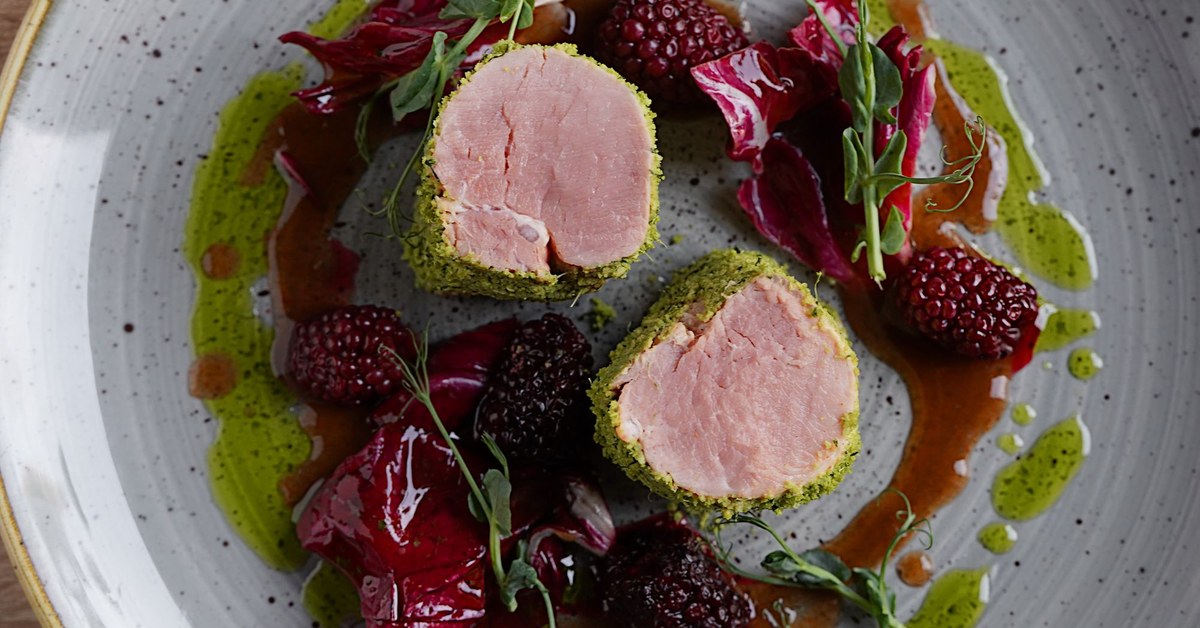
Pat a 1–1½ lb pork tenderloin dry, salt it, and sear it in an oven-safe skillet over medium-high heat for 5–6 minutes, turning until golden on all sides. Move the skillet to a 400°F (205°C) oven and roast 12–20 minutes, until the thickest part reads 145°F (63°C). Rest 3 minutes, then slice. A blush of pink in the center is perfect.
Handy for this: Internal temperature chart · Cooking oil smoke points
At a glance
- Heat the oven to 400°F and trim the silverskin from the tenderloin.
- Pat it dry and season it all over with salt and pepper.
- Sear in an oven-safe skillet with 1 tablespoon of oil over medium-high, turning until golden on all sides, 5–6 minutes.
- Move the skillet to the oven and roast 12–20 minutes.
- Pull it when the thickest part reads 145°F.
- Rest at least 3 minutes, then slice into ½-inch medallions.
The short version
Pork tenderloin is one of the fastest, most impressive dinners you can make. Season it, sear it in a hot oven-safe skillet until golden on every side, then finish it in a 400°F (205°C) oven until the thickest part reaches 145°F (63°C). Rest it 3 minutes and slice. Total time from fridge to table: about 30 minutes.
The result is a golden crust outside and tender, juicy slices with a light pink blush inside. Here's every step, a timing table, and how to tell exactly when it's done.
Get to know the cut
Pork tenderloin is a long, narrow muscle, usually 1–1½ pounds (450–680 g), and often sold two to a package. It's lean, mild and very tender, which is why it cooks so quickly. Don't confuse it with pork loin, a much wider roast that takes far longer.
Because it's lean, tenderloin is at its best cooked to exactly 145°F. A thermometer is the one tool that makes it reliably juicy every time.
Prep: trim, dry and season
Remove the silverskin
Look for a thin, shiny, silvery membrane along one side. It tightens as it cooks and can make the tenderloin curl. Slip the tip of a thin knife under one end, angle the blade slightly up, and slide it along while you pull the membrane taut. Small bits left behind are fine.
Season it
Pat the tenderloin dry with paper towels so it sears instead of steaming. Season all over with about ¾ teaspoon of kosher salt per pound and some black pepper. If you have time, salt it 1 hour to a day ahead and refrigerate it uncovered; it'll be even juicier and better seasoned.
Easy flavor ideas: garlic powder and smoked paprika; Dijon mustard and rosemary; or brown sugar, cumin and chili powder for a sweet-smoky crust.
Tuck the tail
Tenderloins taper to a thin tail at one end. Fold the last 2 inches under and tie it with kitchen twine, or simply accept that the tail will be more done, which some people love.
How to cook pork tenderloin, step by step
- Heat the oven. Set it to 400°F (205°C) with a rack in the middle.
- Heat the skillet. Put a 12-inch oven-safe skillet (cast iron or stainless steel) over medium-high heat with 1 tablespoon of high-smoke-point oil. When the oil shimmers, you're ready. Our smoke points of oils chart lists good choices.
- Sear on all sides. Lay the tenderloin in and cook 1½–2 minutes per side, turning with tongs, until every side is golden brown, about 5–6 minutes total.
- Roast. Move the skillet to the oven. Roast 12–20 minutes, depending on size, and start checking the temperature at 10 minutes.
- Check and pull. Insert an instant-read thermometer into the thickest part. When it reads 145°F, it's done. Use an oven mitt on the skillet handle; it stays hot for a long time.
- Rest. Move the pork to a cutting board and rest it at least 3 minutes, or up to 10 for extra-juicy slices.
- Slice. Cut across the grain into ½-inch medallions.
If you love the stovetop part of this recipe, our guide to pan-fried pork chops uses the same sear-and-check rhythm for a quick weeknight dinner.
Pork tenderloin cooking time: timing table
These times assume a fridge-cold tenderloin, a 5–6 minute sear, and a preheated oven. Thickness matters more than weight, so let the thermometer have the final word.
| Tenderloin weight | Sear (all sides) | Oven 400°F (205°C) | Oven 425°F (220°C), no sear | Pull at | Rest |
|---|---|---|---|---|---|
| ¾ lb (340 g) | 5 min | 10–12 min | 15–18 min | 145°F (63°C) | 3–5 min |
| 1–1¼ lb (450–570 g) | 5–6 min | 12–15 min | 18–22 min | 145°F (63°C) | 3–5 min |
| 1½ lb (680 g) | 6 min | 15–20 min | 22–25 min | 145°F (63°C) | 5–10 min |
| Two 1-lb tenderloins, same pan | 6–7 min | 15–20 min | 20–25 min | 145°F (63°C) | 5–10 min |
No oven-safe skillet? Sear in any skillet, then move the tenderloin to a sheet pan for roasting. It may need a couple of extra minutes.
“Every side is golden now. Into the oven it goes, and I'll let you know when it's time to check the temperature.”
How to tell when pork tenderloin is done
Tenderloin cooks fast, so it helps to know the signs as you go. Your senses guide you; the thermometer confirms it.
Sight
- During the sear, each side is ready to turn when it's golden brown and lifts easily from the pan.
- In the oven, clear juices start to bead on the surface as it nears done.
- Sliced at 145°F, the center is moist and very light pink, and the juices run clear. That blush is exactly what you want.
Sound
- A strong, steady sizzle when the pork hits the oil means the pan is hot enough to sear.
- When you pull the skillet from the oven, a lively sizzle around the pork tells you the pan is very hot; keep the mitt on.
Smell
- A savory, roasted aroma with a hint of sweetness builds as the crust forms. Spices like paprika and garlic smell toasty right as the sear finishes.
Touch
- Press the thickest part with tongs. Raw tenderloin feels soft; done tenderloin feels firm with a slight springy give, similar to a medium steak.
Internal temperature
USDA's safe minimum internal temperature for pork is 145°F (63°C), followed by a 3-minute rest. Insert the thermometer sideways into the very center of the thickest part. Our doneness temperatures chart keeps every target in one place.
This is exactly the moment Pan watches for: it follows the sear side by side and speaks up when the crust is golden all around and it's time for the oven.
Quick pan sauce while it rests
Those browned bits in the skillet are pure flavor. While the pork rests, set the skillet over medium heat (the handle is still hot, so use a mitt) and add a minced shallot or garlic clove with a little butter. Pour in ½ cup of chicken broth, apple cider or white wine and scrape up the bits. Simmer 2–3 minutes until slightly thickened, then stir in a teaspoon of Dijon mustard and any juices from the cutting board.
What to serve with pork tenderloin
Tenderloin goes with almost anything. Roast sweet potato wedges on a second rack while the pork cooks; our guide on how to cook sweet potatoes in the oven has the timing. Green beans, applesauce, a simple salad or rice all round out the plate.
Leftovers
Refrigerate leftovers within 2 hours and eat them within 3–4 days. Thin slices are lovely cold in sandwiches. To rewarm, heat them gently in a covered skillet with a splash of broth so they stay juicy.
Your skillet did a lot of work tonight. Our guide on how to clean a cast iron frying pan keeps it ready, and the same sear-then-check approach makes a great steak on the stove. You've got this.
Common questions
What temperature should pork tenderloin be cooked to?
USDA's safe minimum for pork is 145°F (63°C) with a 3-minute rest. At that temperature the center is juicy with a light pink blush, which is perfectly safe.
How long do you cook pork tenderloin at 400°F?
After a 5–6 minute sear, a 1–1¼ lb tenderloin usually needs 12–15 minutes at 400°F, and a 1½ lb tenderloin 15–20 minutes. Without searing first, plan on 20–25 minutes. Check with a thermometer, since thickness matters more than weight.
Should I sear pork tenderloin before baking?
Searing gives you a golden, flavorful crust that roasting alone can't match, and it shortens the oven time. If you'd rather skip it, roast at 425°F so the outside still browns.
Is pork tenderloin the same as pork loin?
No. Tenderloin is a long, narrow, very tender muscle that usually weighs 1–1½ pounds. Pork loin is a much larger, wider roast that needs a longer, slower roast.
Do you cover pork tenderloin in the oven?
No, roast it uncovered so the crust stays crisp. After it comes out, you can tent it loosely with foil while it rests.
How do you keep pork tenderloin juicy?
Pull it right at 145°F, rest it at least 3 minutes, and slice it across the grain. A quick brine or salting an hour ahead adds extra insurance.
Sources
- USDA FSIS: Safe Minimum Internal Temperature Chart
- America's Test Kitchen: Pan-Seared Oven-Roasted Pork Tenderloins
- The Kitchn: How to Make Roasted Pork Tenderloin
Reviewed against USDA FSIS guidance. How we choose sources and fix mistakes: editorial policy.
Keep cooking
- Meat & poultryHow to Cook Pork Chops on the StoveCook pork chops on the stove in 8 to 14 minutes: sear over medium-high, flip, and pull at 140°F so they rest to a juicy 145°F. Times for every thickness.
- Meat & poultryHow to Cook Steak on the StoveCook steak on the stove in a hot cast iron pan: 3–4 minutes per side for a 1-inch medium-rare steak, then rest 5 minutes. Timing chart and doneness cues.
- Thanksgiving & holidaysHow to Cook Sweet PotatoesBake whole sweet potatoes at 400°F for 45 to 60 minutes, roast cubes at 425°F, or cook them on the stove. Clear times, doneness cues, plus easy acorn squash.
- Start hereHow to Clean a Cast Iron PanClean a cast iron frying pan in 3 steps: wash with warm water and a little soap, dry over low heat, then rub in a thin coat of oil. Plus stuck food and rust.
- Thanksgiving & holidaysHow to Make Beef WellingtonMake beef Wellington by wrapping seared tenderloin in duxelles, prosciutto and puff pastry, then bake at 425°F for 25–35 minutes until it reads 120–125°F.
- Thanksgiving & holidaysBoxing Day LeftoversTurn Boxing Day leftovers into bubble and squeak, turkey sandwiches, pie, hash and soup. Plus safety: chill in 2 hours, eat in 3–4 days, reheat to 165°F.
- Free toolInternal temperature chartSafe and perfect internal temperatures for steak, chicken, salmon, pork and more, plus a printable PDF.
- Free toolSmoke point of oils, with the best oil for each jobSmoke points of 20+ oils and fats, and the best oil for searing, frying and cast iron.