How to Bake a Potato
Quick answer
Scrub a russet potato, dry it, poke it 6–8 times and rub it with oil and kosher salt. Bake it right on the rack at 425°F (220°C) for 45–60 minutes, or at 400°F (200°C) for 55–70. It's ready when the skin is crisp, a skewer slides in with no resistance, and the center reads 205–210°F (96–99°C).
Handy for this: Internal temperature chart · Reheating guide · What can I make?
At a glance
- Heat the oven to 425°F (220°C) with a rack in the middle.
- Scrub the potatoes, dry them completely and poke each one 6–8 times with a fork.
- Rub with oil and kosher salt.
- Set the potatoes directly on the oven rack, with a sheet pan on the rack below.
- Bake 45–60 minutes, until a skewer slides in easily and the center reads 205–210°F (96–99°C).
- Split right away, fluff the inside with a fork and add toppings.
The short version
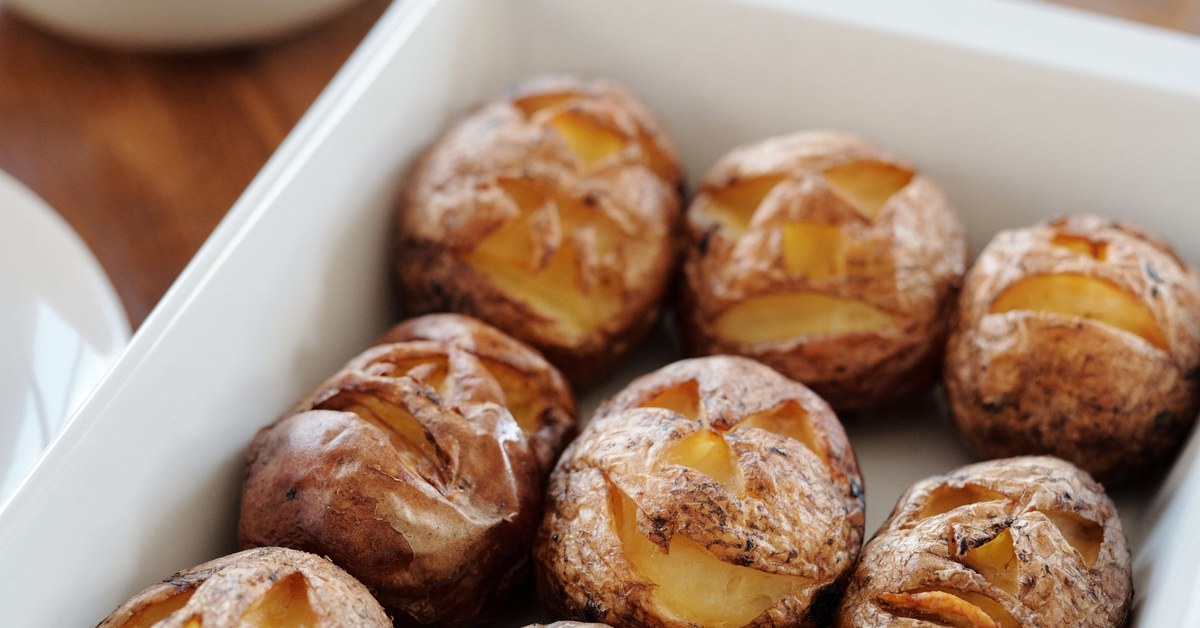
A great baked potato needs three things: a russet, a hot oven and more time than you think. Scrub it, dry it, poke it, rub it with oil and salt, and set it straight on the rack at 425°F (220°C). A medium potato takes 45–60 minutes. It's ready when the skin is crisp and papery and a skewer slides into the middle like it's going into soft butter.
If you have a thermometer, aim for 205–210°F (96–99°C) in the center. That's the point where the starch turns light and floury instead of dense.
What you need
- 4 medium russet potatoes, 8–10 oz (225–280 g) each. Pick ones that are about the same size so they finish together. Look for firm skins with no green patches or sprouts.
- 1 tablespoon of olive oil or melted bacon fat. Just enough to coat the skins. Bacon fat gives a smoky, savory crust.
- 1 teaspoon of kosher salt. Coarse salt sticks to the oiled skin and gives you a salty, crackly bite.
- Toppings. Butter, sour cream and chopped chives are the classic trio. More ideas at the end.
- A fork, a sheet pan and a skewer or instant-read thermometer. The sheet pan goes on the rack below to catch drips.
Russets are the right potato here because they're high in starch and low in moisture. If you want a crispy, craggy potato instead of a whole one, our guide on how to make roast potatoes is the better fit.
How to bake a potato in the oven
- Heat the oven. Set it to 425°F (220°C) with a rack in the middle and a sheet pan on the rack underneath. Give it a full 15 minutes to heat.
- Scrub and dry. Scrub each potato under cold water with a brush to get the dirt out of the eyes. Then dry it really well with a towel. A wet skin steams instead of crisping, so this step matters more than it looks.
- Poke holes. Stab each potato 6–8 times with a fork, about half an inch deep, all the way around. This lets steam out so the potato doesn't split and the inside dries a little as it bakes.
- Oil and salt. Rub the oil over the skins with your hands, then sprinkle with kosher salt on all sides. You want a thin, even sheen, not a puddle.
- Bake bare on the rack. Set the potatoes directly on the middle rack, an inch or two apart. Hot air hits every side, so the bottom crisps as well as the top. Don't wrap them in foil.
- Check at 45 minutes. Slide a thin skewer or paring knife into the thickest part. If it meets any firm, crunchy resistance in the middle, give it another 10 minutes and check again. Most medium russets land between 50 and 60 minutes.
- Split right away. Pull the potatoes out with mitts or tongs. Cut a slit lengthwise across the top, then push the ends toward the center so the inside puffs up. Fluff it with a fork and let the steam escape before you add butter. Letting a baked potato sit whole makes the inside go gummy.
Baked potato time and temperature chart
Times are for russets straight from the pantry, baked bare on the rack in a fully preheated oven. Size makes the biggest difference, so weigh one if you're unsure.
| Potato size | 350°F (175°C) | 400°F (200°C) | 425°F (220°C) | 450°F (230°C) |
|---|---|---|---|---|
| Small, 5–6 oz (140–170 g) | 60–70 min | 45–50 min | 35–45 min | 30–40 min |
| Medium, 8–10 oz (225–280 g) | 75–90 min | 55–70 min | 45–60 min | 40–50 min |
| Large, 12–16 oz (340–450 g) | 90–105 min | 70–80 min | 60–75 min | 55–65 min |
| Microwave start, then oven | n/a | 20–25 min | 15–20 min | 15 min |
At 350°F you can bake potatoes alongside a roast or a casserole, they just take longer and the skin stays a little softer. For any temperature, the target inside is the same. Our doneness temperatures chart lists it next to meats and fish if you're cooking a whole dinner at once.
“The skin looks dry and crackly and the skewer went in like butter. Pull them now and split them while they're steaming.”
How to tell when a baked potato is done
A potato can look finished on the outside long before the center is soft. Here's what to check.
Sight
- The skin starts shiny from the oil. As it bakes, it turns dry, matte and a shade deeper brown, with fine wrinkles near the ends.
- Small cracks or a little steam puffing out of the fork holes usually means the inside is soft and steaming.
Sound
- Open the oven and listen. A light sizzle and crackle on the skin means the oil is crisping it. Tap the skin with a fingernail. A done potato sounds hollow and papery, not dull and solid.
Smell
- A fully baked russet smells toasty and earthy, a bit like roasted nuts. A raw, starchy smell when you poke it means it needs more time.
Touch
- Squeeze the potato gently with an oven mitt on. It should give all the way through, like a ripe avocado. If the middle still feels firm, keep going.
- A skewer or thin knife should slide in and out with no grab at the center.
Temperature
For the fluffiest texture, take it to 205–210°F (96–99°C) in the thickest part. Potatoes don't have a food safety minimum the way meat does, but if you reheat a leftover baked potato, USDA advises heating leftovers to 165°F (74°C). Refrigerate leftovers within 2 hours, and don't leave foil-wrapped potatoes sitting at room temperature.
If you'd like a heads-up instead of opening the oven every 10 minutes, Pan can keep an eye on the skin through the oven window and tell you when it's time to test the center.
Tips for the best baked potato
- Skip the foil. Foil makes a soft, steamed skin. If you love soft skin, that's fine, but for crisp skin, bake them bare.
- Salt the skin, not just the inside. A salty crust is half the pleasure. Kosher or flaky salt works best.
- Go a little past "cooked." At 195°F a potato is technically cooked but still dense. The last 10–15 degrees is where it turns fluffy.
- Open it right away. Steam trapped inside a whole potato makes the flesh wet and heavy. Split and fluff within a minute or two.
- Short on time? Microwave it for 5–8 minutes first, then oil, salt and finish in a hot oven for 15–20 minutes.
- Reheating leftovers. A 375°F (190°C) oven for 15–20 minutes brings back the crisp skin better than a microwave. Our reheating guide has times for other foods too.
What to serve with a baked potato
A baked potato is the classic partner for a seared steak. Pair it with our guide on how to cook steak on the stove and a quick green vegetable like broccoli, and dinner is done.
It also sits nicely next to salmon baked in the oven or a tray of chicken drumsticks. Start the potatoes first and slide the second pan in when they have 15–40 minutes left.
It can also be the whole meal. Load it with chili, shredded cheese and scallions, or with sautéed broccoli and cheddar, or with leftover pulled pork. A spoonful of Greek yogurt with lemon and dill is a lighter take on sour cream. If you want something sweeter, bake sweet potatoes the same way, they just take a little less time.
Got extra potatoes the next day? Scoop out the insides for mashed potatoes, or try what can I make with my ingredients for more ideas.
In a hurry? How to bake a potato in the microwave takes about 10 minutes, with a quick oven finish for crisp skin. Roasting a tray of potatoes? Add corn on the cob in the oven on the rack below.
No oven? An air fryer baked potato gets the same fluffy inside with even crisper skin.
Bought a big bag? How long potatoes last shows how to store them for months.
Swap the sour cream for crème fraîche, richer and milder.
Baking sweet potatoes instead? Their skin is edible too; scrub it well first.
No sour cream for topping? Here's the best sour cream substitute.
Bought a big tub of sour cream for topping? Here's whether you can freeze sour cream.
Top it with sour cream and scallions; see what is a scallion. For a smoky sprinkle, see substitute for paprika.
Pan watches it for you
Pan tells you when the potatoes are ready
Pan watches the skin through the oven window as it dries out and darkens. It speaks up when the skin looks crisp and wrinkled enough that it's time to check the center.
- Skin going from shiny and wet to dry and matte: about halfway there
- Fine wrinkles near the ends and a deeper brown color: time to test with a skewer
- Little bubbles of oil sizzling on the skin: the outside is crisping nicely
- A thin crack opening at a fork hole with steam coming out: ready to pull
Pan AI is on iPhone • Android.
Common questions
How long does it take to bake a potato at 400°F?
A medium russet (8–10 oz) takes about 55–70 minutes at 400°F (200°C). A large one (12–16 oz) can take 70–80 minutes. Check with a skewer or thermometer rather than the clock, since potatoes vary a lot in size and density.
What temperature should a baked potato be inside?
A baked potato is fully cooked and fluffy at 205–210°F (96–99°C). At 190–200°F it's cooked but still a little dense and waxy in the middle. Push the thermometer into the thickest part, through the side.
Should you wrap a baked potato in foil?
Not if you want crisp skin. Foil traps steam, so the skin turns soft and the potato tastes more steamed than baked. Bake it bare, right on the rack. If you need to hold potatoes for a while after baking, foil keeps them warm.
Do you have to poke holes in a potato before baking?
It's a good habit. A few fork holes let steam escape and keep a dense potato from splitting open in the oven. It also helps the inside dry out a bit, which makes it fluffier.
What is the best potato for baking?
Russets are the classic choice. They're starchy and low in moisture, so the inside turns light and floury and the skin crisps well. Yukon Golds also bake nicely and come out creamier and denser.
Can you bake a potato faster in the microwave first?
Yes. Microwave a poked potato for 5–8 minutes, turning it once, until it gives a little when squeezed. Then oil and salt it and finish at 425°F (220°C) for 15–20 minutes to crisp the skin.
Sources
Reviewed against USDA FSIS guidance. How we choose sources and fix mistakes: editorial policy.
Keep cooking
- Thanksgiving & holidaysHow to Make Roast PotatoesParboil potatoes 8–10 minutes, rough them up, then roast in hot fat at 425°F (220°C, gas 7) for 45–60 minutes, turning once, until crisp and golden.
- Vegetables & fruitHow to Make Mashed PotatoesBoil peeled Yukon Gold chunks in salted water 15–20 minutes until a fork slides in, then mash with warm butter and milk. Ratios, times and fixes inside.
- Thanksgiving & holidaysHow to Cook Sweet PotatoesBake whole sweet potatoes at 400°F for 45 to 60 minutes, roast cubes at 425°F, or cook them on the stove. Clear times, doneness cues, plus easy acorn squash.
- Meat & poultryHow to Cook Steak on the StoveCook steak on the stove in a hot cast iron pan: 3–4 minutes per side for a 1-inch medium-rare steak, then rest 5 minutes. Timing chart and doneness cues.
- Vegetables & fruitHow to Cook EggplantPan-fry ½-inch eggplant slices 3–4 minutes per side, or roast cubes at 425°F for 20–25 minutes, until golden and creamy inside. Prep, times and cues.
- Vegetables & fruitHow to Cook Frozen CornSauté frozen corn in butter over medium-high for 6–8 minutes, boil it 3–5 minutes, microwave 4–5 minutes or roast at 425°F for 20–25 minutes. No thawing needed.
- Free toolBoiling times chartHow long to boil chicken, shrimp, potatoes, corn, broccoli and 30+ more foods.
- Free toolReheating guideHow to reheat fried chicken, steak, prime rib, rice and 20+ leftovers so they taste fresh.
- Free toolWhat can I make?Type what is in your fridge and get simple recipes you can cook right now.