How to Tell If Fish Is Done
Quick answer
Fish is done when the flesh turns from translucent to opaque all the way through and flakes easily when pressed with a fork. The USDA and FDA safe minimum is 145°F (63°C) in the thickest part. A good starting point is about 10 minutes per inch of thickness: thin tilapia takes 2–3 minutes per side in a pan, 1-inch cod about 4–5.
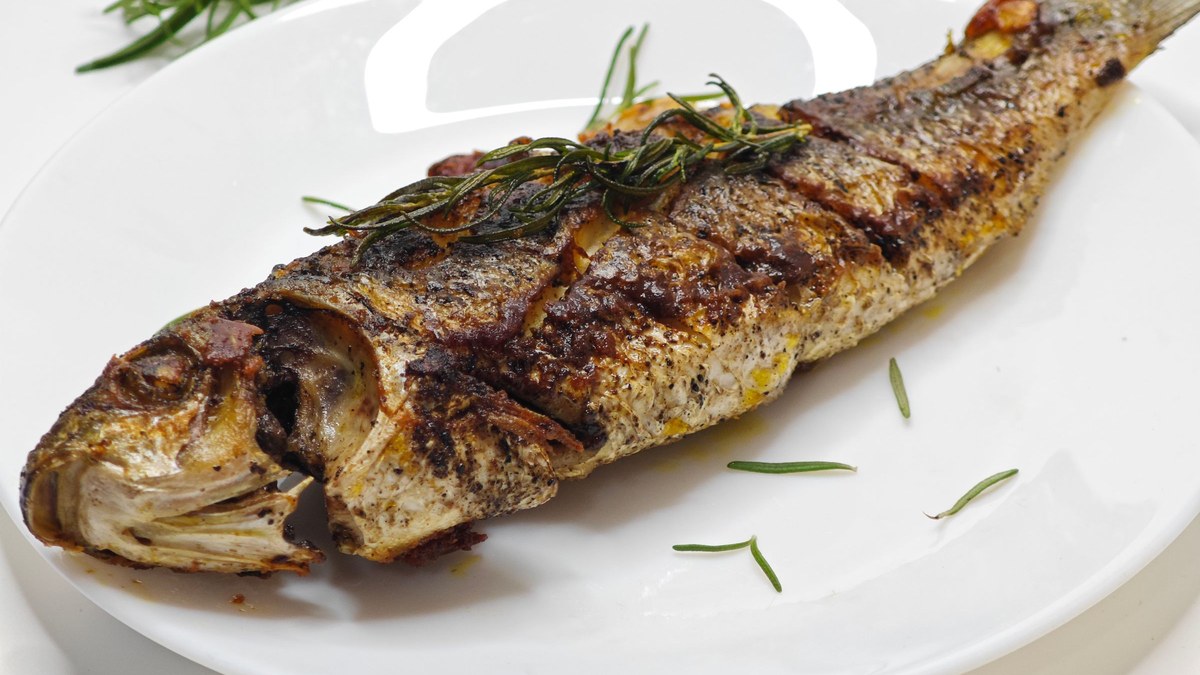
Handy for this: Internal temperature chart · Cooking oil smoke points
Part of our Food safety temperatures (safe temperatures, storage times and thawing in one chart) hub.
At a glance
- Pat the fish dry and season it.
- Measure the thickest part: plan on about 10 minutes per inch.
- Cook until the color change has climbed most of the way up the side.
- Flip once, gently.
- Check the thickest part: opaque and flaking, or 145°F.
- Take it off and serve right away.
The short version
Raw fish is glossy and translucent. Cooked fish is matte and opaque, and the flakes, the natural layers of the muscle, pull apart with a gentle push. Check the thickest part, because thin edges cook first. When the center has just turned opaque, it's done; a minute more and it starts to dry out.
“The opaque color has climbed most of the way up and it's letting go of the pan. Flip it now.”
Three ways to check
- Fork test. Press a fork into the thickest part and twist gently. Done fish separates into flakes; undercooked fish resists and looks glassy.
- Color. Look into the center: opaque white for cod, tilapia and halibut, light pink for salmon, with no translucent layer left.
- Thermometer. 145°F (63°C) in the thickest part is the safe minimum.
Times by fish and thickness
| Fish | Typical fillet | Pan, per side | Oven at 400°F |
|---|---|---|---|
| Tilapia, sole, flounder | ¼–½ inch | 2–3 min | 8–10 min |
| Cod, haddock | 1 inch | 4–5 min | 12–15 min |
| Halibut | 1 inch | 4–5 min | 12–15 min |
| Salmon | 1 inch | 4–6 min skin side, 1–3 min flesh side | 12–15 min |
The 10-minutes-per-inch rule is a starting point, not a promise. Start checking a couple of minutes early.
Signs of overcooked fish
- Dry, crumbly flakes that fall apart instead of separating cleanly.
- White beads on the surface. That's albumin, a protein squeezed out as the fish tightens.
- A tough, chewy bite. Next time, take it off as soon as the center turns opaque.
Common mistakes
- Checking the thin end. Always test the thickest part.
- Moving it too soon. Fish sticks until it has a crust; wait until it releases.
- Cooking from half-frozen. The outside overcooks before the center is done. Thaw it first, or follow a frozen-fish method.
Keep going
Next up: Pan Fried Fish, How to Cook Cod and How to Cook Tilapia.
Times for pan-frying, baking, air frying, broiling and poaching are in how to cook fish.
Pan watches it for you
Pan watches the color change in the fillet
Pan watches the side of the fillet through your phone camera, sees the opaque line rise, and tells you out loud when to flip and when to check the thickest part.
- Oil shimmering: lay the fillet in
- Opaque most of the way up: flip it
- Releasing easily: the crust has formed
- White beads on top: it's getting dry, take it off
Pan AI is on iPhone • Android.
Common questions
How can you tell when fish is done?
The flesh turns opaque all the way through and separates into flakes when you press it with a fork. The safe minimum is 145°F (63°C).
What temperature should fish be cooked to?
USDA and FDA say 145°F (63°C) in the thickest part.
How do you know when tilapia is done?
It turns opaque white and flakes easily, usually after 2–3 minutes per side in a hot pan for a thin fillet.
Why is my fish rubbery?
It was cooked past the point where the center turned opaque. Check the thickest part early and take it off as soon as it flakes.
How do you know when salmon is done?
It turns opaque, flakes with a fork and reads 145°F in the thickest part. Many cooks pull it a little earlier and let it rest.
How do you know when cod is done?
The flesh turns bright white and opaque and separates into large flakes when pressed with a fork, at 145°F.
What happens if fish is undercooked?
Translucent, glossy flesh in the center means it isn't done. Return it to the heat for another minute or two and check again.
Sources
- USDA FSIS: Safe Minimum Internal Temperature Chart
- FoodSafety.gov: Safe Minimum Internal Temperatures
- FDA: Selecting and Serving Fresh and Frozen Seafood Safely
Reviewed against USDA FSIS, FoodSafety.gov and FDA guidance. How we choose sources and fix mistakes: editorial policy.
Keep cooking
- Fish & seafoodPan Fried FishPan fry fish in a hot oiled skillet: 2 to 3 minutes per side for thin fillets, 3 to 4 for 1-inch cod or mahi mahi. Cook to 145°F, when it flakes easily.
- Fish & seafoodHow to Cook CodPan-sear cod fillets 3–4 minutes per side over medium-high, or bake at 400°F for 10–14 minutes, until the fish flakes and reaches 145°F. Frozen cod too.
- Fish & seafoodHow to Cook TilapiaPan-fry tilapia fillets 2–3 minutes per side over medium-high, or bake at 400°F for 10–12 minutes, until opaque, flaky and 145°F. Times and easy tips.
- Fish & seafoodSalmon Internal TempUSDA says salmon is done at 145°F (63°C) in the thickest part. Where to check, how carryover works, why some cooks pull earlier, and cues that it's ready.
- Free toolInternal temperature chartSafe internal temperatures for steak, chicken, salmon, pork and more, plus a printable PDF.