How to Make Mulled Wine
Quick answer
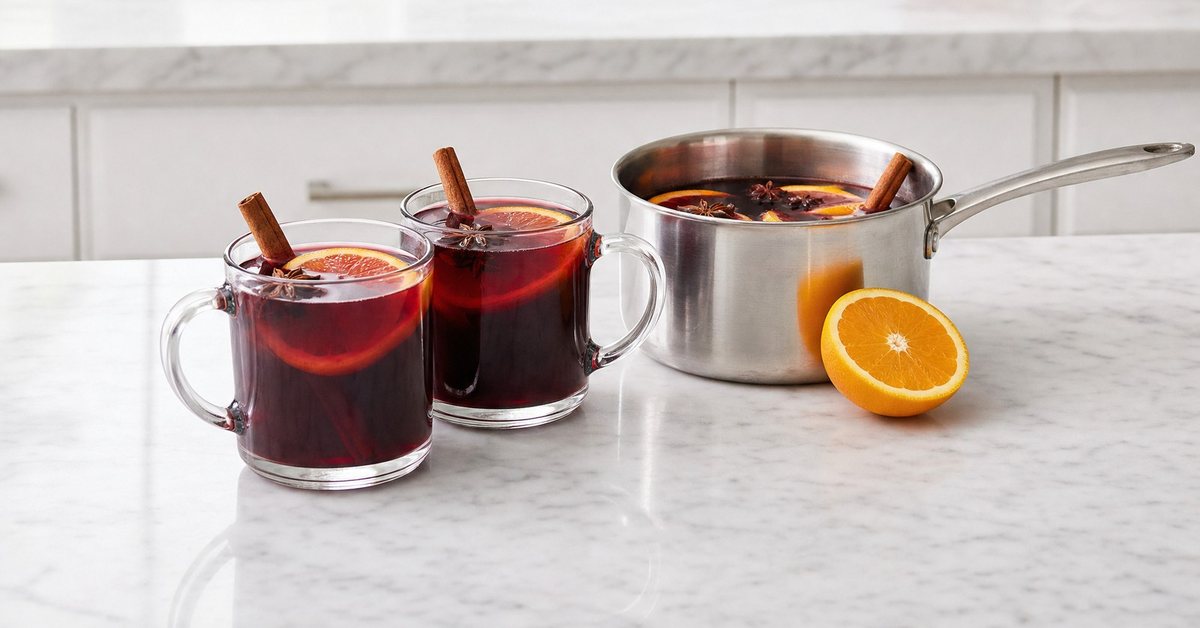
Pour one 750 ml bottle of dry red wine into a saucepan. Add 1 sliced orange, 2 cinnamon sticks, 6 whole cloves, 2 star anise and 3 tablespoons of honey or sugar. Warm it over low heat for 20–30 minutes, until it steams and smells of spice, without letting it simmer or boil. Keep it below about 170°F (77°C) so the alcohol stays in. Strain and serve warm in mugs.
Handy for this: Christmas dinner planner · New Year's Eve party food planner
At a glance
- Slice 1 orange into rounds and stud a few rounds with 6 whole cloves.
- Pour one 750 ml bottle of dry red wine into a medium saucepan.
- Add the orange, 2 cinnamon sticks, 2 star anise and 3 tablespoons of honey or sugar.
- Set the pan over low heat and stir until the honey dissolves.
- Warm 20–30 minutes until it steams steadily, keeping it below a simmer and under about 170°F (77°C).
- Taste, adding more honey or a splash of brandy if you like.
- Strain into mugs and garnish with a fresh orange slice or cinnamon stick.
The short version
Mulled wine is red wine warmed slowly with orange, whole spices and a little honey. The whole trick is heat control. You want it steaming, never bubbling. Alcohol starts to boil off at about 173°F (78°C), so if you keep the pot below roughly 170°F (77°C) the wine stays warm, spiced and full of flavor, and the alcohol stays in the mug instead of drifting up into your kitchen.
One bottle makes about 4 cups, enough for 6 small mugs. It takes 5 minutes to set up and 20–30 minutes of gentle warming. You can make it on the stove, in a slow cooker, without alcohol, or in a big batch for a party. All four versions are below.
What you need
- 1 bottle (750 ml) dry red wine. Pick something fruity with soft tannins: Merlot, Zinfandel, Garnacha, Tempranillo or a young Côtes du Rhône. Avoid big oaky reds, since heat makes oak and tannin taste sharper. A mid-range bottle you'd happily drink on a weeknight is perfect.
- 1 orange. Slice it into rounds. A few strips of peel without the white pith add extra aroma.
- Whole spices: 2 cinnamon sticks, 6 whole cloves and 2 star anise. A few cardamom pods or a thin slice of fresh ginger are good extras. Use whole spices, not ground; ground spices make the wine cloudy and gritty.
- 3 tablespoons honey, maple syrup or sugar. Start here and add more at the end. Sweetness is easier to add than take away.
- Optional: ¼ cup (60 ml) brandy, rum or orange liqueur. Stir it in at the very end, off the heat or on the lowest setting.
- Tools: a medium saucepan, a wooden spoon, a ladle and a fine-mesh strainer.
How to make mulled wine on the stove
- Prep the fruit. Slice the orange into ¼-inch (6 mm) rounds. Press the 6 cloves into the peel of two or three rounds so they're easy to fish out later.
- Combine everything. Pour the wine into a medium saucepan. Add the orange, cinnamon, star anise and honey.
- Warm on low. Set the burner to low, or medium-low on a weak stove. Stir for a minute or two until the honey dissolves.
- Let it steep, 20–30 minutes. Leave it uncovered or with the lid cracked. Within about 10 minutes you'll see the first wisps of steam. After 20 minutes the kitchen should smell of orange and cinnamon. Stir now and then.
- Watch the surface. The wine should steam steadily with a still, glossy surface. If small bubbles appear around the edge, it's getting too hot. Pull the pan off the heat for a minute and turn the burner down.
- Taste and adjust. Add another tablespoon of honey if it tastes sharp. Stir in the brandy now if you're using it.
- Strain and serve. Ladle it through a strainer into heatproof mugs. Garnish with a fresh orange slice or a cinnamon stick.
If you have a thermometer, aim for 140–160°F (60–71°C) in the mug. That's hot enough to feel cozy and far enough below the boiling point of alcohol to keep the drink balanced. Our doneness temperatures chart lists other common kitchen temperatures if you want a reference point.
Why you should never boil mulled wine
Boiling does three things, and none of them help. It drives off alcohol, so the wine tastes thin. It pulls bitter compounds out of the orange pith and the cloves, which turns the flavor harsh. And it cooks the fruitiness out of the wine, leaving it tasting stewed. A low, steady steam gives the spices plenty of time to infuse without any of that.
If it does boil for a moment, don't worry. Take it off the heat, add a splash of fresh wine to brighten it, and taste before adding more sugar.
Slow cooker mulled wine
A slow cooker is the easiest way to keep mulled wine at the right temperature for hours. Add the wine, orange, spices and honey, cover, and heat on low for 1–2 hours, until it's steaming and fragrant. Then switch to the warm setting and let guests ladle their own for up to 3 hours. Avoid the high setting, which can bring it to a simmer.
Taste once an hour. If the cloves get strong, scoop them out. Leaving the lid slightly ajar keeps condensation from dripping back and diluting the wine.
Non-alcoholic mulled wine
For kids, drivers and anyone skipping alcohol, use 3 cups (720 ml) unsweetened red grape juice or pomegranate juice and 1 cup (240 ml) apple cider. Add the juice of half a lemon for the brightness wine normally brings. Use the same orange and whole spices, but cut the sweetener to 1 tablespoon, since the juice is already sweet. With no alcohol to protect, a gentle simmer for 15 minutes is fine, then hold it on low.
If you're serving both versions, label the pots clearly or use two different ladles. A pot of stovetop hot chocolate is another warm option for kids at the same party.
Mulled wine for a party
Scale it by the bottle. One bottle serves about 6 people with a small mug each, or 4 with refills. For two hours of a party, figure on 1½ mugs per guest.
| Guests | Wine | Oranges | Cinnamon sticks | Cloves | Star anise | Honey | Warming time |
|---|---|---|---|---|---|---|---|
| 4–6 | 1 bottle (750 ml) | 1 | 2 | 6 | 2 | 3 tbsp | 20–30 min |
| 8–12 | 2 bottles (1.5 L) | 2 | 3 | 10 | 3 | ⅓ cup | 30–40 min |
| 15–20 | 4 bottles (3 L) | 3 | 5 | 16 | 5 | ⅔ cup | 40–50 min |
Don't scale whole spices exactly by the bottle; they get strong in a big pot. Use a wide, heavy pot so heat spreads evenly, keep it on the lowest setting, and top it up with fresh wine as it goes down. For planning the rest of the spread, try the New Year's Eve party food planner or the Christmas dinner planner.
“Steam is rising but the surface is still. The mulled wine is hot enough to serve. Keep it on low and don't let it bubble.”
How to tell when mulled wine is ready
Sight
- Steady wisps of steam rising across the whole surface, with no bubbles. The surface should look still and glossy.
- Small bubbles at the edges mean it's too hot. Turn it down.
Smell
- After about 20 minutes, the room smells clearly of orange and cinnamon. If you smell sharp alcohol vapor stinging your nose over the pot, it's running too hot.
Taste
- The spices should be noticeable but not medicinal. If cloves dominate, take them out and add a splash of fresh wine.
Once guests arrive, it's easy to lose track of the pot. If you'd rather not keep checking, Pan can watch it for you and tell you when it starts moving from steam toward a simmer.
Tips and fixes
- Too sweet. Add a splash of fresh wine and a squeeze of orange or lemon.
- Too bitter. Remove the orange slices and cloves, add a tablespoon of honey and turn the heat down.
- Cloudy. You probably used ground spices. Strain through a coffee filter or a fine strainer lined with paper towel.
- Make it ahead. Warm the wine with the spices for 20 minutes, strain, cool and refrigerate for up to 3 days. Reheat gently on low until steaming.
- Leftovers. Strain out everything first; spices left in overnight turn bitter. Leftover mulled wine is good in a pan sauce or used as the poaching liquid for pears.
What to serve with mulled wine
Mulled wine loves salty, rich snacks: a cheese board, roasted nuts and a bowl of stovetop popcorn. For a holiday table, it pairs nicely with glazed ham and a spoonful of homemade cranberry sauce, which shares the same orange and spice notes. Find more seasonal recipes on our Christmas cooking page.
Need a non-alcoholic pitcher for the table? How to make iced tea has ratios from a quart to a gallon.
The same cinnamon, cloves and cardamom go into chai tea.
For an alcohol-free pot, see how to make apple cider from fresh apples.
No allspice berries? See substitute for allspice.
Pan watches it for you
Pan tells you when the wine is steaming and warns you before it bubbles
Mulled wine only needs one thing from you: keep it hot without letting it boil. That's easy to forget once guests arrive. Pan watches the surface of the pot and speaks up the moment it moves from a steady steam toward a simmer.
- Honey dissolved and the wine is still: keep warming on low
- Wisps of steam rising across the surface: it's nearly ready
- Steady steam with a still, glossy surface: serve now
- Small bubbles forming at the edges: turn the heat down right away
Pan AI is on iPhone • Android.
Common questions
What temperature should mulled wine be?
Serve mulled wine hot but not simmering, around 140–160°F (60–71°C). Keep it below about 170°F (77°C). Alcohol starts to boil off near 173°F (78°C), so steaming is the goal and bubbles are the sign to turn the heat down.
What wine is best for mulled wine?
Use an inexpensive, fruity, dry red with soft tannins, like Merlot, Zinfandel, Garnacha or a young Côtes du Rhône. Skip heavily oaked or very tannic wines; heating makes oak and tannin taste harsher. You do not need an expensive bottle.
Can you boil mulled wine?
Avoid it. Boiling drives off alcohol, pulls bitterness out of the orange pith and cloves, and makes the wine taste flat and stewed. Keep the heat on low so the surface just steams. If you see bubbles, slide the pan off the burner for a minute.
How do you make mulled wine in a slow cooker?
Add the wine, fruit, spices and sweetener to a slow cooker and heat on low for 1–2 hours, until hot and fragrant. Then switch to warm and serve straight from the pot for up to 3 hours. Taste every hour and pull the cloves if it gets too strong.
How do you make non-alcoholic mulled wine?
Replace the wine with 3 cups (720 ml) of unsweetened grape juice or pomegranate juice and 1 cup (240 ml) of apple cider, plus a squeeze of lemon. Use the same spices, cut the sweetener to 1 tablespoon, and simmer gently for 15 minutes. With no alcohol, a gentle simmer is fine.
How long does mulled wine keep?
Strain out the spices and fruit, cool it, and refrigerate it in a covered jar for up to 3 days. Reheat it gently on low until steaming. Leaving the spices in overnight makes it bitter, so strain first.
Sources
- USDA FSIS: Leftovers and Food Safety
- USDA ARS: Table of Nutrient Retention Factors, Release 6 (alcohol retention)
Reviewed against USDA FSIS guidance. How we choose sources and fix mistakes: editorial policy.
Keep cooking
- Start hereHow to Make Hot Chocolate on the Stove, Rich and SmoothMake hot chocolate on the stove: whisk 2 cups milk with 3 oz chopped chocolate or 3 tbsp cocoa and sugar over medium-low until it steams. Never boil it.
- Start hereHow to Make EggnogMake eggnog on the stove: whisk yolks, sugar and milk, heat gently to 160°F (71°C) until it coats a spoon, then chill 4 hours. Spirits optional, added cold.
- Start hereHow to Make Cranberry SauceMake cranberry sauce: simmer a 12 oz bag of cranberries with 1 cup sugar and 1 cup water or orange juice for 10 minutes until they pop. It sets as it cools.
- Thanksgiving & holidaysChristmas LeftoversRefrigerate Christmas leftovers within 2 hours, eat them within 3–4 days (ham 3–5) and reheat to 165°F. Plus easy ideas: ham hash, soup, fried rice and more.
- Start hereChatGPT for Cooking vs Pan AI: What Changes on December 11, 2026ChatGPT voice changes on Dec 11, 2026, and Live has no video. An honest ChatGPT cooking alternative that watches your pan, and where ChatGPT still wins.
- Start herePan AI vs Samsung FoodSamsung Food saves recipes, plans meals and builds shopping lists. Pan AI watches your pan and tells you when to flip. Where each one is better, side by side.
- Free toolChristmas dinner plannerGuests and menu in, a countdown timeline out, with oven clashes flagged.
- Free toolNew Year's Eve party food plannerGuests and party hours in: appetizers per person, how many kinds, drinks, ice and toast bottles.