How to Make Homemade Jam on the Stove Without Pectin
Quick answer
To make homemade jam without pectin, crush 4 cups of berries, stir in 4 cups of sugar over low heat until it dissolves, then boil hard, stirring, until it reaches 220°F at sea level, the gel point the National Center for Home Food Preservation gives. Ladle it into hot jars with ¼ inch headspace and process 5 minutes in a boiling water canner, or refrigerate it.
Handy for this: Cups to tablespoons · Boiling times chart
At a glance
- Wash, hull and crush the fruit, one layer at a time.
- Measure the fruit, sugar and lemon juice from the chart.
- Heat slowly, stirring, until the sugar dissolves.
- Boil rapidly, stirring often, to 220°F at sea level.
- Check with a cold plate in the freezer.
- Skim foam and ladle into hot jars, ¼ inch headspace.
- Process in a boiling water canner, or refrigerate.
The short version
Jam is fruit and sugar boiled until it sets. Without added pectin it relies on the fruit's own pectin and a long enough boil. The National Center for Home Food Preservation (NCHFP) gives the gel point as 220°F at sea level, lower as you go up in altitude. A thermometer makes it easy; the cold plate test confirms it.
“That's a full rolling boil now. Keep stirring, it's close to setting.”
Fruit, sugar and lemon ratios
| Fruit | Crushed fruit | Sugar | Lemon juice | Yield |
|---|---|---|---|---|
| Berries | 4 cups | 4 cups | None | 3–4 half-pints |
| Apricots | 4–4½ cups | 4 cups | 2 tablespoons | 5–6 half-pints |
| Peaches | 5½–6 cups | 4–5 cups | 2 tablespoons | 6–7 half-pints |
Ratios from NCHFP's jam without added pectin table. Don't cut the sugar in these recipes; it helps the jam set. For less sugar, use a pectin made for reduced-sugar jam.
The gel point by altitude
| Altitude | Boil jam to |
|---|---|
| Sea level | 220°F |
| 1,000 ft | 218°F |
| 2,000 ft | 216°F |
| 3,000 ft | 214°F |
| 4,000 ft | 212°F |
| 5,000 ft | 211°F |
| 6,000 ft | 209°F |
| 7,000 ft | 207°F |
| 8,000 ft | 205°F |
Cold plate test: spoon a little boiling jam onto a cold plate and set it in the freezer for a few minutes. If it wrinkles when you push it, it's ready. Take the pot off the heat while you test.
Canning it or keeping it in the fridge
For shelf-stable jars, NCHFP says to fill hot jars with ¼ inch headspace and process half-pints or pints in a boiling water canner for 5 minutes up to 1,000 feet, 10 minutes from 1,001 to 6,000 feet and 15 minutes above that. Store sealed jars in a cool, dark, dry place at 50–70°F and use within a year. Skipping the canner? Keep the jam in the refrigerator, where refrigerator jams usually last about 3 weeks, or freeze it for up to a year.
A worked example
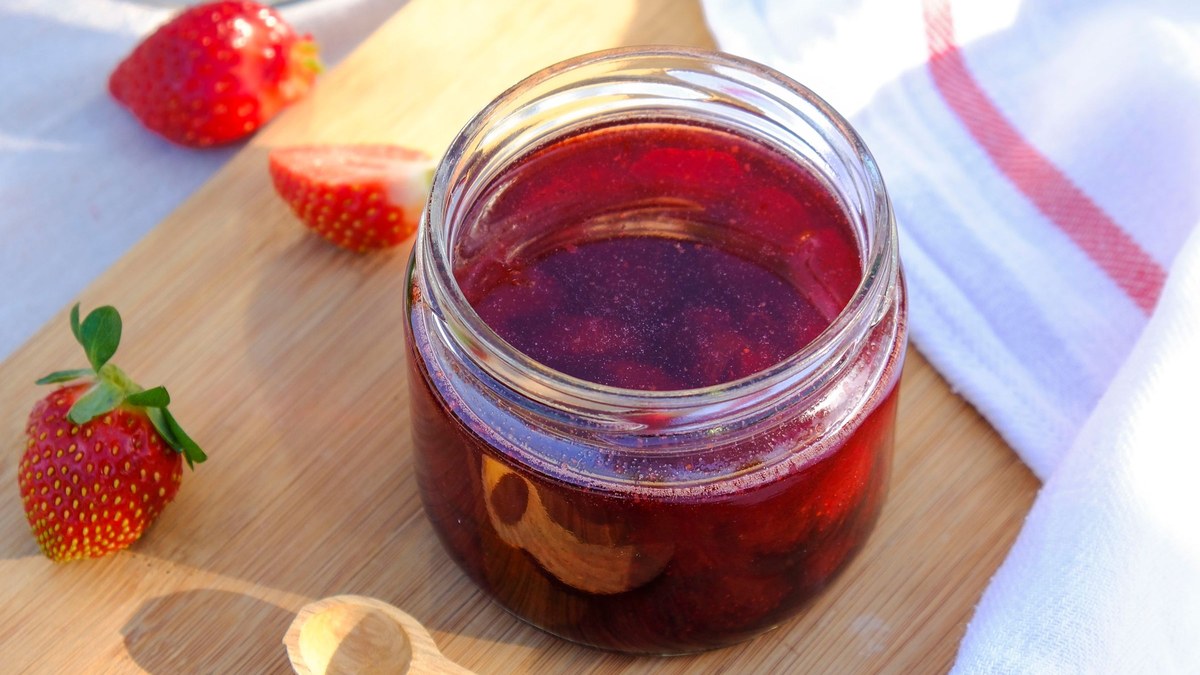
You crush 4 cups of strawberries in a wide pot and stir in 4 cups of sugar over low heat until the grains disappear. Then you turn up the heat to a hard, rolling boil and stir often. About 15 minutes later the thermometer reads 220°F and the foam has settled; a spoonful on a frozen plate wrinkles. You skim, ladle into four hot half-pint jars and process them 5 minutes.
Storing opened jam
Once opened, keep jam in the refrigerator at 40°F or below. NCHFP says regular full-sugar jam is best used within about a month after opening, and freezer jam within 3–4 weeks. Discard any jar with mold, an off smell or a broken seal.
Common mistakes
- Doubling the batch. A bigger pot takes longer to reach the gel point and often sets poorly. Make one batch at a time.
- Cutting the sugar. Jam without pectin needs it to set.
- Boiling too long. Past the gel point it turns sticky and dark.
- Too small a pot. Jam foams up; use a pot at least four times the volume of the fruit.
Keep going
Next up: How to Make Cranberry Sauce, Pan Fried Apples and How to Tell When Fruit Is Ripe.
Sweetening with honey instead? Does honey go bad covers storage and crystals.
No pectin on hand? Applesauce takes just apples, water and 20 minutes.
Serve it the Cornish way, on scones with clotted cream.
Frozen fruit makes good jam; see can you freeze strawberries and can you freeze grapes.
Pan watches it for you
Pan watches the pot so it doesn't boil over
Jam can foam up fast. Pan watches the pot through your phone camera and tells you out loud when to stir or lower the heat.
- Sugar dissolved: turn up the heat
- Rolling boil: stir often
- Foam settles, bubbles slow: test
- 220°F and wrinkles: jar it
Pan AI is on iPhone • Android.
Common questions
How do you know when homemade jam is done?
It reaches 220°F at sea level, or a spoonful on a cold plate wrinkles when pushed after a few minutes in the freezer.
Can you make jam without pectin?
Yes. Equal parts crushed berries and sugar, boiled to the gel point, sets with the fruit's own pectin.
How long does homemade jam last?
Sealed, processed jars keep about a year in a cool, dark place. Opened jam is best within about a month in the fridge.
Do you have to can homemade jam?
No. Unprocessed jam can be kept in the refrigerator for about 3 weeks or frozen for up to a year.
How do you make strawberry jam?
Crush 4 cups strawberries, stir in 4 cups sugar over low heat until dissolved, then boil hard, stirring, until 220°F at sea level. Jar and process, or refrigerate.
How do you make freezer jam?
Use a pectin made for freezer jam and follow its recipe. Freezer jam isn't cooked to the gel point; it keeps in the freezer for up to about a year and in the fridge for a few weeks.
Can you make jam with frozen fruit?
Yes. Thaw it, keep the juice, crush it, and measure the same as fresh.
Can you make jam with less sugar?
Only with a pectin made for low or no sugar. In regular jam, sugar helps it gel and keep, so cutting it gives a runny, short-lived jam.
Sources
- USDA FSIS: Leftovers and Food Safety
- FoodSafety.gov: Safe Minimum Internal Temperatures
- National Center for Home Food Preservation: Making Jam without Added Pectin
- National Center for Home Food Preservation: Storing Home-Canned Jams and Jellies
Reviewed against USDA FSIS, FoodSafety.gov and the National Center for Home Food Preservation guidance. How we choose sources and fix mistakes: editorial policy.
Keep cooking
- Vegetables & fruitHow to Make Cranberry SauceHow to make cranberry sauce: simmer a 12 oz bag of cranberries with 1 cup sugar and 1 cup water or orange juice 10 minutes, until they pop.
- Vegetables & fruitPan Fried ApplesPan fried apples in about 10 minutes: firm apple slices, butter, brown sugar and cinnamon over medium heat until tender, golden and glossy with syrup.
- Vegetables & fruitHow to Tell When Fruit Is RipeHow to tell when fruit is ripe: mango, pineapple, watermelon, papaya, avocado, peach, banana and cantaloupe by sight, smell and touch, plus a table.
- Vegetables & fruitHow to Make Overnight OatsHow to make overnight oats: equal parts rolled oats and milk, a pinch of salt, optional yogurt or chia. Chill 6+ hours; keeps up to 4 days in the fridge.
- Free toolGrams to cups converterConvert grams to cups (and back) for flour, sugar, butter, rice and 30 more ingredients.