How to Make Fudge
Quick answer
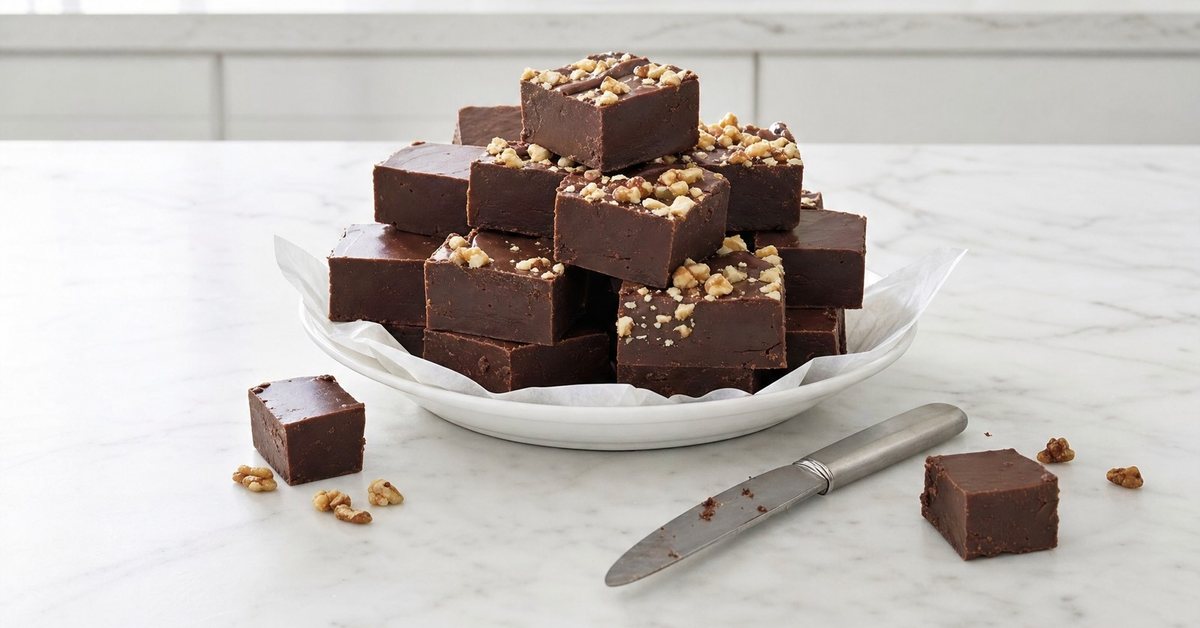
Stir 2 cups sugar, ¾ cup whole milk, 2 oz unsweetened chocolate, 1 tablespoon corn syrup and a pinch of salt over medium heat until the sugar dissolves. Boil without stirring to 234–237°F (112–114°C), about 15–20 minutes. Add 2 tablespoons butter, cool undisturbed to 110°F (43°C), add vanilla and beat 5–10 minutes until it loses its shine. Spread in a buttered pan.
Handy for this: Grams to cups converter · Christmas dinner planner
At a glance
- Butter an 8 x 8-inch (20 cm) pan and line it with parchment, leaving an overhang.
- Stir sugar, milk, chopped chocolate, corn syrup and salt over medium heat until the sugar dissolves and the chocolate melts.
- Clip on a candy thermometer and boil without stirring until it reaches 234–237°F (112–114°C), about 15–20 minutes.
- Take the pan off the heat, drop in the butter without stirring, and let it cool undisturbed to 110°F (43°C), 45–60 minutes.
- Add the vanilla and beat with a wooden spoon for 5–10 minutes, until the fudge thickens and loses its gloss.
- Spread it quickly into the pan, smooth the top, and let it set at room temperature for 2–4 hours.
- Lift it out with the parchment and cut into 1-inch (2.5 cm) squares with a sharp knife.
The short version
Classic fudge is sugar, milk and chocolate boiled to soft-ball stage, 234–237°F (112–114°C), then cooled to about 110°F (43°C) and beaten until it turns thick and matte. Those two numbers are the whole secret. Hitting the right temperature means the fudge sets firm, and waiting to beat it until it cools gives you tiny sugar crystals, which is what makes fudge smooth instead of sandy.
If you'd rather skip the thermometer, there's an easy fudge made with sweetened condensed milk and chocolate chips that takes 10 minutes on the stove. Both versions are below, along with the cold-water test, a troubleshooting list, and how to pack fudge for Christmas gifts.
What you need for classic chocolate fudge
This makes an 8 x 8-inch (20 cm) pan, about 36 one-inch pieces.
- 2 cups (400 g) granulated sugar. Measure carefully. Our grams to cups converter is handy if your recipe card uses one system and your kitchen uses the other.
- ¾ cup (180 ml) whole milk, or half-and-half for a richer fudge.
- 2 ounces (55 g) unsweetened chocolate, finely chopped. You can use 3 tablespoons of cocoa powder instead; whisk it into the sugar first.
- 1 tablespoon light corn syrup. It helps keep big sugar crystals from forming. Optional, but it makes the recipe much more forgiving.
- 2 tablespoons (28 g) unsalted butter, 1 teaspoon vanilla and a pinch of salt.
- Optional: ½ cup (55 g) toasted walnuts or pecans.
- Tools: a heavy-bottomed 2- to 3-quart (2–3 L) saucepan, a candy thermometer, a wooden spoon, a pastry brush with a cup of water, and a parchment-lined 8-inch pan.
How to make old-fashioned fudge on the stove
- Prep the pan. Butter the 8 x 8-inch pan and line it with parchment, leaving a little overhang on two sides so you can lift the fudge out later. Have everything measured before you start; once the sugar boils, things move.
- Dissolve the sugar. Put the sugar, milk, chocolate, corn syrup and salt in the saucepan. Stir over medium heat until the chocolate melts and the sugar dissolves completely, about 5 minutes. Rub a little between your fingers on a spoon; it shouldn't feel gritty.
- Wash down the sides. Dip a pastry brush in water and brush around the inside of the pan just above the liquid. This dissolves stray sugar crystals that could fall back in and make the whole batch grainy.
- Boil without stirring. Clip on the candy thermometer so the tip sits in the syrup but doesn't touch the bottom. Let it boil over medium heat without stirring. If you must, gently swirl the pan. This takes 15–20 minutes. The syrup will foam up at first, so use a pan that's big enough.
- Stop at 234–237°F (112–114°C). Soft-ball stage. Use the lower end for softer fudge and the upper end for firmer fudge. As soon as it gets there, move the pan off the heat onto a cool spot, like a wire rack.
- Add the butter and wait. Drop the butter on top in pieces, but don't stir it in. Leave the thermometer in. Let the fudge cool, untouched, to 110°F (43°C). This takes 45–60 minutes. Don't rush it by stirring or moving the pan around.
- Beat it. Add the vanilla and start beating with a wooden spoon. At first it's glossy and loose. After 5–10 minutes of steady beating, it thickens, gets lighter in color and loses its shine. Stir in the nuts now if using.
- Pour and set. As soon as it turns matte, scrape it into the pan quickly and smooth the top. It sets fast. Leave it at room temperature for 2–4 hours until firm, then lift it out and cut into 1-inch (2.5 cm) squares.
The cold-water test
Candy thermometers can be a few degrees off, and the cold-water test is a good backup. Fill a small glass with very cold water (add an ice cube, then take it out). When you think the syrup is close, drop about ½ teaspoon of it into the water and wait a few seconds. Then reach in and gather it with your fingers.
| What the syrup does in cold water | Stage | Temperature | What to do |
|---|---|---|---|
| Dissolves or makes a thin thread | Thread | 223–235°F (106–113°C) | Keep boiling |
| Forms a soft ball that flattens when lifted out | Soft ball | 234–237°F (112–114°C) | Take it off the heat |
| Forms a firm ball that holds its shape | Firm ball | 244–248°F (118–120°C) | Too far for fudge; it will be crumbly |
To check your thermometer, clip it into a pot of boiling water. At sea level it should read 212°F (100°C). If it reads 210°F, add 2 degrees to your target. At altitude, subtract about 2°F (1°C) for every 1,000 feet (300 m).
“The bubbles have gone small, slow and shiny. You're near soft-ball stage, so check the thermometer and get ready to pull it off the heat.”
How to tell when fudge is ready
Sight
- Early on, the bubbles are big and foamy and climb up the pan. As water boils off, they shrink, slow down and look shiny. That's your cue to check the temperature closely.
- When beating, watch the surface: glossy means keep going, matte and slightly thick means pour now.
Sound
- The boil starts loud and rolling and gets quieter and more of a slow, thick "plop" as the syrup concentrates.
Smell
- It should smell like warm chocolate and caramel. A sharp, bitter smell means the bottom is starting to scorch; lower the heat and don't scrape the bottom.
Temperature
The thermometer is the final word: 234–237°F (112–114°C) for the boil and 110°F (43°C) before beating. Since sugar moves slowly for 10 minutes and then fast at the end, Pan can watch the bubbles for you and say when it's time to check. For other kitchen temperatures, see our doneness temperatures chart.
Easy condensed milk fudge
This is the no-thermometer, no-beating version, and it's the one to make with kids. It's creamy and soft, a little different from old-fashioned fudge, and very hard to get wrong.
- Line an 8 x 8-inch (20 cm) pan with parchment.
- Put 3 cups (510 g) semisweet chocolate chips, one 14-ounce (397 g) can of sweetened condensed milk, 2 tablespoons butter and a pinch of salt in a saucepan.
- Stir over low heat for 5–7 minutes, until the chips are melted and the mixture is smooth and glossy. Keep the heat low; chocolate scorches quickly on the bottom of a pan.
- Off the heat, stir in 1 teaspoon vanilla and any mix-ins: 1 cup chopped nuts, crushed candy canes, or mini marshmallows.
- Spread in the pan and chill 2–3 hours until firm. Cut into squares.
Variations: use white chocolate chips with crushed peppermint for a Christmas look, swap half the chocolate for peanut butter chips, or sprinkle flaky salt on top before chilling.
Fixes and tips
- Grainy fudge. Sugar crystallized too early. Put it back in the pan with ½ cup (120 ml) milk, stir over low heat until smooth, wash down the sides, and boil again to soft-ball stage without stirring.
- Soft fudge that won't set. The syrup didn't get hot enough. Same fix: back in the pan with ¼ cup milk, reheat to 234–237°F (112–114°C), cool and beat again. Or call it fudge sauce and pour it over ice cream.
- Hard, crumbly fudge. It went past soft-ball stage or was beaten too long. Next time pull it at 234°F and pour the moment it loses its shine.
- Fudge set in the pot before you could pour it. Knead it with buttered hands while it's still warm, then press it into the pan.
- Rainy day. Humidity slows setting. Cook to the top of the range, 237°F (114°C).
- Clean-up. Fill the pot with hot water and let it sit; the hardened sugar dissolves on its own.
Fudge for Christmas gifts and storage
Fudge is one of the best homemade holiday gifts because it keeps well and travels well. Cut it into 1-inch squares, put them in mini paper cups, and pack them in a tin or box with parchment between the layers. About 12 pieces make a nice gift.
- Room temperature: 1–2 weeks in an airtight container in a cool spot.
- Fridge: 2–3 weeks, wrapped well so it doesn't pick up other smells.
- Freezer: up to 3 months. Wrap the uncut slab in plastic and foil, then thaw it wrapped at room temperature so condensation doesn't form on the surface.
- Make-ahead plan: make old-fashioned fudge 1–2 weeks before Christmas and the condensed milk version a few days before.
Fudge goes well on a dessert board with a mug of stovetop hot chocolate or a small glass of homemade eggnog. Hosting the big meal too? The Christmas dinner planner helps you schedule the stove and oven so candy-making doesn't collide with the roast, and our holiday cooking hub has the rest of the season's recipes.
Want something sweet with no stove at all? Edible cookie dough skips the eggs and uses heat-treated flour.
Want a lighter frozen treat? How to make banana ice cream needs only frozen bananas.
Need powdered sugar for a glaze? See how to make powdered sugar. Another sweet project: meringue cookies.
Adding walnuts or pecans? Toast them first for deeper flavor.
Melting chocolate on the stove? Learn what a double boiler is and how to make one from a pot and a bowl.
Not sure which can to buy? Here's what evaporated milk is and how it differs from condensed milk.
No cream of tartar? A little lemon juice works; see cream of tartar substitutes.
No sweetened condensed milk? Here's a homemade substitute; for evaporated milk, see this guide.
Pan watches it for you
Pan watches the boiling sugar so you hit soft-ball stage
Fudge comes down to a few degrees, and boiling sugar climbs fastest right when you look away. Pan watches the bubbles change size and speed and tells you when the syrup is getting close to soft-ball stage, so you can check the thermometer at the right moment.
- Large, fast, foamy bubbles that rise high in the pan: lower the heat a notch and don't stir
- Foam settling into steady, medium bubbles: keep boiling, about halfway there
- Small, slow, glossy bubbles with thicker syrup: check for 234–237°F (112–114°C)
- Syrup at soft-ball stage: take it off the heat and add the butter without stirring
Pan AI is on iPhone • Android.
Common questions
What temperature is soft-ball stage for fudge?
Soft-ball stage is 234–237°F (112–114°C) at sea level. At that point a drop of syrup in cold water forms a soft ball that flattens when you lift it out. At higher altitudes, subtract about 2°F (1°C) for every 1,000 feet (300 m) above sea level.
Why is my fudge grainy?
Graininess comes from sugar crystals forming too early. The usual causes are stirring while it boils, sugar crystals on the pan sides falling back in, or beating before it cools to 110°F (43°C). Wash the pan sides with a wet pastry brush, stop stirring once it boils, and wait for it to cool.
Why won't my fudge set?
It didn't get hot enough. If the syrup stops short of 234°F (112°C), there's too much water left and the fudge stays soft. Scrape it back into the pan with ¼ cup (60 ml) milk, bring it back to soft-ball stage, and cool and beat it again.
Can I make fudge without a candy thermometer?
Yes, use the cold-water test. Drop ½ teaspoon of the boiling syrup into a glass of very cold water. When it gathers into a soft ball you can pick up, and that ball flattens on your finger, you've reached soft-ball stage. Or make the condensed milk fudge, which needs no thermometer.
How long does homemade fudge last?
Fudge keeps 1–2 weeks at cool room temperature in an airtight container with parchment between the layers, 2–3 weeks in the fridge, and up to 3 months in the freezer. Let chilled fudge come to room temperature before unwrapping so it doesn't sweat.
Can I double a fudge recipe?
It's better to make two separate batches. A doubled batch takes much longer to boil and cool, and it's hard to beat that much fudge by hand before it sets. Condensed milk fudge doubles easily, though.
Sources
Reviewed against USDA FSIS guidance. How we choose sources and fix mistakes: editorial policy.
Keep cooking
- Start hereHow to Make Hot Chocolate on the Stove, Rich and SmoothMake hot chocolate on the stove: whisk 2 cups milk with 3 oz chopped chocolate or 3 tbsp cocoa and sugar over medium-low until it steams. Never boil it.
- Start hereHow to Make EggnogMake eggnog on the stove: whisk yolks, sugar and milk, heat gently to 160°F (71°C) until it coats a spoon, then chill 4 hours. Spirits optional, added cold.
- Vegetables & fruitPan Fried ApplesPan frying apples takes about 10 minutes: firm apple slices, butter, brown sugar and cinnamon over medium heat until tender, golden and glossy with syrup.
- Eggs & breakfastHow to Make Popcorn on the StoveMake popcorn on the stove with 3 tablespoons of oil and ⅓ cup of kernels in a covered pot over medium heat. Ready in about 5 minutes, with almost no duds.
- Start hereChatGPT for Cooking vs Pan AI: What Changes on December 11, 2026ChatGPT voice changes on Dec 11, 2026, and Live has no video. An honest ChatGPT cooking alternative that watches your pan, and where ChatGPT still wins.
- Start herePan AI vs Samsung FoodSamsung Food saves recipes, plans meals and builds shopping lists. Pan AI watches your pan and tells you when to flip. Where each one is better, side by side.
- Free toolGrams to cups converterConvert grams to cups (and back) for flour, sugar, butter, rice and 30 more ingredients.
- Free toolChristmas dinner plannerGuests and menu in, a countdown timeline out, with oven clashes flagged.