How to Cook Spinach
Quick answer
Heat 1 tablespoon of olive oil in a large skillet over medium heat and cook 2 sliced garlic cloves 30–60 seconds until fragrant. Add 10 ounces of fresh spinach a handful at a time, tossing with tongs, and cook 2–3 minutes until just wilted and glossy green. Season with salt and lemon. A 10 oz bag cooks down to about 1 cup.
Handy for this: Grams to cups converter · What can I make?
At a glance
- Rinse the spinach if it isn't pre-washed and shake or spin off most of the water.
- Heat 1 tablespoon of olive oil in a large skillet over medium heat.
- Add 2 sliced garlic cloves and cook 30–60 seconds until fragrant and pale gold.
- Add the spinach in big handfuls, tossing with tongs as each batch wilts.
- Cook 2–3 minutes total, until just wilted and deep green.
- Season with salt, pepper and a squeeze of lemon, then serve right away.
The short version
Spinach is the fastest vegetable you'll cook. Warm a tablespoon of olive oil and two sliced garlic cloves in a big skillet over medium heat, then add the spinach by the handful and toss it with tongs. In 2–3 minutes it goes from a mountain of leaves to a small, glossy pile. Salt it, squeeze some lemon on top, and eat it right away.
The one thing that surprises everybody is how much it shrinks. A 10-ounce (285 g) bag fills a large skillet to the brim and cooks down to about 1 cup. That's two small side servings, not four.
What you need
- Spinach. Plan on 5 ounces (140 g) of raw spinach per person, or one 10-ounce bag for two. Baby spinach is tender and needs no trimming. Mature flat-leaf or curly spinach has more flavor but needs washing and stem trimming.
- Fat. Olive oil, butter, or a mix. One tablespoon is plenty for 10 ounces.
- Garlic. Two cloves, thinly sliced. Slices are easier to watch than minced garlic and less likely to go too dark.
- A large skillet or wide pot. A 12-inch skillet holds a 10-ounce bag if you add it in batches. A Dutch oven works for bigger amounts.
- Tongs. For turning the leaves so the cooked ones on the bottom come up and the raw ones go down.
- Salt, pepper and lemon. Red pepper flakes or a little Parmesan are nice extras.
Spinach ratios: how much it cooks down
Raw spinach is mostly water and air. Once heat hits it, the leaves collapse and release their water, and the volume drops to roughly a tenth of what you started with. These numbers help you buy the right amount.
| Raw spinach | Raw volume (loosely packed) | Cooked yield | Serves (as a side) |
|---|---|---|---|
| 5 oz (140 g) clamshell | About 5 cups | About ½ cup | 1 |
| 10 oz (285 g) bag | About 10 cups | About 1 cup | 2 |
| 16 oz (450 g) container | About 16 cups | About 1½ cups | 3 |
| 2 lb (900 g) mature bunches | About 28 cups after trimming | About 3 cups | 5–6 |
| 10 oz (285 g) frozen block | Already cooked | About 1 cup squeezed | 2 |
Converting a recipe that lists spinach in grams? Our grams to cups converter handles the math.
How to sauté spinach with garlic, step by step
- Wash and dry. Pre-washed baby spinach can go straight in. Mature spinach often hides sand, so swish it in a big bowl of cold water, lift it out, and repeat until no grit settles on the bottom. Spin it dry or shake it well. A few drops clinging to the leaves are fine.
- Trim stems if needed. On mature spinach, pull off any stems thicker than a pencil lead. Baby spinach stems can stay.
- Heat the oil and garlic. Put 1 tablespoon of olive oil and 2 sliced garlic cloves in a cold 12-inch skillet, then set it over medium heat. Starting cold gives you more control. Cook 1–2 minutes, until the garlic sizzles gently and turns pale gold at the edges.
- Add spinach in batches. Drop in a big handful, about a third of the bag. It will look like way too much. Toss with tongs, lifting the bottom leaves to the top.
- Keep adding. When the first batch has shrunk by half, about 30–45 seconds, add the next handful and toss again. Repeat with the last of it.
- Stop just as it wilts. Total cooking time is 2–3 minutes. The moment the last leaves have collapsed and look glossy, take the pan off the heat.
- Season and drain. Sprinkle with a pinch of salt and pepper and squeeze on a little lemon. Lift the spinach onto a plate with tongs and leave any liquid behind in the pan.
Spinach cooking times by method
| Method | Heat | Time | Notes |
|---|---|---|---|
| Sautéed, baby spinach | Medium | 1–2 min | Wilts almost on contact |
| Sautéed, mature spinach | Medium | 3–4 min | Thicker leaves, trim stems |
| Steamed | Boiling water, covered | 2–3 min | Mild flavor, keeps more color |
| Blanched | Rolling boil, salted | 30–60 sec | Shock in ice water, squeeze dry |
| Frozen, sautéed | Medium | 3–4 min | Thaw and squeeze first |
| Wilted into soup or pasta | Off heat or low | 1 min | Stir in at the very end |
“The last leaves just collapsed and they're glossy and deep green. Take it off the heat now.”
How to tell when spinach is ready
Spinach goes from perfect to soggy in about a minute, so watch it, not the clock.
Sight
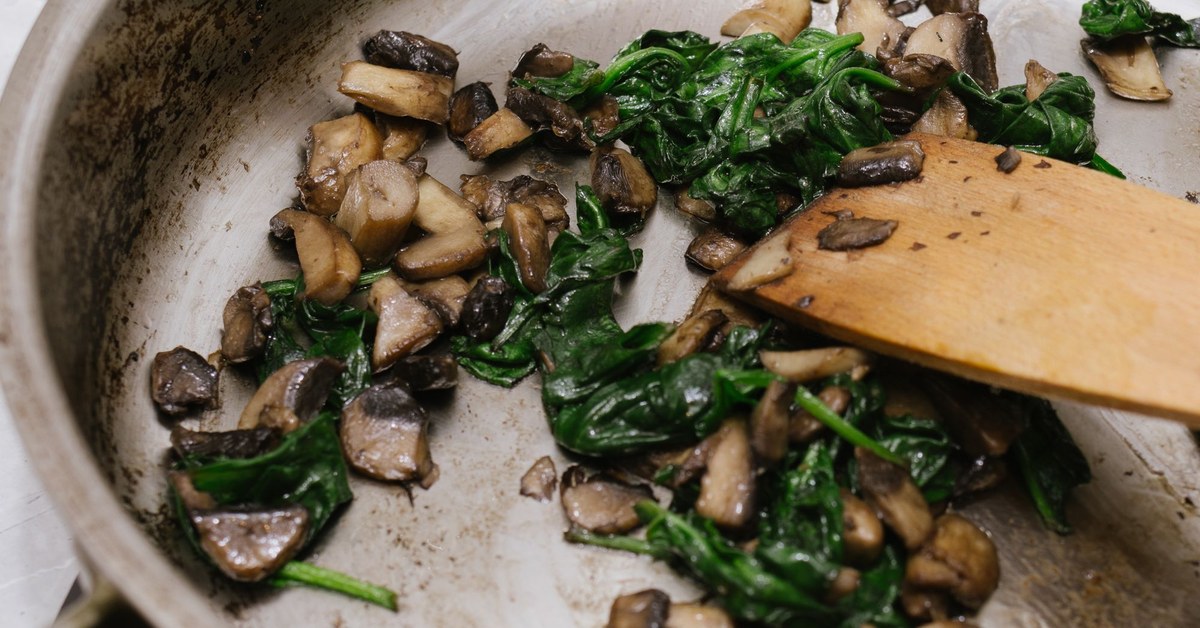
- Raw leaves are matte and stand up stiffly. As they heat, they slump, turn glossy, and go a deeper, brighter green. Glossy and just collapsed is the moment.
- When the leaves turn dark, almost army green, and a puddle forms around them, they've gone a little too far. Still edible, just softer and wetter.
- The garlic should be pale gold. If it starts heading toward brown before the spinach goes in, pull the pan off the heat for a few seconds.
Sound
- Garlic in warm oil gives a soft, steady sizzle. A loud, crackling sizzle means the heat is too high for garlic.
- Each handful of wet spinach hisses when it lands, then goes quiet as the leaves wilt. When the hissing stops and you hear liquid bubbling instead, it's done.
Smell
- Sweet, nutty garlic means it's time to add the leaves. A sharp, acrid smell means the garlic went too dark. Start over with fresh garlic, it only costs you a minute.
- Cooked spinach smells fresh and earthy. A metallic or swampy smell comes from cooking too long.
Touch
- Lift some with tongs. Ready spinach drapes softly over the tongs but still has a little body. Overcooked spinach hangs limp and drips.
- Thick stems on mature spinach should bend easily without snapping.
Temperature and safety
Leafy greens don't have a safe minimum cooking temperature, but they do need a good rinse. Wash unwashed spinach under running water and keep it away from raw meat. Pre-washed bags labeled "ready to eat" don't need rewashing, per FDA. Refrigerate cooked spinach within 2 hours, eat it within 3–4 days, and reheat leftovers to 165°F (74°C).
Since the whole thing takes three minutes, it's easy to look away at the wrong second. Pan watches the leaves and tells you when they've just wilted.
Tips for better sautéed spinach
- Use a bigger pan than you think. Spinach needs room for its water to steam away. A small pan turns it into a soupy pile.
- Don't cover it. A lid traps the water and stews the leaves. Toss it uncovered.
- Salt at the end. Salt pulls out water. Adding it early makes the spinach weep.
- Lemon right before serving. Acid dulls green color during cooking, so add it off the heat.
- Squeeze frozen spinach hard. Wrap thawed spinach in a clean kitchen towel and twist until no more water drips. You'll get about ¾ cup of liquid out of a 10-ounce block.
- Try other flavors. Butter and a pinch of nutmeg, sesame oil and soy sauce, or a spoon of cream and Parmesan for a quick creamed spinach.
What to serve with spinach
Garlicky spinach is a great bed for fish. Spoon it under a fillet from our salmon on the stove guide or next to shrimp. Sautéed spinach and mushrooms cook in the same pan, one after the other, and taste great together on toast.
Leftover spinach folds right into eggs. Chop it and add it to an omelette or scrambled eggs, and cook the eggs to 160°F (71°C), until no liquid egg remains. You can also stir a handful of raw leaves into hot pasta with olive oil and Parmesan. If you've got half a bag left and no plan, try what can I make with my ingredients.
For a heartier green that simmers into something silky, see how to cook collard greens.
Making saag? Add browned paneer; here's what it is and how to cook it.
Mix it with ricotta for a pasta filling, or crumble on feta cheese to serve.
In Japan, boiled greens are often dressed with clear dashi and soy sauce.
Bought too much? See can you freeze spinach for blanching it for later.
Other greens freeze the same way; see can you freeze kale.
Pan watches it for you
Pan tells you when it's wilted
Pan watches the garlic first and then the leaves. It speaks up when the garlic turns pale gold, and again the moment the spinach has just wilted, before it turns dark and watery.
- Garlic slices turning from white to pale gold: add the spinach now
- Pile of leaves dropping by half: add the next handful
- Last leaves just collapsed and glossy, deep green: pull it off the heat
- Liquid pooling at the edges of the pan: lift the spinach out with tongs
Pan AI is on iPhone • Android.
Common questions
How much does spinach cook down?
A lot. Fresh spinach shrinks to roughly one-tenth of its raw volume. A 10-ounce (285 g) bag, about 10 loosely packed cups, cooks down to about 1 cup. Plan on 5 ounces of raw spinach per person for a side dish.
How long do you sauté spinach?
About 2–3 minutes over medium heat for a 10-ounce bag. Baby spinach wilts in 1–2 minutes. Mature flat-leaf spinach with thicker stems takes 3–4. Pull it as soon as the last leaves collapse.
How do you keep sautéed spinach from getting watery?
Dry the leaves well before cooking, use a large pan so the moisture can evaporate, and don't cover it. Cook just until wilted, then lift it out with tongs and leave any liquid in the pan, or tip the pan and pour it off.
How do you cook frozen spinach?
Thaw it in the fridge or microwave, then squeeze out the water in a clean towel. Sauté the squeezed spinach in oil or butter with garlic over medium heat for 3–4 minutes until hot throughout. A 10-ounce block gives you about 1 cup after squeezing.
Should you remove spinach stems?
Baby spinach stems are tender and can stay. On mature spinach, pull or trim stems thicker than a pencil lead, since they stay stringy after the leaves wilt.
Can you reheat cooked spinach?
Yes. Refrigerate it within 2 hours and use it within 3–4 days. Reheat to 165°F (74°C) in a skillet or microwave until steaming. It will release a little more water, so drain it before serving.
Sources
- FDA: Selecting and Serving Produce Safely
- USDA FSIS: Leftovers and Food Safety
- Jessica Gavin: Sautéed Spinach
- Love and Lemons: Sautéed Spinach
Reviewed against FDA and USDA FSIS guidance. How we choose sources and fix mistakes: editorial policy.
Keep cooking
- Vegetables & fruitHow to Cook MushroomsSauté sliced mushrooms in a hot, uncrowded skillet 8–10 minutes, salting at the end, until golden brown and tender. Times for sautéed and roasted mushrooms.
- Fish & seafoodHow to Cook Salmon on the StovePan-sear salmon skin side down over medium-high heat for 4–6 minutes, flip, and cook 2–3 minutes more. Timing by thickness and how to tell salmon is done.
- Eggs & breakfastHow to Make an OmeletteMake an omelette with 3 eggs in a buttered 8-inch nonstick pan over medium heat for 2–3 minutes, lifting the edges, then fill, fold and slide it out.
- Vegetables & fruitHow to Cook Vegetables on the StoveCook asparagus, carrots, potatoes, sweet potatoes, green beans and broccoli on the stove with one simple method, clear times, and easy cues for tender-crisp.
- Vegetables & fruitHow to Cook EggplantPan-fry ½-inch eggplant slices 3–4 minutes per side, or roast cubes at 425°F for 20–25 minutes, until golden and creamy inside. Prep, times and cues.
- Vegetables & fruitHow to Cook Frozen CornSauté frozen corn in butter over medium-high for 6–8 minutes, boil it 3–5 minutes, microwave 4–5 minutes or roast at 425°F for 20–25 minutes. No thawing needed.
- Free toolGrams to cups converterConvert grams to cups (and back) for flour, sugar, butter, rice and 30 more ingredients.
- Free toolWhat can I make?Type what is in your fridge and get simple recipes you can cook right now.