How to Cook Cauliflower
Quick answer
Cut a medium head of cauliflower into 1½-inch florets. To roast, toss with 2 tablespoons of olive oil and ¾ teaspoon salt and roast at 425°F (220°C) for 25–30 minutes, flipping once, until deep golden. On the stove, brown them in oil over medium-high 5–6 minutes, add 3 tablespoons of water, cover 3 minutes, then uncover and brown 2–3 minutes more.
Handy for this: What can I make? · Reheating guide
At a glance
- Remove the leaves, cut out the core and break the cauliflower into even 1½-inch florets.
- To roast, toss with olive oil and salt and spread on a sheet pan with space between pieces.
- Roast at 425°F (220°C) for 25–30 minutes, flipping halfway, until deep golden.
- To pan-sear, brown the florets in oil over medium-high heat for 5–6 minutes.
- Add 3 tablespoons of water, cover for 3 minutes, then uncover and brown 2–3 minutes more.
- Finish with lemon, garlic, herbs or Parmesan and serve hot.
The short version
Plain boiled cauliflower is fine. Browned cauliflower is something else entirely. The sugars caramelize, the edges go crisp and nutty, and the inside turns creamy. For that, you need high heat and a little space. Roast florets at 425°F (220°C) for 25–30 minutes, flipping once, or brown them in a big skillet for 10–12 minutes with a quick covered steam in the middle so they cook all the way through.
Both methods start the same way: even florets, good oil, and patience while the first side browns.
What you need
- 1 medium head cauliflower (about 2 lb / 900 g). Look for tight, creamy white curds with no brown spots and fresh green leaves. It gives about 6 cups of florets.
- 2 tbsp olive oil. Avocado oil works well too, especially in a hot skillet. Our smoke points chart explains which oils handle high heat.
- ¾ tsp salt and ¼ tsp black pepper.
- 1 tsp lemon juice. For the end.
- 1 tbsp chopped parsley. Or dill, cilantro or chives.
- A rimmed baking sheet for roasting, or a 12-inch skillet with a lid for the stovetop.
How to cut cauliflower
Pull off the outer leaves (they're edible and roast up crisp, so keep them if you like). Turn the head upside down and cut around the core with a paring knife. Break the florets apart with your hands, then cut big ones in half through the stem so each piece has a flat side. Flat sides touch the pan, and touching the pan is how they brown. Aim for pieces about 1½ inches (4 cm) across.
Rinse the florets under cool running water and dry them well with a towel. Wet cauliflower steams instead of browning.
How to roast cauliflower
- Heat the oven to 425°F (220°C). Put a rack in the middle. For extra-crisp edges, slide the empty sheet pan in while the oven heats.
- Toss with oil and salt. In a big bowl, toss the florets with the oil, salt and pepper until every piece looks lightly coated.
- Spread them out. Lay the florets on the sheet pan flat side down, with space between pieces. If they're touching all over, use two pans.
- Roast 15 minutes, then flip. The bottoms should be golden by now. Turn them with a spatula.
- Roast 10–15 minutes more. They're ready when the flat sides are deep golden brown, the edges are crisp and a fork slides into the stem easily. Total time is 25–30 minutes.
- Finish. Squeeze lemon over the top, scatter the parsley and taste for salt.
How to cook cauliflower in a pan
- Heat the skillet. Set a 12-inch skillet over medium-high for 2 minutes, then add the oil and let it shimmer.
- Add the florets flat side down. One layer, with a little room. You should hear a strong sizzle.
- Brown 5–6 minutes. Stir only once or twice. You want real color on the flat sides before moving on.
- Steam to cook through. Add 3 tablespoons of water. It'll hiss loudly. Cover right away and cook 3 minutes so the centers turn tender.
- Uncover and crisp. Take the lid off. Once the water cooks away and the sizzle comes back, cook 2–3 minutes more, tossing, until the edges brown again.
- Season and serve. Off the heat, add salt, pepper, lemon and herbs. A minced garlic clove added for the last 30 seconds is a nice touch.
Cauliflower cooking times and temperatures
Times are for fresh cauliflower, dried well after washing. Frozen florets need a hotter oven and won't get quite as crisp.
| Method | Cut | Heat | Time | Ready when |
|---|---|---|---|---|
| Roasted | 1-inch florets | 425°F (220°C) | 20–25 min | Deep golden, crisp edges |
| Roasted | 1½-inch florets | 425°F (220°C) | 25–30 min | Deep golden, fork-tender stem |
| Roasted | 1-inch-thick steaks | 425°F (220°C) | 30–35 min, flip once | Browned both sides, tender core |
| Roasted from frozen | Florets | 450°F (230°C) | 25–30 min | Browned, no icy centers |
| Pan-seared | 1½-inch florets | Medium-high + cover | 10–12 min | Browned, fork-tender |
| Boiled | Florets | Rolling boil | 5–7 min | Fork slides in, slight resistance |
| Steamed | Florets | Covered over boiling water | 6–8 min | Tender, still holds shape |
For more boiled and steamed vegetable times on one page, see our boiling times chart.
“The flat sides are deep golden now and the edges are crisping. Flip them and give it two more minutes.”
How to tell when cauliflower is done
Cauliflower is forgiving. It stays good across a wide window, from tender-crisp to fully soft. Here's how to land where you want.
Sight
- Raw cauliflower is bright, chalky white. As it cooks, the cut surfaces turn slightly translucent and ivory.
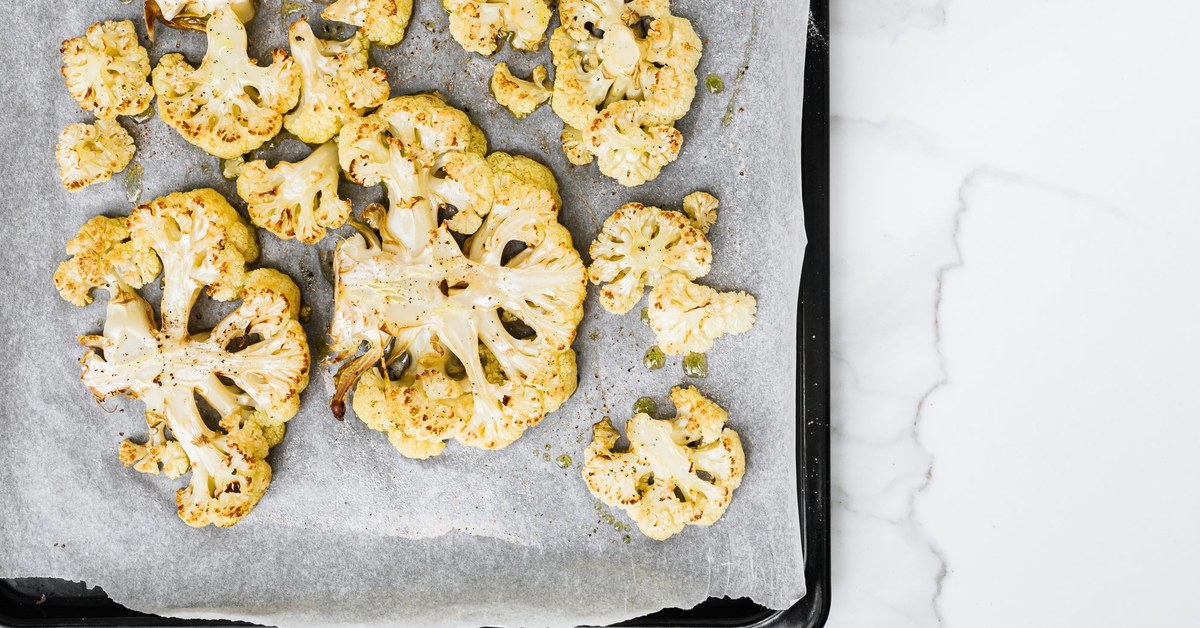
- Roasted and pan-seared florets are ready when the flat sides are deep golden to chestnut brown and the tiny curds on top look toasted. A few very dark edges are part of the charm.
- Pale florets with water pooling around them mean the pan is crowded. Spread them out and give them more time.
Sound
- A strong, steady sizzle in the skillet means browning. When you add the water it roars, then goes quiet under the lid. When you uncover and the sizzle returns, the water is gone and the second round of browning has started.
Smell
- Browning cauliflower smells nutty and sweet, a little like toasted bread. A strong sulfur smell means it's been boiled or steamed too long, so pull it sooner next time.
Touch
- Pierce the thickest stem with a fork or knife. It should slide in with little resistance. If it pushes back hard, give it 3–5 more minutes.
- Roasted florets should feel crisp at the edges and give slightly when you squeeze one with tongs.
Temperature
Fresh cauliflower has no safety temperature, since you're cooking for texture and flavor. Wash it under running water before cutting, as the FDA recommends for all produce. When you reheat leftovers, bring them to 165°F (74°C). Our reheating guide covers the best way to keep roasted vegetables crisp.
Flipping at the right moment is most of the work here, and it's what Pan watches for: it sees the flat sides go deep golden and tells you when to turn them.
Tips for better cauliflower
- Dry it well. Pat the florets dry after rinsing. Surface water has to cook off before any browning starts.
- Give it room. One medium head fills one standard sheet pan. If you're cooking two heads, use two pans and rotate them halfway.
- Use enough oil. Cauliflower soaks up oil. Two tablespoons per head is the sweet spot for color without greasiness.
- Season after. Garlic, Parmesan and fresh herbs go on in the last few minutes or after cooking, since they color faster than the cauliflower does.
- Try spices. Toss the florets with 1 teaspoon of smoked paprika, cumin or curry powder along with the oil for an easy change.
Flavor variations
- Garlic Parmesan. In the last 5 minutes of roasting, sprinkle on ¼ cup grated Parmesan and 2 minced garlic cloves.
- Curry roasted. Add 1 teaspoon curry powder and ½ teaspoon cumin with the oil. Finish with cilantro and yogurt.
- With chickpeas. Roast a can of drained, dried chickpeas on the same pan. See how to cook chickpeas for more.
- Cauliflower steaks. Cut 1-inch slabs through the core, brown them in a skillet for 3–4 minutes per side, then finish in a 425°F (220°C) oven for 15–20 minutes.
What to serve with cauliflower
Roasted cauliflower is a great partner for roast chicken, pork chops or salmon. It fits right in on a holiday table next to glazed carrots and Brussels sprouts. If you like it, try the same high-heat method with broccoli.
Have half a head of cauliflower and a few other things? Our what can I make tool will suggest a dinner.
Pan watches it for you
Pan tells you when to flip
Pan watches the flat sides of the florets as they brown and tells you when they've turned deep golden, so you flip at the right time and catch the edges before they go past toasty.
- Florets still creamy white with a few pale spots: leave them alone
- Flat sides light gold: about two minutes to the flip
- Flat sides deep golden brown with crisp edges: flip now
- Water cooked off and the sizzle is back: uncover and brown the second side
Pan AI is on iPhone • Android.
Common questions
How long do you roast cauliflower at 425°F?
Roast 1½-inch florets at 425°F (220°C) for 25–30 minutes, flipping halfway. Smaller 1-inch florets take 20–25 minutes, and 1-inch-thick cauliflower steaks take 30–35 minutes, flipped once.
How do you cook cauliflower on the stove?
Brown florets in 2 tablespoons of oil in a large skillet over medium-high for 5–6 minutes, stirring only occasionally. Add 3 tablespoons of water, cover for 3 minutes to steam them through, then uncover and cook 2–3 minutes more to crisp the edges. Total time is 10–12 minutes.
How long do you boil or steam cauliflower?
Boil florets in salted water for 5–7 minutes, or steam them over boiling water, covered, for 6–8 minutes. They're done when a fork slides in with only slight resistance. Go a few minutes longer if you're mashing them.
Why is my roasted cauliflower soggy?
Usually the pan is crowded or the oven isn't hot enough. Crowded florets trap steam and never brown. Spread them out with space between pieces, use 425°F (220°C), and dry the cauliflower well after washing.
Can you roast frozen cauliflower?
Yes. Don't thaw it. Toss the frozen florets with oil and salt, spread them out on a preheated sheet pan and roast at 450°F (230°C) for 25–30 minutes, flipping once. It won't get quite as crisp as fresh, but it browns well.
How long does cooked cauliflower last?
Refrigerate cooked cauliflower in a covered container for 3–4 days. Reheat roasted cauliflower in a 400°F (200°C) oven or a hot skillet for 5–8 minutes until hot, 165°F (74°C), so it crisps up again.
Sources
- FDA: Selecting and Serving Produce Safely
- Love and Lemons: Roasted Cauliflower
- RecipeTin Eats: Roasted Cauliflower
Reviewed against FDA guidance. How we choose sources and fix mistakes: editorial policy.
Keep cooking
- Vegetables & fruitHow to Cook BroccoliSteam broccoli florets 4–5 minutes, boil 2–3, sauté 6–8 or roast at 425°F for 18–22 until bright green and fork-tender. Times and cues for every method.
- Vegetables & fruitHow to Cook Brussels SproutsPan-sear halved Brussels sprouts cut side down 8–10 minutes, or roast at 425°F for 20–25, until deep golden and fork-tender. Times, cues and tips.
- Vegetables & fruitHow to Cook CarrotsGlaze sliced carrots on the stove for 12–15 minutes, or roast them at 425°F for 25–30 minutes until tender and caramelized. Times, cues and holiday tips.
- Rice, pasta, grains & beansHow to Cook ChickpeasSimmer soaked dried chickpeas for 1–1½ hours until creamy, or pan-roast canned chickpeas in oil for 10–15 minutes until golden and crisp. Full guide.
- Vegetables & fruitHow to Cook EggplantPan-fry ½-inch eggplant slices 3–4 minutes per side, or roast cubes at 425°F for 20–25 minutes, until golden and creamy inside. Prep, times and cues.
- Vegetables & fruitHow to Cook Frozen CornSauté frozen corn in butter over medium-high for 6–8 minutes, boil it 3–5 minutes, microwave 4–5 minutes or roast at 425°F for 20–25 minutes. No thawing needed.
- Free toolWhat can I make?Type what is in your fridge and get simple recipes you can cook right now.
- Free toolReheating guideHow to reheat fried chicken, steak, prime rib, rice and 20+ leftovers so they taste fresh.