When to Flip Salmon (and How to Keep It From Sticking)
Quick answer
Cook salmon skin side down first and flip it when the flesh has turned opaque about three quarters of the way up the side and the fillet releases from the pan on its own, usually after 4–6 minutes for a 1-inch fillet over medium-high heat. Then cook the flesh side 1–3 minutes. If it sticks, it isn't ready. USDA's safe minimum for fish is 145°F (63°C).
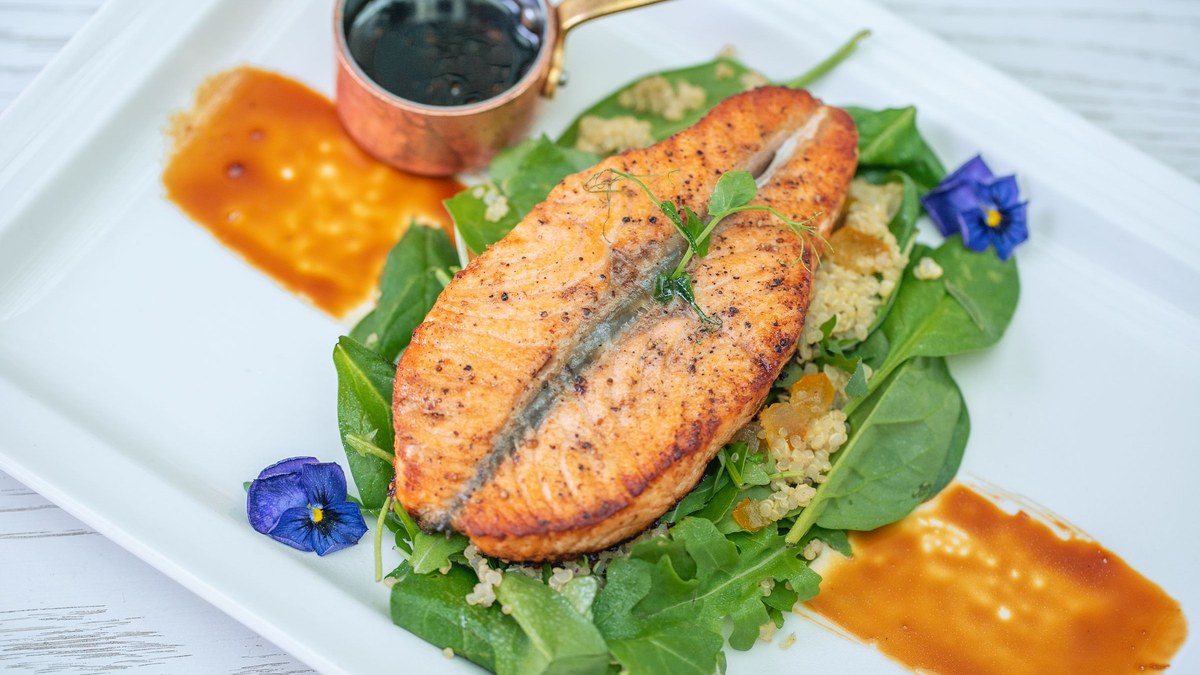
Handy for this: Salmon internal temp · Salmon on the stove
At a glance
- Pat the salmon very dry and salt it just before cooking.
- Heat a skillet over medium-high until a thin layer of oil shimmers.
- Lay the fillet skin side down and press it flat for 10–15 seconds.
- Cook 4–6 minutes until the opaque color is three quarters of the way up and the skin releases.
- Flip it once with a thin spatula.
- Cook the flesh side 1–3 minutes.
- Check the thickest part: 145°F, or opaque and flaking with a fork.
- Serve skin side up so it stays crisp.
The short version
Most of the cooking happens skin side down. The skin protects the flesh and turns crisp, and you can watch the color change climb up the side of the fillet. When the pale, opaque color is about three quarters of the way up and the fillet slides when you nudge it, flip it. The second side only needs a short finish.
Skinless fillets work the same way, with a shorter first side: flip when the bottom is golden and the opaque line is about halfway up.
“The color has climbed about three quarters of the way up and the skin is letting go. Flip it now.”
How to know it's time to flip
- The color line. Raw salmon is translucent and deep orange-pink. Cooked salmon turns opaque and lighter. Watch that line rise up the side.
- It releases. Fish skin sticks at first and lets go when it has crisped. If a spatula meets resistance, wait 30–60 seconds.
- The skin looks crisp at the edges. Browned, bubbly edges mean the skin underneath is done.
Time per side
| Fillet | Skin side (first) | Flesh side |
|---|---|---|
| ¾ inch | 3–4 min | 1–2 min |
| 1 inch | 4–6 min | 1–3 min |
| 1½ inches | 6–7 min | 2–4 min, lower heat |
Medium-high heat in a stainless or cast iron skillet with a thin film of high smoke point oil. Thick fillets can finish in a 400°F oven.
Why salmon sticks (and how to stop it)
- Wet skin. Pat it very dry with paper towels and salt it just before cooking.
- A cold pan. Heat the pan until the oil shimmers before the fish goes in.
- Moving it too soon. Press it flat for the first 10–15 seconds so the skin doesn't curl, then leave it alone.
- A worn nonstick or a dry cast iron pan. A thin, even layer of oil matters more than the pan.
When is salmon done?
USDA's safe minimum for fish is 145°F (63°C), when the flesh is opaque and separates easily with a fork. Many cooks take salmon off a little earlier because it keeps cooking off the heat; our salmon internal temp guide explains the trade-off. If you're serving young children, pregnant guests or anyone with a weak immune system, cook it to 145°F.
Common mistakes
- Starting flesh side down. The skin side is the slow, forgiving side; start there.
- Flipping more than once. Fish is delicate and breaks.
- Overcooking the second side. One to three minutes is enough; white beads of albumin on the surface mean it's getting dry.
Keep going
Next up: Salmon Internal Temp, How to Cook Salmon on the Stove and How to Cook Salmon in the Oven.
Wondering about the skin? Can you eat salmon skin covers safety and the crispy method.
Pan watches it for you
Pan watches the color climb up the fillet
Pan watches the side of the fillet through your phone camera, sees the opaque line rise, and tells you out loud when to flip and when to check the center with a thermometer.
- Oil shimmering: lay it skin side down
- Opaque line three quarters up: flip it now
- Skin still sticking: give it 30 more seconds
- White beads on top: it's getting dry, take it off
Pan AI is on iPhone • Android.
Common questions
How do you know when to flip salmon?
When the flesh is opaque about three quarters of the way up the side and the fillet releases from the pan without sticking, usually after 4–6 minutes for a 1-inch fillet.
Should you cook salmon skin side down first?
Yes. Most of the cooking happens on the skin side, which protects the flesh and gets crisp. The flesh side only needs 1–3 minutes.
Why does my salmon stick to the pan?
Usually the skin was wet, the pan wasn't hot enough, or it was moved too soon. Dry the skin, preheat until the oil shimmers, and wait until it releases.
What temperature is salmon done?
USDA's safe minimum for fish is 145°F (63°C), when the flesh is opaque and flakes easily.
How long do you cook salmon skin side down?
About 4 to 6 minutes for a 1-inch fillet over medium-high heat, until the opaque color is three quarters of the way up. Then 1 to 3 minutes on the flesh side.
When do you flip skinless salmon?
Flip it when the bottom is golden and the opaque line is about halfway up the side.
How do you serve pan-seared salmon?
Serve it skin side up so the skin stays crisp.
Sources
- USDA FSIS: Safe Minimum Internal Temperature Chart
- FoodSafety.gov: Safe Minimum Internal Temperatures
Reviewed against USDA FSIS and FoodSafety.gov guidance. How we choose sources and fix mistakes: editorial policy.
Keep cooking
- Fish & seafoodSalmon Internal TempUSDA says salmon is done at 145°F (63°C) in the thickest part. Where to check, how carryover works, why some cooks pull earlier, and cues that it's ready.
- Fish & seafoodHow to Cook Salmon on the StovePan-sear salmon skin side down over medium-high heat for 4–6 minutes, flip, and cook 2–3 minutes more. Timing by thickness and how to tell salmon is done.
- Fish & seafoodHow to Cook Salmon in the OvenBake salmon at 400°F for 12–15 minutes per inch of thickness, until it flakes and reads 145°F, or 125–130°F for a silky center. Times, temps and cues.
- Fish & seafoodPan Fried FishPan fry fish in a hot oiled skillet: 2 to 3 minutes per side for thin fillets, 3 to 4 for 1-inch cod or mahi mahi. Cook to 145°F, when it flakes easily.
- Free toolInternal temperature chartSafe internal temperatures for steak, chicken, salmon, pork and more, plus a printable PDF.