When to Flip Pancakes (and How to Tell They're Done)
Quick answer
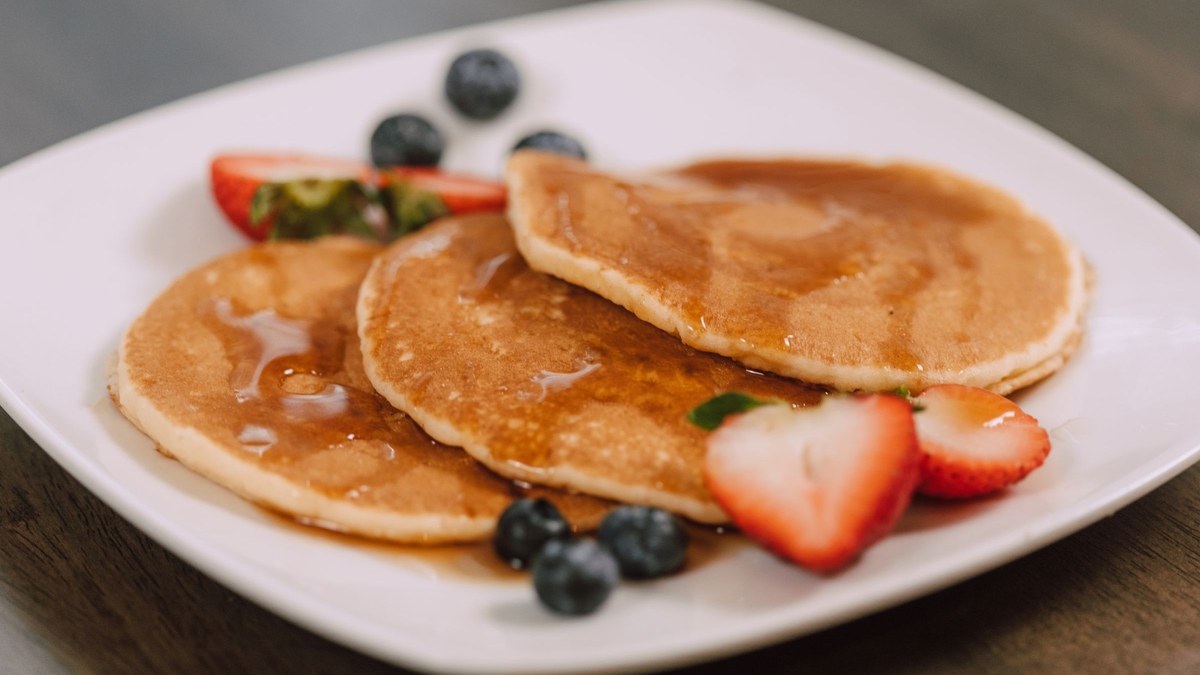
Flip a pancake when bubbles rise to the surface, pop and leave small holes that stay open, and the edges look dry and set. On a pan over medium heat (a griddle at about 350–375°F), that takes 2–3 minutes. Flip once, then cook the second side 1–2 minutes until it's golden and the center springs back when you press it lightly.
Handy for this: How to make pancakes from scratch · Is the pan hot enough?
At a glance
- Heat a nonstick pan or griddle over medium heat and brush it with a thin film of butter or oil.
- Test the pan: a few drops of water should skitter and disappear in a couple of seconds.
- Pour about ¼ cup of batter per pancake, leaving room between them.
- Cook 2–3 minutes until bubbles pop and stay open and the edges look dry.
- Slide a thin spatula under and flip once.
- Cook the second side 1–2 minutes until golden.
- Press the center lightly: it should spring back.
- Serve right away or keep warm in a 200°F oven.
The short version
Watch the top, not the clock. When the batter stops looking wet and glossy near the edges and the bubbles that pop leave holes that don't fill back in, the bottom is set and golden. That's your moment. A thin spatula should slide under the whole pancake without tearing it.
Flip once. The second side is quicker, about half the time of the first, and it doesn't make bubbles, so you judge it by color and by a light press in the center.
“Bubbles are popping and staying open near the edge, and the edges look dry. Flip it now.”
The three signs it's time to flip
- Bubbles pop and stay open. Bubbles form all over the surface. When the ones near the edge pop and leave little craters that stay open, the batter underneath has set.
- The edges look dry and matte. A shiny, wet ring around the edge means it needs more time. A dull, set edge means it's ready.
- It slides. Give the pan a small shake or slip the spatula under one side. If it moves freely, flip it.
Pan temperature and time per side
| Heat | First side | Second side | What you'll see |
|---|---|---|---|
| Medium-low | 3–4 min | 2 min | Pale, even color; good for thick batter |
| Medium (griddle 350–375°F) | 2–3 min | 1–2 min | Even golden brown; the usual target |
| Medium-high | 1–1½ min | 1 min | Dark outside, risk of a raw center |
Test the pan with a few drops of water: they should skitter and evaporate in a couple of seconds. If they sit and steam, the pan is too cool; if they vanish instantly with smoke, it's too hot. The first pancake is a test. Adjust the heat after it.
Why pancakes burn outside and stay raw inside
- Heat too high. The bottom browns before the bubbles have time to set the middle. Turn it down a notch.
- Batter too thick or pancakes too big. Use about ¼ cup of batter per pancake and let a very thick batter loosen with a spoonful of milk.
- Flipping too early. If the edges are still glossy, the inside is still liquid. Wait 30 seconds more.
Common mistakes
- Pressing the pancake after flipping. It pushes out the air and makes it dense.
- Flipping more than once. Each extra flip deflates it a little.
- Too much butter in the pan. A thin film is enough; pools of butter fry the edges and spot the surface. Wipe the pan with a paper towel between batches.
- Crowding. Leave room to slide the spatula in.
Keep going
Next up: How to Make Pancakes From Scratch, How to Make French Toast and How to Make Crepes.
Making a big stack for Shrove Tuesday? Our Pancake Day guide has the batter, the toppings and a plan for a crowd.
For fluffier pancakes, use buttermilk, or a quick homemade substitute.
No buttermilk for pancakes? Use a substitute for buttermilk: milk plus lemon juice.
Pan watches it for you
Pan watches the bubbles so you can make the next one
Pan watches the surface of the pancake through your phone camera, sees the bubbles and the edges change, and tells you out loud when to flip and when it looks done.
- Water drops skitter: pour the batter
- Bubbles popping and staying open: flip it now
- Edges still glossy: give it 30 more seconds
- Second side golden: take it off
Pan AI is on iPhone • Android.
Common questions
How do you know when to flip a pancake?
When bubbles on the surface pop and leave holes that stay open, and the edges look dry and set. On medium heat that's usually after 2–3 minutes.
How long should pancakes cook on each side?
About 2–3 minutes on the first side and 1–2 minutes on the second, over medium heat or on a griddle at about 350–375°F.
Why are my pancakes raw in the middle?
The heat is usually too high, so the outside browns before the middle sets. Lower the heat, use about ¼ cup of batter per pancake, and wait until the edges look dry before flipping.
Should you flip pancakes more than once?
No. Flip once. Extra flips push the air out and make them flatter.
What temperature should a griddle be for pancakes?
About 350 to 375°F, or medium heat on a pan. A few drops of water should skitter and disappear in a couple of seconds.
How much batter per pancake?
About 1/4 cup per pancake, with room between them.
How do you keep pancakes warm?
Hold them in a 200°F oven until you are ready to serve.
Sources
- USDA FSIS: Safe Minimum Internal Temperature Chart
- FoodSafety.gov: Safe Minimum Internal Temperatures
Reviewed against USDA FSIS and FoodSafety.gov guidance. How we choose sources and fix mistakes: editorial policy.
Keep cooking
- Eggs & breakfastHow to Make Pancakes From ScratchMake pancakes from scratch by whisking a simple batter, resting it 5 minutes, and cooking ¼ cup at a time over medium heat for 2–3 minutes per side.
- Eggs & breakfastHow to Make French ToastMake French toast by soaking thick bread in egg, milk and cinnamon, then cooking it in butter over medium heat for 2–3 minutes per side until golden brown.
- Eggs & breakfastHow to Make CrepesMake crepes by resting a thin batter 30 minutes, then cooking 3 tbsp at a time over medium heat for 60–90 seconds a side. Ratios, flip cues, lemon and sugar.
- Eggs & breakfastHow to Tell If Oil Is Hot EnoughOil is hot enough for sautéing when it shimmers and flows like water; for frying, a wooden spoon makes steady bubbles. Temps, tests and warning signs.
- Free toolGrams to cups converterConvert grams to cups (and back) for flour, sugar, butter, rice and 30 more ingredients.