How to Roast Vegetables
Quick answer
Heat the oven to 425°F (220°C). Toss even pieces with about 1 tablespoon oil and ½ teaspoon salt per pound and spread them out on a sheet pan. Roast, flipping once, until the edges are deep golden: 15–20 minutes for peppers and broccoli, 20–25 for Brussels sprouts and cauliflower, and 30–45 for 1-inch potatoes, carrots and roots.
Handy for this: Cooking oil smoke points · What can I make?
At a glance
- Heat the oven to 425°F (220°C) with a rack in the middle or lower third.
- Cut the vegetables into even pieces, about 1 inch (2.5 cm) for roots and squash.
- Toss with 1 tablespoon of oil and ½ teaspoon of salt per pound (450 g).
- Spread in a single layer on a rimmed sheet pan, cut sides down, with space between pieces.
- Roast for half the expected time, then flip with a spatula.
- Keep roasting until the edges are deep golden and a knife slides in easily.
- Season to taste and serve hot.
The short version
Hot oven, even pieces, plenty of room. Heat the oven to 425°F (220°C), cut your vegetables into similar-sized chunks, toss them with oil and salt, and spread them out on a sheet pan so they aren't touching. Roast, flip once, and take them out when the edges are deep golden and a knife slides through the thickest piece.
That's the whole method. What changes from vegetable to vegetable is only the time, and the time mostly depends on how dense the vegetable is and how big you cut it.
What you need
- About 2 lb (900 g) of vegetables. That feeds four as a side. Good choices in December and January: carrots, parsnips, potatoes, sweet potatoes, beets, butternut squash, cauliflower, broccoli, Brussels sprouts, red onion and bell peppers.
- 2 tablespoons (30 ml) of olive oil. Roughly 1 tablespoon per pound. Enough to coat every piece with a thin, glossy layer, not so much that they sit in a puddle.
- 1 teaspoon of kosher salt and ¼ teaspoon of black pepper. Add garlic, dried thyme or rosemary if you like, and a squeeze of lemon at the end.
- A rimmed sheet pan. A standard half sheet (18 × 13 inches) holds about 2 lb in one layer. Dark metal pans brown faster than shiny ones. Skip glass dishes, they hold steam and brown slowly.
- A sharp knife and a metal spatula for cutting even pieces and flipping without tearing the browned sides.
Olive oil is comfortable at 425°F. If you want to go hotter, check our oil smoke point chart before you swap oils.
How to roast vegetables, step by step
- Heat the oven. Set it to 425°F (220°C) with a rack in the middle or lower third. Give it a full 15 minutes. A half-heated oven is the most common reason roasted vegetables come out pale.
- Wash and dry. Rinse the vegetables, then dry them well with a towel. Water on the surface has to steam off before browning can start.
- Cut evenly. Aim for 1-inch (2.5 cm) pieces for roots and squash, bite-sized florets for cauliflower and broccoli, and halves for Brussels sprouts. Even size matters more than the exact size.
- Toss with oil and salt. Do this in a big bowl, not on the pan, so every piece gets coated. Your hands are the best tool here.
- Spread them out. Lay the pieces in a single layer with a little space between them. Turn cut sides down, since flat surfaces touching hot metal brown the best. If they don't fit, use two pans.
- Roast, then flip once. At about the halfway mark, slide the pan out and turn the pieces with a spatula. You should see golden undersides.
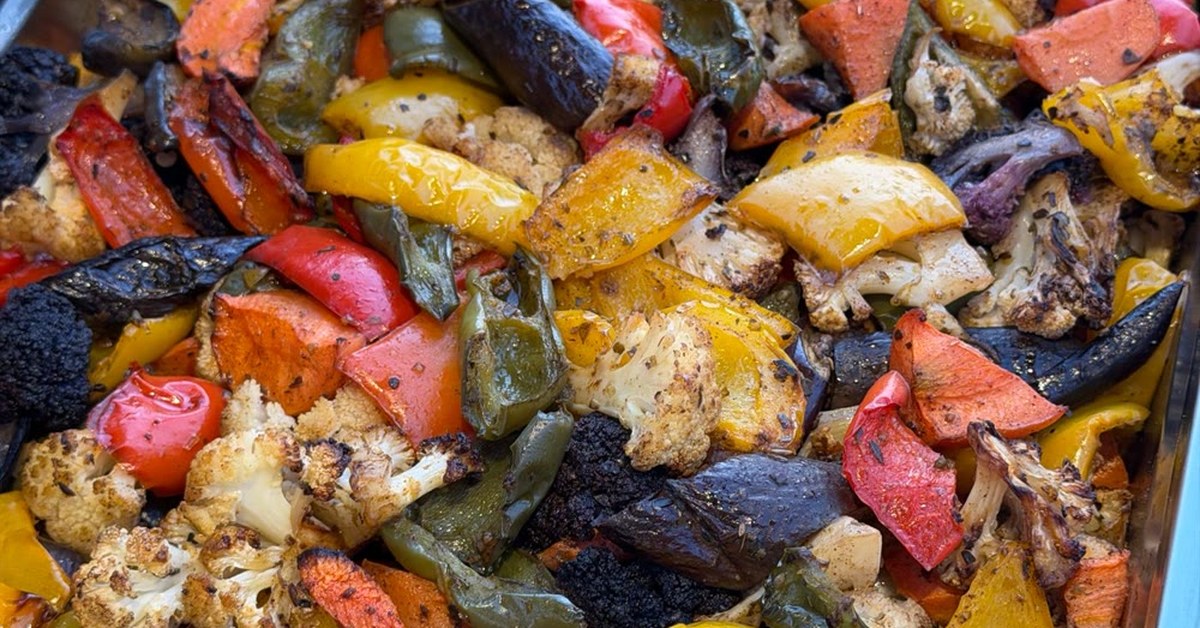
- Finish and season. Roast until the edges are well browned and the thickest piece is tender all the way through. Taste, add more salt if needed, and finish with lemon juice or fresh herbs.
Mixing vegetables on one pan? Start the slow ones (potatoes, carrots, beets) first, then add quick ones (peppers, broccoli) to the same pan for the last 15–20 minutes. Everything comes out at the same moment.
Roasting times at 425°F by vegetable and cut size
These times are for a fully preheated 425°F (220°C) oven and a single layer on a metal sheet pan. A crowded pan can add 10 minutes or more.
| Vegetable | Cut | Time at 425°F | Ready when |
|---|---|---|---|
| Potatoes | 1-inch (2.5 cm) cubes | 35–45 min | Crisp golden edges, fluffy inside |
| Carrots, parsnips | 1-inch chunks or ½-inch coins | 25–35 min (coins 20–25) | Browned edges, knife slides in |
| Beets | 1-inch cubes | 35–45 min | Tender, slightly wrinkled |
| Sweet potatoes | 1-inch cubes | 25–30 min | Caramelized spots, soft center |
| Butternut squash | 1-inch cubes | 25–35 min | Golden edges, creamy inside |
| Cauliflower | 1½-inch florets | 20–25 min | Deep golden on the flat sides |
| Broccoli | 1½-inch florets | 15–20 min | Crisp, dark tips, bright stems |
| Brussels sprouts | Halved | 20–25 min | Cut sides deep brown, outer leaves crisp |
| Bell peppers | 1-inch strips | 15–20 min | Soft, blistered and lightly charred |
| Red onion | 1-inch wedges | 20–25 min | Soft, sweet, browned edges |
Bigger pieces take longer and stay creamier inside. Smaller pieces brown faster and get crispier. If you cut your carrots into sticks instead of chunks, take 5 minutes off.
“The edges just turned deep golden and the pieces are shrinking a little. Give them a flip now, or pull the pan if they're already tender.”
How to tell when roasted vegetables are done
The clock gets you close. Your senses finish the job.
Sight
- The side touching the pan is deep golden brown, and the edges have a few darker spots. Pale all over means they need more time.
- Pieces shrink slightly and look a little wrinkled. Root vegetables lose their raw, shiny look.
- The pan is dry. Any liquid you saw early on has cooked off.
Sound
- When you pull the pan out, you should hear a steady sizzle. A quiet pan with liquid pooling means the vegetables are steaming, not roasting, so spread them out or give them more time.
Smell
- Roasting vegetables smell sweet and nutty, a lot like caramel for carrots and squash. A sharp, smoky smell means the thin bits are getting a little too far, so check the pan.
Touch
- A paring knife or fork should slide into the thickest piece with almost no push. Potatoes should feel fluffy inside, carrots tender but not mushy.
- Florets should feel crisp at the tips and tender at the stem.
Temperature
Vegetables don't have a safety temperature the way meat does, so tenderness is your test. Root vegetables are soft at around 200–210°F (93–99°C) inside, which is why a knife is a more practical check than a thermometer. If you're roasting vegetables alongside chicken, the chicken still needs to reach 165°F (74°C), and our internal temperature chart has the rest.
The oven door makes this the hardest part to judge from a distance. When you slide the tray out to check, Pan can look at the color on the cut sides and tell you whether to flip, keep going or pull them.
Tips for better roasted vegetables
- Don't crowd the pan. This is the big one. Two half-full pans beat one overloaded pan every time.
- Preheat the pan, too. For extra-crisp potatoes or Brussels sprouts, put the empty sheet pan in the oven while it heats, then tip the oiled vegetables onto the hot metal. They sizzle on contact.
- Cut flat sides. Halve sprouts, slice florets so they have a flat face, and cut carrots on a long diagonal. More flat surface means more browning.
- Add garlic late. Whole cloves are fine from the start, but minced garlic darkens quickly at 425°F. Toss it in for the last 10 minutes.
- Finish with something bright. Lemon juice, a splash of vinegar, grated Parmesan, or a handful of chopped parsley wakes everything up.
- Leftovers reheat well. Spread them on a pan at 400°F (200°C) for 8–10 minutes. They crisp back up much better than in the microwave.
What to serve with roasted vegetables
A pan of roasted vegetables goes with almost any winter dinner. Serve them next to a whole roast chicken, a pork loin, a pan-seared steak, or a skillet of meatballs in tomato sauce. Toss leftovers with cooked grains and a little dressing for lunch, or blend roasted squash and carrots with stock for a quick soup.
Want to go deeper on one vegetable? We have full guides for carrots, cauliflower and Brussels sprouts, plus butternut squash and crispy roast potatoes. And if the crisper drawer is full of odds and ends, what can I make will suggest something to do with them.
Add a protein to the same tray and you have one of our sheet pan dinners.
Try something new on the sheet pan: fennel roasts sweet and tender. Finish with a tahini drizzle.
Serve roasted vegetables warm with a ball of burrata and olive oil.
Finish the tray with crumbled feta cheese and a squeeze of lemon.
Add slices of halloumi in the last 10 minutes, or spoon chimichurri on top.
For fresh zucchini that browns well, skip frozen; see can you freeze zucchini for what frozen is good for.
Frozen broccoli roasts well from frozen; see can you freeze broccoli.
Frozen asparagus and green beans roast well from frozen; see can you freeze asparagus and can you freeze green beans.
Pan watches it for you
Pan tells you when to flip and when to pull
Roasting happens behind an oven door, so Pan watches the tray each time you slide it out to check. It looks at the color on the cut sides and the edges and tells you whether to flip, keep going or take the pan out.
- Pale tops and a bit of liquid on the pan: back in the oven, it's still steaming off water
- Cut sides golden brown, tops still pale: flip now
- Edges dark golden and pieces slightly shrunken: check one with a knife, it's nearly ready
- Thin tips on florets turning very dark: pull those pieces or the whole pan
Pan AI is on iPhone • Android.
Common questions
What temperature do you roast vegetables at?
425°F (220°C) is the sweet spot for most vegetables. It's hot enough to brown the outside before the inside turns mushy. Delicate vegetables like cherry tomatoes and asparagus also do well at 400°F (200°C), and you can go to 450°F (230°C) for quick-cooking florets.
How long do you roast vegetables at 425°F?
Most vegetables take 15–45 minutes at 425°F. Peppers, broccoli and green beans take 15–20 minutes, cauliflower and Brussels sprouts 20–25, 1-inch butternut squash cubes 25–35, and 1-inch potatoes, carrots, parsnips and beets 30–45.
Why are my roasted vegetables soggy?
Usually the pan is too crowded. Vegetables release water as they cook, and when pieces touch, they steam instead of browning. Use two pans, dry the vegetables well after washing, and make sure the oven is fully preheated.
Can you roast different vegetables together?
Yes. Group them by cooking time and either cut the slower ones smaller or start them first. For example, put carrots and potatoes in for 15 minutes, then add broccoli and peppers to the same pan for the last 20.
Should you flip vegetables while roasting?
Flip once, about halfway through. Leave them alone before that so the side touching the pan has time to brown. Flipping too often keeps them pale.
What oil is best for roasting vegetables?
Olive oil is the classic choice and works well at 425°F. Avocado oil and other neutral oils handle even higher heat. Butter tastes great but browns quickly at this temperature, so toss it in at the end.
Sources
- Love and Lemons: Roasted Vegetables
- RecipeTin Eats: Roasted Vegetables
- FDA: Selecting and Serving Produce Safely
Reviewed against FDA guidance. How we choose sources and fix mistakes: editorial policy.
Keep cooking
- Vegetables & fruitHow to Cook CarrotsGlaze sliced carrots on the stove for 12–15 minutes, or roast them at 425°F for 25–30 minutes until tender and caramelized. Times, cues and holiday tips.
- Vegetables & fruitHow to Cook CauliflowerRoast cauliflower florets at 425°F for 25–30 minutes, or pan-sear them for 10–12 minutes, until deep golden and fork-tender. Cuts, times and cues.
- Vegetables & fruitHow to Cook Brussels SproutsPan-sear halved Brussels sprouts cut side down 8–10 minutes, or roast at 425°F for 20–25, until deep golden and fork-tender. Times, cues and tips.
- Vegetables & fruitHow to Cook Butternut SquashRoast butternut squash cubes at 425°F for 25–35 minutes or halves at 400°F for 45–60. How to peel and cut it safely, plus mashed squash and timing.
- Vegetables & fruitHow to Cook EggplantPan-fry ½-inch eggplant slices 3–4 minutes per side, or roast cubes at 425°F for 20–25 minutes, until golden and creamy inside. Prep, times and cues.
- Vegetables & fruitHow to Cook Frozen CornSauté frozen corn in butter over medium-high for 6–8 minutes, boil it 3–5 minutes, microwave 4–5 minutes or roast at 425°F for 20–25 minutes. No thawing needed.
- Free toolSmoke point of oils, with the best oil for each jobSmoke points of 20+ oils and fats, and the best oil for searing, frying and cast iron.
- Free toolWhat can I make?Type what is in your fridge and get simple recipes you can cook right now.