How to Make Over Easy Eggs (and When to Flip Them)
Quick answer
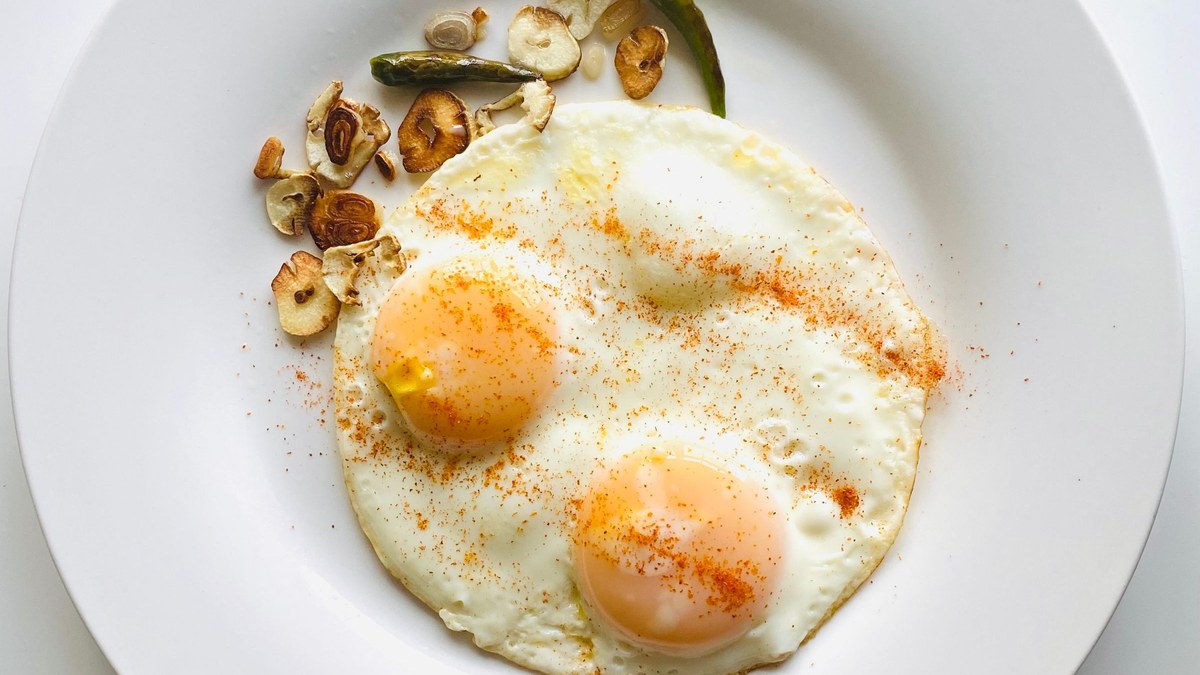
Heat a nonstick pan over medium-low with a little butter, crack in the egg and cook 2–3 minutes, until the white is set right up to the yolk. Slide a thin spatula under, flip gently and cook 20–30 seconds for over easy, about 1 minute for over medium and 2 minutes for over hard. Use pasteurized eggs for anyone avoiding runny yolks.
Handy for this: Boiled egg timer · Cooking oil smoke points
At a glance
- Heat a nonstick pan over medium-low and melt about 1 teaspoon of butter.
- Crack the egg into a small bowl first, then slide it into the pan.
- Cook 2–3 minutes, without moving it, until the white is set all the way to the yolk.
- Loosen the edges and slide a thin spatula fully under the egg.
- Flip it gently, low and close to the pan.
- Cook 20–30 seconds for over easy, 1 minute for over medium, 2 minutes for over hard.
- Slide it onto a plate yolk side up.
The short version
Over easy means fried on both sides with the yolk still runny. The trick is in the first side: low enough heat that the white sets without the bottom getting tough, and enough patience to wait until the white near the yolk is no longer clear and jiggly. Then the flip is short. The second side only firms the thin layer of white over the yolk.
“The white is set right up to the yolk and it's sliding in the pan. Flip it now, gently.”
When to flip the egg
- The white is opaque almost to the yolk. Only a thin, clear film should be left right around the yolk.
- The edges are set. Soft, white edges that lift easily; lacy brown edges mean the pan is hotter than it needs to be.
- It slides. Give the pan a small shake. If the egg moves as one piece, it's ready to flip.
Over easy, over medium, over hard
| Style | After the flip | Yolk |
|---|---|---|
| Over easy | 20–30 sec | Runny |
| Over medium | About 1 min | Jammy, thick center |
| Over hard | About 2 min (break the yolk if you like) | Firm |
| Sunny side up | No flip; cover for the last minute | Runny |
Times are for a large egg on medium-low heat after a 2–3 minute first side.
How to flip without breaking the yolk
- Use a thin, wide spatula and slide it all the way under the yolk before lifting.
- Flip low. Keep the spatula an inch or two above the pan and turn your wrist; don't lift and drop.
- Start with fresh eggs. Fresher yolks sit higher and are less likely to break.
- Or flip with the pan. With a little practice, a quick forward jerk of the pan flips the egg with no spatula at all.
Is a runny yolk safe?
USDA advises cooking eggs until both the yolk and white are firm, and egg dishes to 160°F (71°C). A runny yolk is a personal choice for healthy adults. For young children, older adults, pregnant guests or anyone with a weak immune system, use pasteurized eggs or cook them over hard.
Common mistakes
- Heat too high. The bottom turns brown and rubbery before the top sets.
- Flipping too early. Clear white near the yolk runs everywhere when it turns.
- Too little fat. The egg sticks and the yolk breaks on the flip.
- Leaving it after the flip. Thirty seconds is the difference between over easy and over medium.
Keep going
Next up: How to Fry an Egg, How to Make Scrambled Eggs and How to Poach an Egg.
Pan watches it for you
Pan watches the white set so you can flip on time
Pan watches the egg through your phone camera, sees the white turn opaque around the yolk, and tells you out loud when to flip and when to take it off.
- Butter foaming: slide the egg in
- White set up to the yolk: flip it now
- Edges browning fast: turn the heat down
- Twenty seconds after the flip: take it off for over easy
Pan AI is on iPhone • Android.
Common questions
How do you know when to flip an over easy egg?
When the white is opaque almost all the way to the yolk and the egg slides in the pan. On medium-low heat that takes about 2–3 minutes.
How long do you cook an over easy egg after flipping?
About 20–30 seconds. One minute gives you over medium, and about two minutes gives you over hard.
What is the difference between over easy and over medium?
Over easy has a runny yolk. Over medium is cooked a little longer after the flip, so the yolk is thick and jammy.
Are over easy eggs safe to eat?
USDA advises cooking eggs until the yolk and white are firm. If you want a runny yolk for someone at higher risk, use pasteurized eggs.
What is an over easy egg?
A fried egg flipped once and cooked 20–30 seconds on the second side. The white is set and the yolk stays runny.
What is the difference between sunny side up and over easy?
Sunny side up is never flipped; you cover the pan for the last minute so the top white sets. Over easy is flipped and cooked 20–30 seconds on the yolk side. Both keep a runny yolk.
How do you flip an over easy egg without breaking the yolk?
Wait until the white is fully set and the edges move when you shake the pan. Slide a thin spatula all the way under, lift low, and turn it over gently close to the pan.
What heat do you cook over easy eggs on?
Medium-low. Melt the butter until it foams, add the egg, and cook 2–3 minutes until the white sets before flipping. High heat browns the bottom before the top is done.
Sources
- USDA FSIS: Safe Minimum Internal Temperature Chart
- FoodSafety.gov: Safe Minimum Internal Temperatures
- USDA FSIS: Shell Eggs from Farm to Table
Reviewed against USDA FSIS and FoodSafety.gov guidance. How we choose sources and fix mistakes: editorial policy.
Keep cooking
- Eggs & breakfastHow to Fry an EggFry a sunny side up egg over medium-low heat, covered, for 2–3 minutes until the white sets and the yolk stays runny. Times for every fried egg style.
- Eggs & breakfastHow to Make Scrambled EggsMake scrambled eggs over medium-low heat in butter for 3–5 minutes, folding slowly and pulling them off while still glossy. Soft, fluffy and diner styles.
- Eggs & breakfastHow to Poach an EggPoach an egg in barely simmering water for 3–4 minutes, until the white is set and the yolk is still soft. Fresh eggs, a strainer and a gentle swirl help.
- Eggs & breakfastHow to Boil EggsBoil eggs by lowering them into boiling water: 6 minutes for soft, 7 for jammy, 11–12 for hard-boiled, then chill in ice water. Easy-peel tips included.
- Free toolInternal temperature chartSafe internal temperatures for steak, chicken, salmon, pork and more, plus a printable PDF.