How to Cook Butternut Squash
Quick answer
Peel the squash, scoop out the seeds and cut it into 1-inch cubes. Toss with 2 tablespoons of olive oil and 1 teaspoon of salt and roast in one layer at 425°F (220°C) for 25–35 minutes, flipping once. Or skip peeling: halve it, oil the cut sides and roast cut side down at 400°F (200°C) for 45–60 minutes.
Handy for this: What can I make? · Reheating guide
At a glance
- Heat the oven to 425°F (220°C) and line a sheet pan with parchment.
- Trim both ends of the squash, then cut the neck from the round bulb so each piece sits flat.
- Peel each piece with a sturdy Y-peeler until you reach bright orange flesh.
- Halve the bulb, scoop out the seeds, and cut everything into 1-inch (2.5 cm) cubes.
- Toss the cubes with olive oil, salt and pepper and spread them out on the pan.
- Roast 25–35 minutes, flipping once at 15 minutes, until golden at the edges and fork-tender.
- Season and serve, or mash with butter for a soft side.
The short version
For the best everyday butternut squash, peel it, cut it into 1-inch cubes, toss with olive oil and salt, and roast at 425°F (220°C) for 25–35 minutes. The edges caramelize, the inside turns soft and sweet, and it's ready when a fork slides through without any push.
If peeling sounds like a chore, roast it in halves instead. Cut it lengthwise, scoop the seeds, and roast cut side down at 400°F (200°C) for 45–60 minutes. Then scoop the flesh out for mashing, soup or pasta.
What you need
- 1 butternut squash, about 3 lb (1.4 kg). Pick one that feels heavy for its size, with matte, tan skin and no soft spots. A long neck means more seedless flesh. That gives you about 6 cups of cubes, enough for 4 sides.
- 2 tablespoons (30 ml) olive oil, 1 teaspoon kosher salt and ¼ teaspoon black pepper.
- Optional flavors: 1 tablespoon maple syrup, a pinch of cinnamon or smoked paprika, fresh sage or thyme.
- For mashed squash: 2 tablespoons (28 g) butter and 2–4 tablespoons (30–60 ml) warm milk or cream.
- A large, sharp chef's knife and a sturdy Y-peeler. A dull knife is more likely to slip on the hard skin.
- A rimmed sheet pan and parchment paper, plus a big spoon for scooping seeds.
How to peel and cut butternut squash safely
Raw butternut squash is dense and slippery, so the whole trick is to make every piece sit flat before you cut it.
- Soften the skin (optional). Pierce the squash a few times with a fork and microwave it whole for 2–3 minutes. Let it cool for a minute. The skin peels much more easily.
- Trim the ends. Lay the squash on its side on a cutting board with a damp towel underneath to stop sliding. Slice off about ½ inch (1 cm) from the stem end and the base.
- Separate neck from bulb. Cut straight across where the narrow neck meets the round bottom. Now you have two pieces with flat ends.
- Peel. Stand each piece on its flat end and run the peeler from top to bottom. Keep going until the pale green streaks are gone and you see bright orange.
- Seed the bulb. Stand the bulb up and cut it in half from top to bottom. Scoop out the seeds and stringy pulp with a spoon. Save the seeds for roasting.
- Cube. Cut the neck into 1-inch (2.5 cm) thick rounds, lay each round flat, and cut it into strips and then cubes. Cut the bulb halves the same way.
How to roast butternut squash cubes, step by step
- Heat the oven to 425°F (220°C) with a rack in the middle. Line a sheet pan with parchment.
- Toss. In a large bowl, toss the cubes with the oil, salt and pepper, plus maple syrup or spices if using.
- Spread out. Lay the cubes in a single layer with a little space around each one. Crowded squash steams and stays pale, so use two pans if needed.
- Roast and flip. Roast 15 minutes, then flip with a spatula. You should see golden undersides.
- Finish. Roast another 10–20 minutes, until the edges are deep amber and the centers are fork-tender.
- Serve. Taste for salt and finish with chopped sage, a little grated Parmesan, or a drizzle of balsamic.
Roasted halves
Cut the whole, unpeeled squash in half lengthwise. A sharp knife pressed down along the center, with a rocking motion, works best. Scoop the seeds, brush the cut sides with oil and salt, and lay them cut side down on a lined pan. Roast at 400°F (200°C) for 45–60 minutes, until the skin looks wrinkled and a knife slides in easily at the thickest part of the neck.
Mashed butternut squash
Scoop the flesh from roasted halves into a bowl, or simmer 1-inch peeled cubes in salted water for 12–15 minutes until very soft and drain well. Mash with 2 tablespoons butter, a few tablespoons of warm milk or cream, salt and a pinch of nutmeg. Roasted squash makes a sweeter, denser mash. Boiled squash is lighter and quicker.
Butternut squash cooking times
Times are for a fully preheated oven or a pot at a steady simmer.
| Method | Cut | Temperature | Time | Ready when |
|---|---|---|---|---|
| Roasted cubes | ½ inch (1 cm) | 425°F (220°C) | 18–22 min | Golden edges, soft center |
| Roasted cubes | 1 inch (2.5 cm) | 425°F (220°C) | 25–35 min | Caramelized edges, fork-tender |
| Roasted cubes | 1 inch (2.5 cm) | 400°F (200°C) | 30–40 min | Lightly browned, fork-tender |
| Roasted halves | Lengthwise, skin on | 400°F (200°C) | 45–60 min | Skin wrinkled, knife slides in |
| Boiled or simmered | 1 inch (2.5 cm) | Simmer | 12–15 min | Breaks when pressed with a spoon |
| Steamed | 1 inch (2.5 cm) | Steam | 10–12 min | Fork-tender |
| Sautéed | ½ inch (1 cm) | Medium heat | 12–15 min, covered part of the time | Browned, tender |
Roasting squash with other vegetables? Our guide on how to roast vegetables has a full chart by vegetable and cut size so everything finishes together.
“The bottoms of the cubes are golden and the edges are starting to caramelize. Flip them now and give them about 10–15 more minutes.”
How to tell when butternut squash is done
Squash has a wide window between "just tender" and "very soft," so you have some room. Here's what to watch for.
Sight
- Raw squash is bright and opaque. Cooked squash turns a deeper orange and looks slightly glossy, almost translucent at the edges.
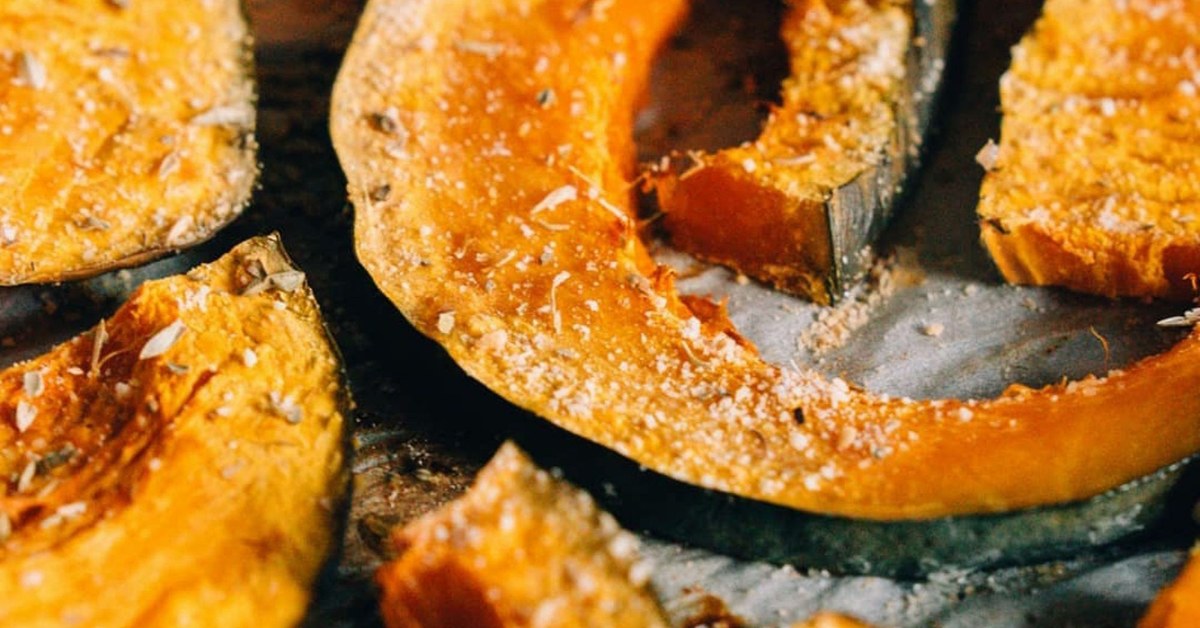
- Roasted cubes have brown, caramelized spots on the sides that touched the pan and shrink a little.
- Halves look puffy at first, then the skin wrinkles and the cut edges darken.
Sound
- When you open the oven, cubes should be sizzling gently. Silence and a wet pan mean they're still steaming off water.
Smell
- Roasting squash smells sweet and nutty, a little like pumpkin pie. When that smell fills the kitchen, check the pan.
Touch
- A fork or paring knife slides into the thickest cube, or the thick neck of a half, with no resistance.
- For mash, a cube should collapse when you press it with the back of a spoon.
Temperature and storage
Squash is safe to eat raw or cooked, so tenderness is the test. Rinse the outside before cutting so the knife doesn't carry dirt into the flesh, and refrigerate leftovers within 2 hours. Reheat cooked squash until steaming, 165°F (74°C).
Pan can help here when you slide the tray out to check. It looks at the color on the cubes and tells you when it's time to flip and when they're ready to come out.
Tips for better butternut squash
- Cut evenly. The neck and bulb cubes should be the same size so they finish together.
- Go hot for caramel. 425°F (220°C) gives the best browned edges. At 375°F (190°C) squash softens but barely browns.
- Add sugar late. Maple syrup or honey darkens fast. Toss it on for the last 10 minutes if you want a glaze without dark spots.
- Use parchment. Squash sugars stick to bare pans. Parchment keeps the browned bits on the squash, not the pan.
- Roast the seeds. Toss cleaned seeds with oil and salt and roast at 325°F (165°C) for 15–20 minutes.
- Freeze extra. Spread cooked cubes or mash on a pan, freeze, then bag them. They're ready for soups and pasta on a busy night.
What to serve with butternut squash
Roasted squash cubes are a natural next to roast chicken, pork loin or turkey, and they're great tossed into salads with greens, feta and toasted pecans. Serve them next to homemade meatballs, stir them into risotto, or toss them with pasta, brown butter and sage, or fold them into grain bowls.
Mashed squash can stand in for mashed potatoes on a holiday table, or you can mix the two half and half. For more winter squash ideas, try our guides to spaghetti squash and sweet potatoes. And if you've got half a squash left and no plan, what can I make will find you one.
For a smaller squash you don't need to peel, see how to cook acorn squash: roasted halves in about 45 minutes.
Brown butter and sage is classic; see substitute for sage.
Pan watches it for you
Pan tells you when to flip the squash
Squash goes from pale to caramelized in the last 10 minutes. Each time you slide the tray out, Pan looks at the color on the cubes and tells you whether to flip, keep roasting or take it out.
- Cubes still bright and shiny with no browning: back in for 10 more minutes
- Bottoms golden brown: flip now
- Edges dark amber and cubes slightly shrunken: check with a fork, nearly ready
- Small cubes at the pan edges turning very dark: move them to the center or pull the pan
Pan AI is on iPhone • Android.
Common questions
Do you have to peel butternut squash before roasting?
Only for cubes. If you roast the squash in halves, leave the skin on and scoop the soft flesh out afterward. The skin of a well-roasted squash is edible too, though it stays a little chewy.
How long does butternut squash take to roast?
1-inch cubes take 25–35 minutes at 425°F (220°C). Halves take 45–60 minutes at 400°F (200°C), depending on size. Smaller ½-inch cubes cook in about 20 minutes.
What's the easiest way to cut butternut squash?
Trim the ends, cut the long neck from the round bulb, then stand each piece on its flat end to peel and slice. Working with flat, stable pieces keeps the knife from slipping. Microwaving the whole squash for 2–3 minutes softens the skin and makes it easier.
How do you know when butternut squash is cooked?
A fork or knife slides into the thickest piece with no resistance, and the flesh looks deep orange and slightly translucent. Roasted cubes should have caramelized brown edges.
Can you eat the seeds?
Yes. Rinse off the strings, pat the seeds dry, toss with a little oil and salt, and roast at 325°F (165°C) for 15–20 minutes until crisp and golden. They make a great snack or salad topping.
How long does cooked butternut squash last?
Refrigerate cooked squash within 2 hours in a covered container. It keeps 3–5 days in the fridge and about 10–12 months in the freezer. A whole, uncut squash keeps 1–3 months in a cool, dry spot.
Sources
- Love and Lemons: Roasted Butternut Squash
- Love and Lemons: Butternut Squash Soup
- FDA: Selecting and Serving Produce Safely
Reviewed against FDA guidance. How we choose sources and fix mistakes: editorial policy.
Keep cooking
- Vegetables & fruitHow to Roast VegetablesRoast vegetables on a sheet pan at 425°F for 15–45 minutes, tossed in oil and spread out. Times by cut size for roots, crucifers, squash and peppers.
- Vegetables & fruitHow to Cook Spaghetti SquashCook spaghetti squash in the oven, microwave or Instant Pot with clear times, plus the easy fork test that tells you the strands are tender and ready.
- Thanksgiving & holidaysHow to Cook Sweet PotatoesBake whole sweet potatoes at 400°F for 45 to 60 minutes, roast cubes at 425°F, or cook them on the stove. Clear times, doneness cues, plus easy acorn squash.
- Vegetables & fruitHow to Make Mashed PotatoesBoil peeled Yukon Gold chunks in salted water 15–20 minutes until a fork slides in, then mash with warm butter and milk. Ratios, times and fixes inside.
- Vegetables & fruitHow to Cook EggplantPan-fry ½-inch eggplant slices 3–4 minutes per side, or roast cubes at 425°F for 20–25 minutes, until golden and creamy inside. Prep, times and cues.
- Vegetables & fruitHow to Cook Frozen CornSauté frozen corn in butter over medium-high for 6–8 minutes, boil it 3–5 minutes, microwave 4–5 minutes or roast at 425°F for 20–25 minutes. No thawing needed.
- Free toolWhat can I make?Type what is in your fridge and get simple recipes you can cook right now.
- Free toolReheating guideHow to reheat fried chicken, steak, prime rib, rice and 20+ leftovers so they taste fresh.